
- Democratic U.S. senator-elect James Talarico secured a decisive victory over Republican Ken Paxton, becoming the state’s first Democratic U.S. senator in over 30 years and pledging a politics of unity and bipartisanship in Washington.
- State Representative Gina Hinojosa made history by winning the gubernatorial race, becoming Texas’s first Latina governor, and pledged to fire Texas Education Agency Commissioner Mike Morath on her first day in office.
- Democrats achieved a major legislative breakthrough by capturing a majority in the Texas House, flipping 14 seats and leading in uncalled races, while Lieutenant Governor-elect Vicki Goodwin defeated incumbent Republican Dan Patrick.
- While the Texas Senate retained a 19–12 Republican majority, incoming Lt. Gov. Vicki Goodwin holds powerful constitutional presiding powers that could reshape legislative outcomes, including potential changes to cannabis laws and school voucher funding.
- Republican ground was significantly eroded across rural Texas counties, where reliable red strongholds experienced turnout drops or swung toward Democratic candidates.
- U.S. Senator Ted Cruz remains the sole statewide elected Republican official in Texas as his term continues, facing altered committee standing following Democratic gains in the U.S. Senate.
Texas (Texas 24 News) November 11, 2026 – A sweeping political realignment has reshaped the landscape of Texas following a historic election cycle that ended decades of uninterrupted Republican dominance across major statewide offices. Democratic U.S. senator-elect James Talarico captured a landmark federal victory over Republican Ken Paxton, while state lawmaker Gina Hinojosa made history by being elected the first Latina governor of Texas. Concurrently, Democrats flipped control of the Texas House of Representatives, secured the powerful office of Lieutenant Governor through Vicki Goodwin, and reduced the state’s Republican executive footprint. As incoming leaders prepare for inauguration in January 2027, the shift signals major policy overhauls in education, state agency leadership, taxation, and cannabis regulation.
- How Did Democratic Candidates Overturn Long-Standing Red Strongholds in Rural Texas?
- What Impact Will Lieutenant Governor Vicki Goodwin’s Victory Have on Cannabis Laws in Texas?
- How Does Ted Cruz’s Position Change as Texas’s Sole Statewide Republican Lawmaker?
- Background of the Particular Development After the News
- How This Development Can Affect Texas Taxpayers, Public Education, and State Legislation
According to post-election coverage published by The Dallas Morning News, Democratic U.S. senator-elect James Talarico addressed reporters following his decisive victory, emphasizing that his coalition was united by economic frustration and a broad public desire for structural change. Talarico stated: “People across the political spectrum are hungry for a different kind of politics. Not a politics of hate, not a politics of fear, not a politics of division, but a politics of love”.
When questioned regarding whether incoming Democratic legislators should prioritize legislative deliverables or pursue investigations into the outgoing administration, Talarico rejected the premise as a false choice. As reported by The Dallas Morning News, Talarico asserted: “Our top priority has to be delivering for the people of Texas, for the people of this country. They didn’t send us to Washington for political retribution”. Talarico’s six-year term begins when he is sworn into the United States Senate on 3 January 2027, marking the first time a Democrat has held the seat in more than 30 years.
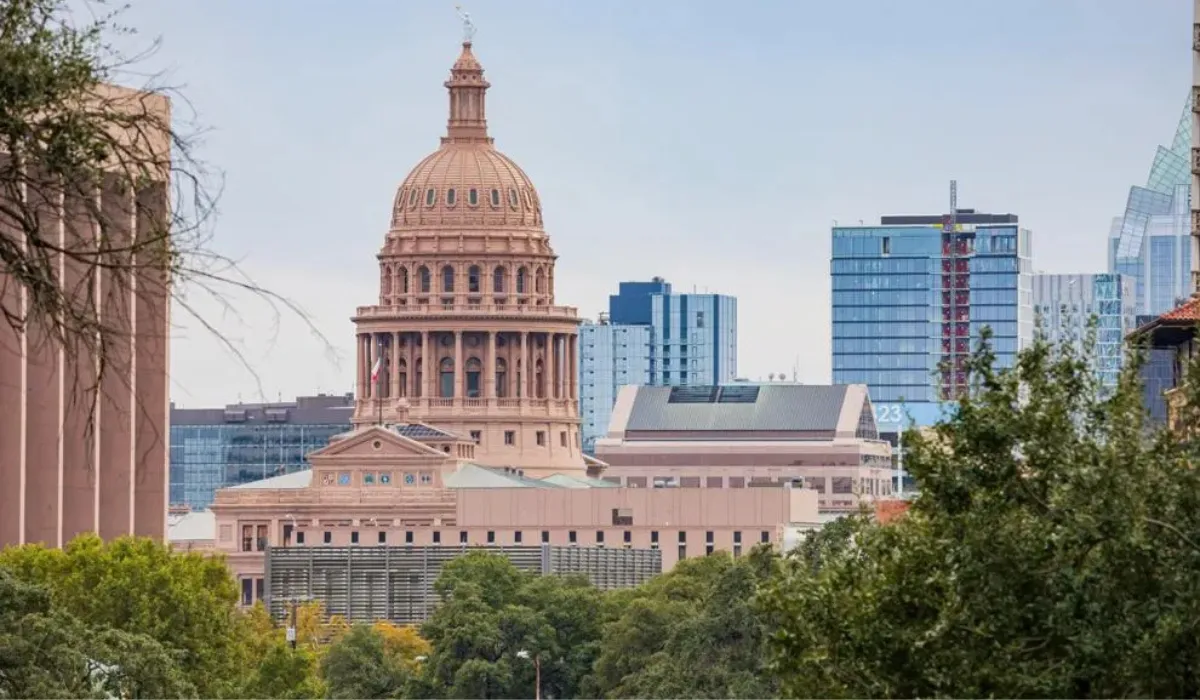
In state-level developments reported by the San Antonio Express-News, Democratic state legislator Gina Hinojosa secured her place in history as the first Latina governor of Texas. Set to be inaugurated on 19 January on the south steps of the Texas State Capitol, Hinojosa announced aggressive plans to reshape state administration. During her campaign trail and victory speeches on 3 November, Hinojosa pledged to remove Texas Education Agency Commissioner Mike Morath on her first day in office.
Expanding on her executive oversight agenda, Hinojosa noted that she would review outgoing governor Greg Abbott’s agency and university board appointments on a case-by-case basis. As reported by the San Antonio Express-News, Hinojosa criticized prior governance, stating: “What has happened in Texas is it has become a pay-to-play government, where it is Greg Abbott’s donors who are appointed to everything”. Furthermore, Hinojosa vowed to dismantle the state’s $1 billion school voucher program and halt state takeovers of public-school districts, utilizing her gubernatorial line-item veto power to eliminate voucher funding where direct repeal is blocked.
The legislative branch also experienced a historic shift. According to data compiled by The Associated Press, Democrats successfully flipped 14 state House seats and maintained leads in several uncalled races, securing a firm majority in the Texas House when lawmakers convene in January 2027.
However, the Texas Senate maintained a 19–12 Republican majority, though two upcoming vacancies will alter its composition as Democratic senator Sarah Eckhardt takes office as comptroller and Democrat Nathan Johnson assumes the role of attorney general. Crucially, Lieutenant Governor-elect Vicki Goodwin defeated incumbent Republican Dan Patrick to capture the historically powerful presiding office of the Senate.
Analyzing the institutional power balance under the new leadership, University of Texas political scientist Joshua Blank told reporters that Goodwin will wield substantial procedural authority. As reported by regional political analysts, Blank noted: “There are certain powers as the presiding officer over the body that Republicans will have a hard time removing from the lieutenant governor”.
How Did Democratic Candidates Overturn Long-Standing Red Strongholds in Rural Texas?
A significant driver of the statewide Democratic sweep was the erosion of Republican voting margins across reliable rural counties. According to an in-depth analysis published by The Texas Tribune, voters in conservative rural districts either cast ballots for Democratic challengers or abstained from voting entirely, with approximately 90% of counties experiencing declining turnout located in rural areas.
James Talarico successfully closed the partisan voting gap in rural counties by approximately 10 percentage points compared to 2018 baseline figures, while outperforming previous Democratic benchmarks in exurban areas by roughly 15 percentage points.
Commenting on the structural shift in voter behavior, Drew Landry, a political science professor at Levelland College, told The Texas Tribune: “This tells us that you can’t take rural Texas for granted. Republicans were really trying everything to gin up support, but they didn’t want to talk about the big issues, and they paid the political price for it”.
Statistical turnout metrics highlighted contrasting voter engagement across geographic sectors:
- Border Counties: Experienced the largest surge in voter participation, rising 8.2 percentage points since 2022.
- Urban Counties: Followed closely with an increase of 7.9 percentage points in overall voter turnout.
- Rural Counties: Saw marginal growth, with turnout rising by just 1.4 percentage points across traditional red districts.
What Impact Will Lieutenant Governor Vicki Goodwin’s Victory Have on Cannabis Laws in Texas?
Outgoing Lieutenant Governor Dan Patrick was a staunch opponent of cannabis legalization, leading legislative efforts to restrict and ban hemp-derived products containing THC. While Governor Greg Abbott previously vetoed sweeping prohibition bills, stricter regulatory frameworks were subsequently implemented.
Following Vicki Goodwin’s electoral victory over Patrick, the state’s cannabis policy framework faces potential revision. As reported by the Austin American-Statesman, Goodwin campaigned on a platform supporting the legalization and regulation of cannabis sales.
During her campaign, Goodwin argued that tax revenues generated from legal marijuana sales could be directly allocated to fund health insurance coverage for the estimated 5 million uninsured residents in Texas. Nevertheless, political analysts note that because the Texas Senate retains a 19–12 Republican majority, passing comprehensive legalization bills through the upper chamber will require intense bipartisan negotiation.
How Does Ted Cruz’s Position Change as Texas’s Sole Statewide Republican Lawmaker?
U.S. Senator Ted Cruz woke up following the election as the only statewide elected Republican official in Texas, raising immediate questions regarding his political future despite having four years remaining on his current Senate term.
Having campaigned aggressively for Republican candidates across the United States in a failed effort to preserve his party’s congressional majorities, Cruz described the midterm results as a “Watergate-level repudiation,” as noted by the San Antonio Express-News.
With Democrats capturing control of the U.S. Senate in January, Cruz will relinquish his chairmanship of the influential Committee on Commerce, Science, and Transportation. Furthermore, speculation surrounding a potential presidential run in 2028 has faced internal scrutiny. Conservative radio host Kenny Webster summarized the political climate, telling reporters: “The Texas Republicans are very unpopular right now, and he’s one of them”.
Background of the Particular Development After the News
The 2026 midterm elections in Texas represent a culmination of demographic shifts, economic anxieties, and voter dissatisfaction with incumbent state leadership. For over three decades, Texas operated as a reliable stronghold for the Republican Party, anchored by strong rural turnouts, pro-business economic messaging, and conservative social policies under long-serving governors like Greg Abbott and powerful legislative officers like Dan Patrick.
However, rapid urbanization in major metropolitan hubs—including Austin, Dallas, Houston, and San Antonio—alongside significant population influxes along the Texas-Mexico border, gradually altered the state’s electoral map. Issues concerning public education funding, public health access, reproductive rights, and cost-of-living pressures motivated non-traditional voters to engage at unprecedented levels.
The introduction of new political figures like James Talarico at the federal level and Gina Hinojosa at the state executive level reflects an active effort by the Texas Democratic Party to build broad-based coalitions crossing traditional urban-rural divides, culminating in the historic electoral reversals of November 2026.
How This Development Can Affect Texas Taxpayers, Public Education, and State Legislation
The transition of executive and legislative authority in Texas will produce immediate structural impacts across public administration, education policy, and economic governance:
1. Texas Public School Systems and Educators
For public school educators, parents, and administrators, Governor-elect Gina Hinojosa’s commitment to terminating the $1 billion school voucher program and replacing Texas Education Agency Commissioner Mike Morath represents a profound policy pivot. The elimination of state-funded private school vouchers will redirect millions of dollars back into traditional public school districts, potentially easing budget deficits and funding teacher salary increases across both urban and rural school systems.
2. State Business Community and Agency Regulation
For corporate leaders, state contractors, and business organizations, Hinojosa’s pledge to review state board and agency appointments on a “case-by-case” basis will introduce a period of administrative transition. Companies accustomed to decades of conservative political alignment under the Abbott administration will need to engage with newly appointed leadership across public university systems, transportation boards, and environmental agencies.
3. Texas Taxpayers and Healthcare Policy
For healthcare advocates and uninsured residents, the potential legalization and taxation of cannabis championed by Lieutenant Governor-elect Vicki Goodwin offers a novel funding mechanism. If a regulated cannabis framework clears the Republican-controlled Senate, generated tax revenues could be channeled into subsidized health insurance programs, directly addressing Texas’s high rate of uninsured citizens.