Key Points
- Rural Backlash Against Tech Expansion: Conservative voters across rural Texas are revolting against the sudden proliferation of massive data centres, chip fabrication facilities, and energy infrastructure disrupting local communities.
- First Major Cracks in Republican Firewall: Disenchanted lifelong Republicans are turning toward Democratic candidates, pushing Democratic U.S. Senate nominee James Talarico and gubernatorial nominee Gina Hinojosa above 30 per cent in rural polling—with Talarico reaching 42 per cent in late-September surveys.
- Grassroots Defections in Grimes and Navarro Counties: In Navasota, 31-year-old Republican Joie Miller announced plans to vote Democratic after Elon Musk’s $119 billion, 5,000-acre “Terafab” semiconductor facility disrupted her family’s land. In Corsicana, former Republican voters met with Hinojosa over pollution and noise from data centre developments.
- Cross-Party Policy Divergence: Frustrations with Governor Greg Abbott’s administration extend beyond industrial development to include public school voucher initiatives, state-wide school funding deficits, and municipal growth pressures transforming rural counties.
- Down-Ballot Congressional Referendums: In Texas’ 10th Congressional District, Democratic nominee Caitlin Rourk is running a competitive campaign targeting Republican nominee Chris Gober, a prominent conservative attorney representing Elon Musk.
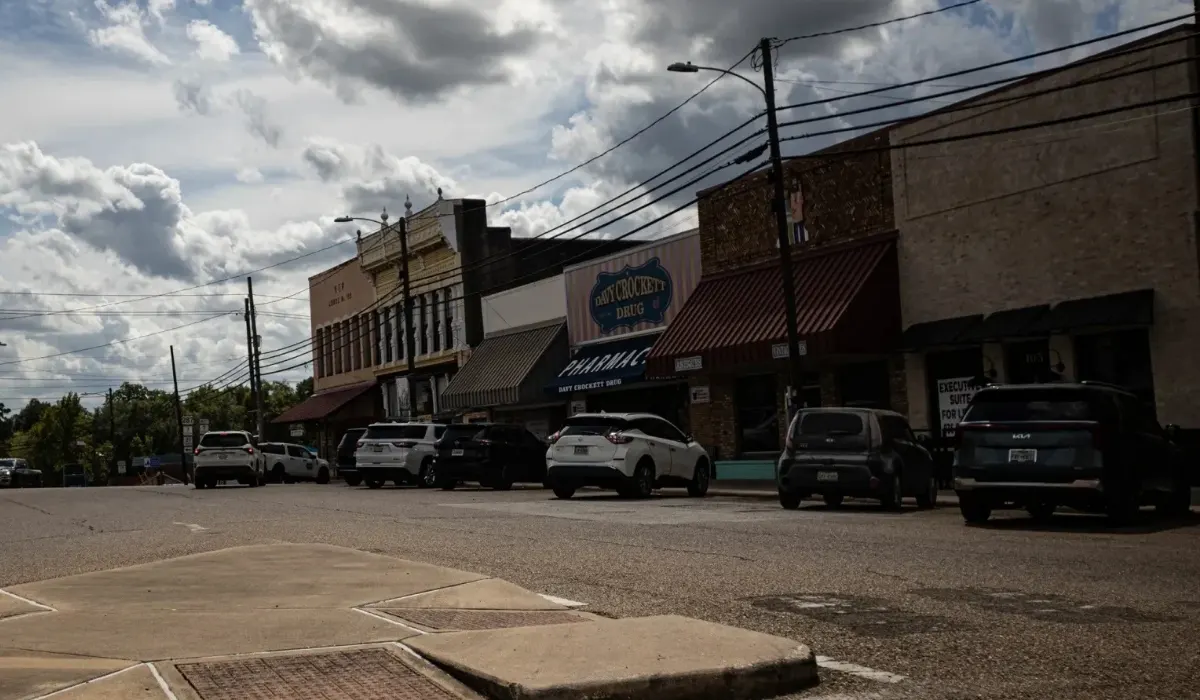
Texas (Texas 24 News) October 23, 2026 – A growing revolt among lifelong rural Republicans over the unbridled expansion of Big Tech infrastructure and AI data centres is threatening to fracture Texas’ historically solid conservative firewall ahead of the 3 November midterm election. Across small towns and agricultural counties traditionally reliant on heavy Republican majorities, voters are breaking party ranks to oppose massive industrial developments—such as Elon Musk’s $119 billion “Terafab” chip plant in Grimes County and sprawling server farms in Navarro County. This grassroots voter frustration has boosted Democratic nominees James Talarico and Gina Hinojosa to historic polling levels in rural districts, creating a high-stakes referendum on the state’s economic development policies.
- Why Are Rural Texas Voters Turning Against Big Tech and Data Centre Expansion?
- How Are Democratic Nominees James Talarico and Gina Hinojosa Polling in Rural Texas?
- How Is Governor Greg Abbott and the Republican Party Responding to Rural Frustrations?
- How Is Big Tech Development Impacting Down-Ballot Races in Texas’ 10th Congressional District?
- Background of the Particular Development
- How Will This Rural Voter Shift Affect Texas Energy Policy and Future Elections?
Why Are Rural Texas Voters Turning Against Big Tech and Data Centre Expansion?
As reported by Sewell Chan and Eleanor Klibanoff of The Texas Tribune, rural residents across central and eastern Texas are organizing against the environmental and social impacts caused by rapid industrial development.
In Navasota, located in Grimes County, 31-year-old lifelong Republican Joie Miller moved to her family’s 100-acre ranch to raise her daughter away from urban sprawl. However, construction commenced on Elon Musk’s “Terafab” semiconductor factory—a facility projected to span 5,000 acres—located just over a mile from her in-laws’ property.
Describing the immediate impact of continuous industrial construction, Joie Miller stated that heavy trucks rumbled past their ranch day and night while ash rained down on their property.
Investigating the local approval process led Joie Miller to question decades of one-party rule in Texas. As reported by Sewell Chan of The Texas Tribune, Joie Miller stated:
“You just look around and think, are things better or worse, and if they’re worse, who has been in charge? The Republican Party doesn’t seem to care about us right now. They do this every single time, where they say they’re going to fix a problem, despite having had decades to fix it, and I think a lot of us are sick of it.”
Miller confirmed she plans to vote Democratic for the first time in her life in the upcoming election.
In Corsicana, located in Navarro County, local residents gathered to present dossiers on the RIOT data centre and planned power facilities. As detailed by Eleanor Klibanoff of The Texas Tribune, residents documented persistent noise pollution, degraded air quality, rising electricity bills, and unaddressed safety concerns.
Addressing Democratic gubernatorial nominee Gina Hinojosa during a community roundtable, 70-year-old Michael Ellis, who lives less than a mile from a new data centre construction site, criticized state incentives offered to tech developers. As reported by Eleanor Klibanoff of The Texas Tribune, Michael Ellis stated:
“Greg Abbott has enticed them. He didn’t fix anything. Call yourself whatever you’re going to call yourself, Republican, Democrat, I don’t care. You need to oversee this industry.”
How Are Democratic Nominees James Talarico and Gina Hinojosa Polling in Rural Texas?
As reported by The Texas Tribune, Democratic nominees for statewide office are recording their highest polling numbers in rural Texas since the Obama administration, when statewide Democrats last surpassed 25 per cent of the rural vote.
In late-September survey data, Democratic U.S. Senate nominee James Talarico reached 42 per cent in a Fox News poll of rural Texas voters. Simultaneously, gubernatorial nominee Gina Hinojosa has polled between 28 per cent and 38 per cent across rural districts in public surveys conducted since late September.
Analyzing the political dynamics behind party-crossover voters, Ali Zaidi, a Democratic political consultant who managed rural outreach for Mike Collier’s 2018 and 2022 lieutenant governor campaigns, told The Texas Tribune:
“If Democrats break through in rural Texas, it will be because Republican leadership was caught flat-footed by a new issue. Because on the fundamentals — low taxation, business climate, conservative values — they’ve got those locked down and there’s nothing a Democrat can do to explain that away.”
Addressing audience members at The Texas Tribune Festival regarding her cross-party campaign strategy, Gina Hinojosa remarked:
“I’m not asking voters to trust Democrats. It’s hard enough to get people to trust me.”
Former Republican state legislator Byron Cook from Corsicana noted that rural frustration extends beyond data centres to include public school vouchers, the state’s THC ban, surveillance Flock cameras, and rapid population growth. As reported by The Texas Tribune, Byron Cook stated:
“This is the traditional backbone of the party, hard-working, family people. Elected officials need to show that they truly care about rural residents and don’t take them for granted, and right now, I don’t think rural Texas has been respected the way it should be.”
How Is Governor Greg Abbott and the Republican Party Responding to Rural Frustrations?
As reported by political correspondents for The Texas Tribune, Governor Greg Abbott has taken executive action to address community friction while actively campaigning across rural Texas.
After previously declaring that Texas would become the “epicenter of AI development,” Governor Abbott temporarily paused new data centre permits and recommended that the Texas Legislature establish statutory guardrails regarding water and power usage. This pause drew criticism from former President Donald Trump, who publicly warned that communities rejecting data centres would end up “backwards and poor.”
Defending the governor’s record, Eduardo Leal, spokesperson for the Abbott campaign, told The Texas Tribune that Governor Abbott “will always put rural Texans first,” while criticizing Hinojosa for “pretending to be something she’s not.”
Leal highlighted campaign advertisements emphasizing Hinojosa’s legislative voting record on social issues, stating:
“These policies are out of step with Texans, especially rural Texans.”
Echoing those concerns, Joni Clonts, chair of the Houston County Republican Party in East Texas, told The Texas Tribune that shared social values would maintain the Republican firewall. Commenting on the ideological gap, Joni Clonts stated:
“Democrats, their platform is pretty out there, and I think most of us don’t want somebody that has those values and plans to make any decisions for our state.”
How Is Big Tech Development Impacting Down-Ballot Races in Texas’ 10th Congressional District?
As reported by Ballotpedia and The Texas Tribune, the battle over tech development is defining down-ballot contests, notably in Texas’ 10th Congressional District, a 13-county area extending from Austin to near the Louisiana border.
Democratic nominee Caitlin Rourk, an Army officer and former deputy finance director for the Texas National Guard during Operation Lone Star, is challenging Republican nominee Chris Gober, a prominent conservative attorney who serves as Elon Musk’s lawyer and led Musk’s America PAC.
Rourk has focused her campaign on door-to-door canvassing, knocking on more than 20,000 doors to frame the election as a referendum on corporate influence. As reported by The Texas Tribune, Caitlin Rourk stated:
“There’s a lot of misconceptions and some well-earned conceptions about the Democratic Party in these areas. But with everything that’s going on, I’ve noticed a lot more willingness to at least have a conversation about this race.”
In Grimes County, Danette Miller, a lifelong Republican living near the Terafab site, confirmed she plans to vote for Rourk due to Gober’s ties to Musk. As reported by The Texas Tribune, Danette Miller stated:
“He’s Elon’s person, so I can’t vote him in. We’re never going to get the true story. We’re never going to get a fair shake. I just worry that midterms are going to pass and they’ll all start building up again. And then even if we do move, what’s to stop them from putting a data center next to us there?”
Background of the Particular Development
Rural Texas has historically served as an unbeatable electoral firewall for the Republican Party. Although rural residents comprise less than one-fifth of the statewide electorate, high turnout rates and 70-to-80 per cent conservative margins have routinely offset Democratic majorities in metropolitan centers like Houston, Dallas, Austin, and San Antonio. During the 2018 U.S. Senate election, Democrat Beto O’Rourke won a narrow majority of non-rural counties but lost statewide due to Senator Ted Cruz securing 75 per cent of the rural vote.
In recent years, Texas state leaders aggressively recruited mega-scale technology campuses, semiconductor fabricators, and AI server facilities through local tax abatements and streamlined regulatory approvals. Driven by cheap land and access to the ERCOT power grid, developments expanded rapidly into agricultural counties. However, since 2018, nine Texas counties previously classified as rural exceeded the 50,000-resident threshold due to rapid suburbanization and commercial construction. This unprecedented industrial footprint has strained local water tables, increased local electrical grid demands, and generated sustained noise and light pollution, sparking local resistance across historic agricultural communities.
How Will This Rural Voter Shift Affect Texas Energy Policy and Future Elections?
The political friction surrounding Big Tech expansion in rural Texas will impact upcoming legislative sessions and statewide political strategies:
For Rural Communities and Local Landowners
Regardless of final election outcomes on 3 November, the bipartisan pushback from rural voters will force the Texas Legislature to enact stricter statutory regulations on data centres and industrial technology campuses when it reconvenes. Landowners can expect proposed legislation mandating local public hearings, strict decibel noise limits, mandatory water-recycling requirements for cooling facilities, and reduced property tax abatement allowances for high-energy tech developments.
For Tech Corporations and Infrastructure Developers
Technology conglomerates and energy providers planning major capital investments in Texas will face heightened local opposition, increased land-acquisition costs, and lengthened permitting timelines. Developers will likely be forced to offer direct community benefit agreements, dedicated local infrastructure investments, and explicit environmental guarantees to secure municipal operating approvals.
For Statewide Electoral Coalitions
If Democratic candidates maintain 30 to 40 per cent support in rural counties through Election Day, Republican party strategists will be forced to reallocate significant campaign resources toward defending rural strongholds in future election cycles. Even modest shifts in rural voting margins will narrow statewide election outcomes, making Texas increasingly competitive in upcoming gubernatorial and presidential races.