Key Points
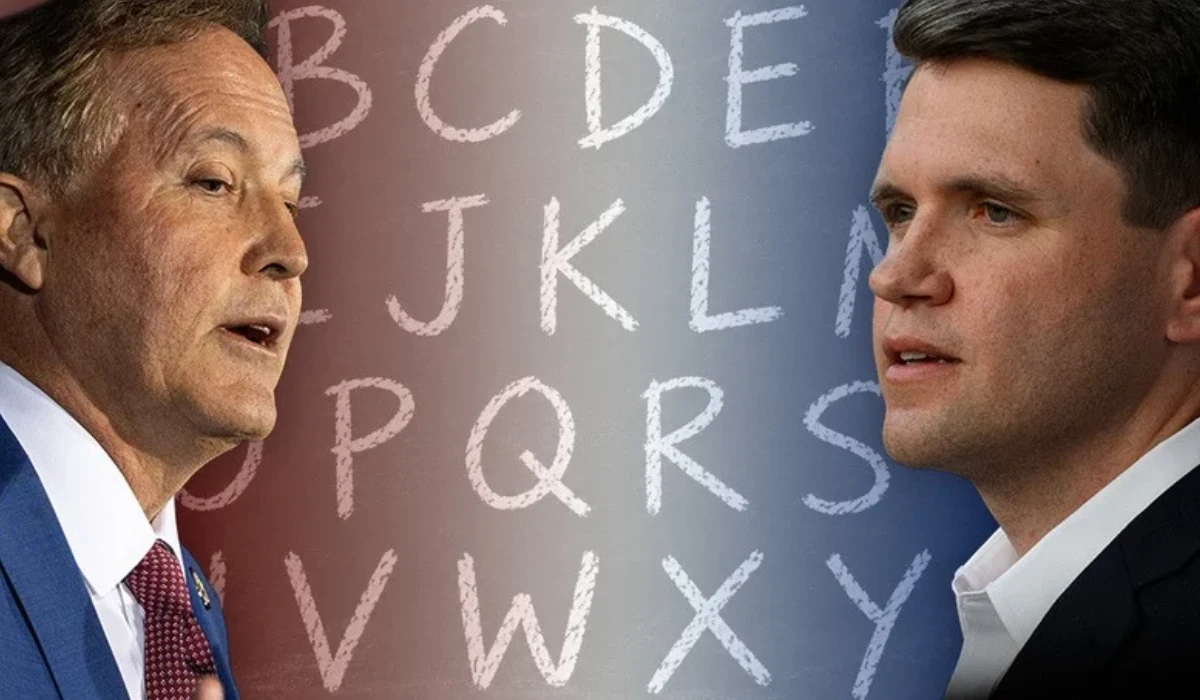
- A fresh Fox News poll reveals that Republican candidate Ken Paxton and Democratic candidate James Talarico are tied at 49 per cent each in the high-stakes Texas U.S. Senate election.
- The latest survey indicates a shift since September, when Talarico held a narrow lead with 51 per cent against Paxton’s steady 49 per cent.
- The survey interviewed a broader sample of 1,398 likely Texas voters between 15 October and 19 October, featuring a margin of error of plus or minus 2.5 percentage points.
- Demographically, Paxton gained ground amongst both male and female voters by one percentage point each, whereas Talarico’s support fell by one point among men and two points among women.
- Despite the statistical tie on the ballot, Talarico holds a notable advantage over Paxton in favorability metrics, scoring a 49 per cent favorable opinion compared to Paxton’s 41 per cent.
- In the concurrent gubernatorial contest, incumbent Republican Governor Greg Abbott maintains a five-point lead over Democratic opponent Gina Hinojosa, leading 52 per cent to 47 per cent.
- Cross-ticket voting dynamics reveal that 7 per cent of Talarico’s supporters intend to split their ballot to vote for Governor Abbott, whilst only 2 per cent of Paxton’s supporters plan to back Hinojosa.
- Disagreements persist between both senatorial candidates regarding the terms and venues for a potential head-to-head debate ahead of November.
Texas (Texas 24 News) October 22, 2026 – Republican Attorney General Ken Paxton and Democratic state Representative James Talarico are currently locked in a statistical dead heat in the race for the United States Senate seat in Texas.According to a newly published Fox News survey of 1,398 likely voters across the Lone Star State, both political figures have secured exactly 49 per cent of the prospective vote.The polling data underscores an increasingly tight contest as the campaign enters its final weeks, accompanied by ongoing public disagreements between the candidates regarding the arrangements for a potential televised debate.
- Key Points
- What Do the Demographic Metrics and Favorability Ratings Reveal About the Candidates?
- How Do the Educational Platforms of Paxton and Talarico Differ?
- How Does the Gubernatorial Race Impact Cross-Ticket Voting Trends?
- What is the Background of This Particular Development?
- How This Development Can Affect Texas Voters and Policy?
The latest numbers represent a minor downward shift for the Democratic challenger, James Talarico, who previously registered 51 per cent against Paxton’s unchanged 49 per cent in a previous survey. Conducted between 15 October and 19 October, the newly expanded sample carries a margin of error of plus or minus 2.5 percentage points, compared to the 881 likely voters surveyed in September with a 3 percentage point error margin. One per cent of surveyed participants indicated they remained undecided.
What Do the Demographic Metrics and Favorability Ratings Reveal About the Candidates?
A deeper evaluation of the Fox News data illustrates shifting demographic support across the electorate. Attorney General Paxton expanded his base by a single percentage point amongst both male and female respondents since the previous September poll. Conversely, Representative Talarico saw his support decrease by one percentage point amongst male voters and two percentage points amongst female voters over the same timeframe.
However, candidate favorability metrics continue to demonstrate a contrasting picture.As reported by Julieanna Jackson of FOX 7 Austin, Talarico retains a significant lead over his Republican opponent in general personal perception.Forty-nine per cent of surveyed Texas voters expressed a favorable view of Talarico, whereas Paxton achieved a 41 per cent favorability score among the electorate.
How Do the Educational Platforms of Paxton and Talarico Differ?
Education policy stands as one of the clearest substantive policy divisions defining the Texas U.S. Senate race. The two contenders have positioned themselves on starkly opposing sides across several key educational issues, including state-funded school vouchers, religious inclusion within public school systems, public university tuition costs, diversity programmes, and content regulations within school libraries.
Paxton has consistently championed conservative educational policies, advocating for parental choice mechanisms such as school voucher schemes and supporting measures that allow broader religious expression within state classrooms. Talarico, a former public school teacher, has consistently voiced opposition to private school vouchers, arguing they divert critical resources away from the public education infrastructure, while strongly calling for increased state funding for public education and the protection of inclusive library curricula.
How Does the Gubernatorial Race Impact Cross-Ticket Voting Trends?
In the simultaneous race for the Texas governor’s mansion, incumbent Republican Governor Greg Abbott holds a five-point advantage over his Democratic challenger, state Representative Gina Hinojosa.The Fox News poll found Governor Abbott securing 52 per cent of likely voters as he seeks an historic fourth term in office, whilst Hinojosa captured 47 per cent.
This gubernatorial disparity has influenced voter behaviour across party lines. Seven per cent of respondents who intend to vote for Democratic Senate candidate Talarico stated they plan to split their ticket to vote for the Republican Governor Abbott. By comparison, only 2 per cent of Paxton’s senatorial base indicated an intention to cast a vote for Democratic gubernatorial candidate Hinojosa. Straight-ticket voting, which previously allowed electors to select an entire party line with a single mark, was officially outlawed by the Texas Legislature in 2017.
What is the Background of This Particular Development?
The deadlocked poll reflects Texas’s evolving political landscape, which has historically been a stronghold for the Republican Party. Texas has not elected a Democrat to a statewide office since 1994, marking the longest losing streak for either major political party in any U.S. state. Republican Ken Paxton, who has served as the Attorney General of Texas since 2015, possesses strong name recognition and key endorsements from national figures, including President Donald Trump. However, Paxton’s political tenure has also been marked by high-profile legal battles, internal legislative impeachment proceedings, and ethical controversies, which have created mixed feelings among moderate voters within his own party.
On the other side, Democrat James Talarico, a state representative hailing from Round Rock, has positioned himself as a pragmatic reformer focused on public education, church-state separation, and middle-class economic stability. His campaign has drawn substantial financial contributions and donor interest, allowing him to stay competitive against an established statewide official. Talarico previously held a slight lead over Paxton in summer and early autumn polls.The narrowing gap indicated by the latest October Fox News survey aligns with historical voter consolidation patterns in Texas as election day approaches, where conservative turnout typically rises during final campaign stretches.
How This Development Can Affect Texas Voters and Policy?
As the Senate race settles into an absolute deadlock, the immediate impact will fall upon Texas voters, political strategists, and national campaign committees. With both candidates tied at 49 per cent, both campaign teams will likely intensify their ad spending, direct mailings, and get-out-the-vote (GOTV) operations across high-density suburban areas around Houston, Dallas-Fort Worth, and Austin.
For the average Texas voter, this tightening contest means an unprecedented barrage of campaign advertisements, political rallies, and voter mobilisation efforts in the final days of the election cycle.Moderate Republicans and independent voters—particularly suburban women and split-ticket voters backing Governor Abbott—will find themselves targeted as the decisive swing demographic.
Furthermore, if Talarico’s high favorability ratings translate into high Democratic turnouts, it could narrow the margins in down-ballot judicial and legislative contests across urban and suburban districts. Conversely, if Paxton successfully mobilises the conservative base and retains Abbott ticket-splitters, it could reinforce the Republican Party’s uninterrupted thirty-year hold on Texas statewide offices and impact the national balance of power in the U.S. Senate.