Key Points
- Faith in Public Service: Both Texas Attorney General Ken Paxton, a Republican, and Democratic state Representative James Talarico have made Christianity a cornerstone of their political identity and campaign messaging.
- Clash Over Public Education: Paxton advocates for weaving biblical instruction, the Ten Commandments, and daily prayer into public school classrooms, whereas Talarico, a former middle school English teacher, strongly opposes state involvement in teaching religious faith.
- Competitive Senate Context: Polls reflect a tight, high-stakes contest for the U.S. Senate seat in Texas, with recent CBS polling showing Talarico holding a slim two-percentage-point lead over Paxton.
- Controversy Surrounding Vouchers: The candidates differ sharply on school vouchers, with Paxton issuing legal opinions supporting private school choice and Talarico condemning vouchers as a threat to public education.
- Electoral Alignments: Political analysts observe that despite ethical questions surrounding Paxton’s record, strong partisan alignment and conservative base support remain central pillars of the race.
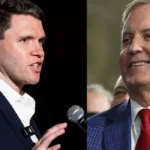
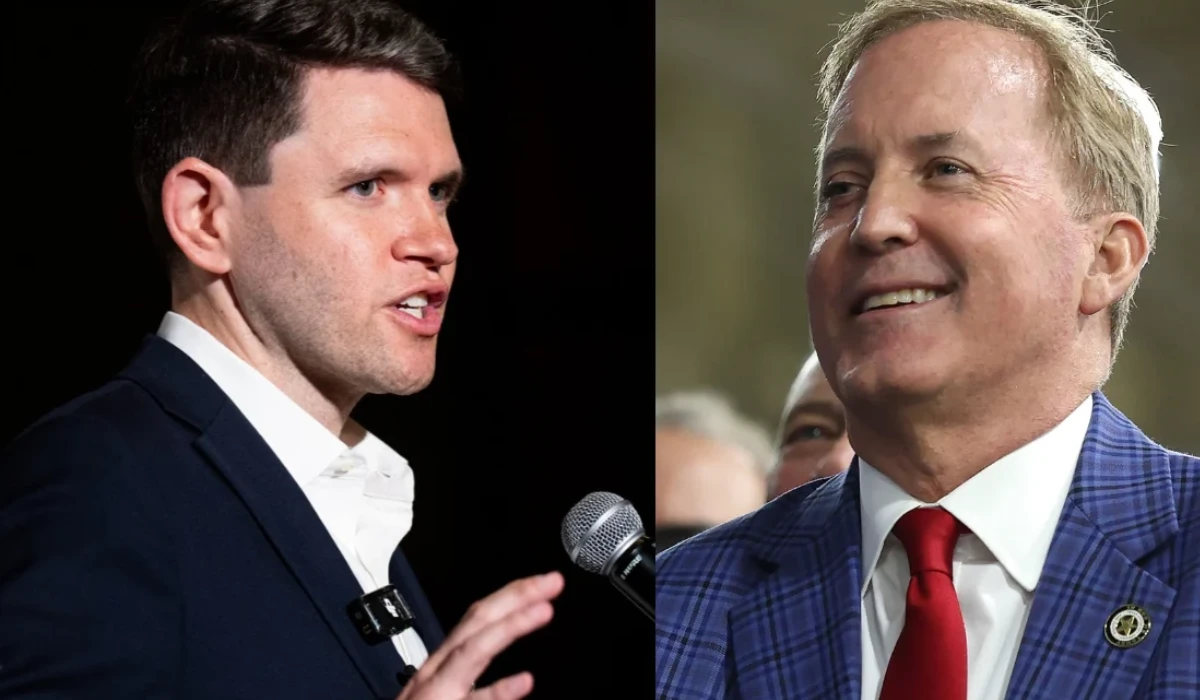
Texas (Texas 24 News) October 23, 2026 – Texas Attorney General Ken Paxton and Democratic state Representative James Talarico have placed Christian values at the centre of their respective campaigns for the U.S. Senate, yet hold opposing views on the role of religion in public education. While Paxton advocates integrating biblical texts and traditional prayer into public school curricula, Talarico argues that state involvement in religious instruction infringes on church-state boundaries. Polling indicates a close contest that could influence the broader balance of power in the U.S. Senate, highlighted by debates over classroom display laws and private school choice vouchers.
- How Do Ken Paxton and James Talarico Define the Relationship Between Religion and Governance?
- What Role Do School Vouchers and Classroom Policies Play in the Candidates’ Platforms?
- How Are Political Analysts and Voters Evaluating the Close Senate Race?
- Background of the Particular Development
- How Will This Senate Contest Impact Texas Voters, School Districts, and National Politics?
How Do Ken Paxton and James Talarico Define the Relationship Between Religion and Governance?
While both candidates ground their public service in Christian principles, their interpretations of religious doctrine lead to distinctly different legislative approaches. Republican Attorney General Ken Paxton frames his personal faith as the central guiding foundation of his executive actions and policy positions. In a recent interview with a Christian publication, Paxton stated: “My Christian faith is the foundation to my life and public service.”
Conversely, Democratic Representative James Talarico, who earned a graduate degree in theological studies, presents his religious conviction through a policy framework centered on community service and public welfare. Addressing a reporter during campaign events, Talarico stated: “I am trying to love my neighbor through public policy.”
Despite these shared expressions of faith, the candidates hold contrasting views regarding the boundaries separating religious instruction from public institutions. Paxton, aligning with Texas Governor Greg Abbott and state Republican leadership, supports introducing biblical references directly into public school environments. This includes displaying the Ten Commandments alongside standard vocabulary lessons and incorporating the reciting of the Lord’s Prayer within instructional schedules.
Talarico, drawing on his experience as a former middle school English teacher, actively criticises state-level efforts to blend religious doctrine with secular school curricula. During a PBS interview addressing a state-approved reading curriculum containing biblical narratives, Talarico stated: “I don’t want politicians and bureaucrats teaching my faith. I want pastors and Sunday School teachers to be teaching my faith.”
What Role Do School Vouchers and Classroom Policies Play in the Candidates’ Platforms?
The intersection of education and religious liberty has emerged as a central point of debate, particularly regarding private school choice and classroom displays. In 2023, Attorney General Paxton released an official legal opinion stating that private school voucher programs do not violate state or federal constitutional provisions.
Continuing his policy focus on school choice, Paxton stated that the state comptroller could exclude specific institutions from participating in the state’s newly established education savings account program if those schools hosted events affiliated with the Council on American-Islamic Relations—which state leadership designated as a terrorist organisation—or maintained connections to foreign entities. Following legal action by affected Islamic schools, the state subsequently permitted their inclusion in the program.
Representative Talarico opposes voucher mechanisms, characterising them as a “scam” designed to “dismantle public education.” Talarico introduced a legislative amendment proposing a statewide public referendum on private school choice. Although the amendment failed to pass, state lawmakers ultimately enacted the voucher legislation following a conference call in which President Donald Trump urged House Republicans to support the measure.
The candidates also hold differing views on legislation governing classroom materials. Texas state law mandates that public schools display 20-by-16-inch posters of the King James Version of the Ten Commandments in every classroom. Following legal challenges from opponents seeking review by the U.S. Supreme Court, Paxton initiated state investigations into nearly 30 school districts to ensure full compliance with the display mandate.
Furthermore, after legislation passed requiring school boards to vote on implementing daily prayer times, Paxton publicly recommended selecting the Lord’s Prayer from the Book of Matthew, issuing an official statement: “In Texas classrooms, we want the word of God opened, the 10 Commandments displayed, and prayers lifted up.”
Academic analysts have evaluated these developments through distinct analytical frameworks. Southern Methodist University religious studies professor Mark Chancey described Paxton’s press statements as a “place where all the themes of Christian nationalism come together,” adding: “There’s this very explicit articulation that public schools should be promoting Protestant Christianity.” Conversely, Professor Chancey noted that Talarico frequently denounces Christian nationalism as a radical movement, emphasizing instead that “public schools are for all citizens, regardless of their religious identities or views on religion.”
How Are Political Analysts and Voters Evaluating the Close Senate Race?
Recent polling highlights a competitive contest between the two nominees. A CBS poll indicated Talarico holding a two-percentage-point lead over Paxton, placing the result within traditional margins of error.
Political science experts point out that party alignment and national political dynamics remain major determinants in voter behavior. Leslie Finger, an assistant professor of political science at the University of North Texas, observed: “Party alignment is so strong.” She added that Paxton’s conservative base consists of “people who have voted for Donald Trump multiple times.”
However, Paxton’s legal history and personal background have drawn scrutiny from some traditional conservative voters. Paxton was indicted on securities fraud charges in 2015 regarding tech startup investment referrals, a case dismissed following a plea agreement. In 2023, the Texas House of Representatives voted to impeach Paxton on allegations of bribery, though he was subsequently acquitted by the state Senate—a legal outcome Paxton publicly described as an “act of God.”
Additionally, Paxton’s personal life has drawn public attention following divorce proceedings initiated by his wife on biblical grounds. Former Republican state Representative Glenn Rogers, who lost his primary seat after opposing voucher legislation, expressed skepticism regarding Paxton’s candidacy and classroom mandates, remarking: “I’m not going to tell you who I’m voting for, but I can tell you I’m not voting for Ken Paxton.” Rogers further questioned the educational impact of display mandates, asking: “Can you show me one single child that has been brought to Christ because the 10 Commandments were posted on the wall?”
Addressing the policy contrasts defining the campaign, Parker Hevron, an associate political science professor at Texas Woman’s University, stated that private school choice “provides a really sharp contrast between the two candidates.”
Background of the Particular Development
The debate over religious expression in Texas public schools takes place against a backdrop of broader legal and legislative battles across the United States. Over the past decade, conservative state lawmakers in Texas have introduced several measures aimed at strengthening religious expression within public institutions, including legislation authorizing volunteer school chaplains, protecting voluntary prayer, and mandating display items such as “In God We Trust” signs and the Ten Commandments.
Concurrently, the national debate surrounding educational choice has intensified. States across the country have enacted or expanded education savings accounts and voucher programs, allowing public funds to support tuition at private and religious schools. These policy developments have drawn both support from advocates of parental rights and legal challenges from civil liberties organizations, leading to active litigation regarding the separation of church and state under the First Amendment of the U.S. Constitution.
How Will This Senate Contest Impact Texas Voters, School Districts, and National Politics?
The outcome of the Texas U.S. Senate election is poised to produce meaningful effects across multiple sectors:
For Public School Administrators and Local School Boards
Texas school districts face ongoing administrative and legal complexities regardless of the election outcome. If state-level policies favoring religious displays and curricula remain supported by federal and state legal rulings, local school boards will continue to manage compliance requirements alongside potential civil liberties litigation. Conversely, a strong showing or victory by candidates opposing state-mandated religious materials could shift local policy discussions regarding classroom autonomy and church-state separation.
For Faith Communities and Religious Organizations
The campaign’s focus on Christianity highlights a broader debate within religious communities regarding the relationship between faith and government policy. Conservative evangelical groups advocating for a greater presence of Christian values in public spaces may see their legislative priorities further advanced if alignment with state executive offices continues. At the same time, mainline Protestant, non-Christian, and secular organizations will likely step up legal and community advocacy to preserve pluralism and neutrality in public institutions.
For National Party Dynamics and Senate Control
Given the tight margins in the U.S. Senate, the Texas race remains a focal point for national party strategists. A competitive contest in a historically conservative state demonstrates shifting suburban demographics and evolving voter priorities surrounding education and government ethics. The election results will likely influence future campaign strategies, party resource allocation, and legislative priorities concerning education policy nationwide.