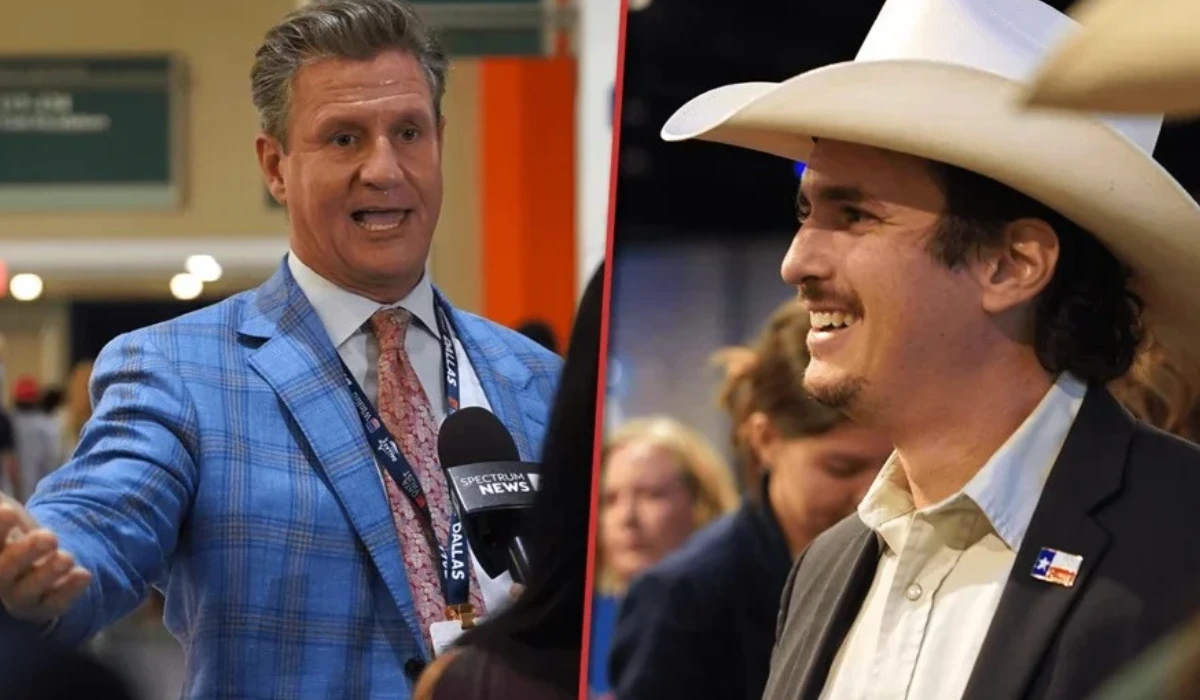
Key Points
- Republican nominee Nate Sheets leads Democratic nominee Clayton Tucker 46 per cent to 40 per cent in an October 19 poll conducted by the University of Houston’s Hobby School of Public Affairs.
- Agriculture contributes 9.1 per cent, or $186.1 billion, to the state’s overall gross domestic product (GDP) as of Texas A&M AgriLife Extension reporting.
- Finance filings from 1 July to 24 September show Sheets raised approximately $587,000 and spent $454,000, while Tucker raised roughly $260,000, spent $143,000, and retained $276,000 in cash on hand.
- Both candidates outlined contrasting strategies to address the biosecurity threat of the New World screwworm (NWS), with Sheets emphasizing sterile fly production and USDA coordination, and Tucker calling for the return of the Screwworm Adult Suppression System (SWASS).
- On internal agency operations, Sheets promised a full audit of the Texas Department of Agriculture (TDA) to remove bureaucratic inefficiency, while Tucker pledged to direct agency resources toward supporting family farms and conducting agricultural impact studies on data center developments.
- Both candidates highlighted meaningful endorsements, with Sheets citing key state legislative committee chairs and major agricultural associations, while Tucker noted support from the Texas Farmers Union and major labor organizations.
- Early voting across Texas commenced in late October, leading up to Election Day on 3 November 2026.
Inverted Pyramid Structure
- Key Points
- Why Do the Candidates Believe the Texas Agriculture Commissioner Office Is Vital?
- What Motivated Nate Sheets and Clayton Tucker to Run for Agriculture Commissioner?
- What Operational Changes Would the Candidates Implement at the TDA?
- How Do the Candidates Plan to Address the New World Screwworm Threat?
- How Would the Candidates Help Farmers Retain a Greater Share of the Food Dollar?
- Which Endorsements Are Most Meaningful to Each Campaign?
- How Do the Candidates Propose Addressing the Impact of Data Centers on Agriculture?
- What Strategies Are Proposed to Manage Texas Water Scarcity?
- What Final Statements Did the Candidates Offer to Texas Voters?
- What is the Background of This Particular Development?
- How This Development Will Affect Texas Farmers, Ranchers, and Consumers?
Texas (Texas 24 News) October 23, 2026 – Republican candidate Nate Sheets and Democratic challenger Clayton Tucker have presented their competing visions for the Texas Department of Agriculture as early voting gets underway across the state ahead of the 3 November election. In a recent public opinion survey released on 19 October by the University of Houston’s Hobby School of Public Affairs, Sheets holds a lead over Tucker, polling at 46 per cent to 40 per cent. The race for Agriculture Commissioner carries significant weight for the state’s economy, where agricultural activities generate $186.1 billion annually, accounting for 9.1 per cent of Texas’ total gross domestic product.
Why Do the Candidates Believe the Texas Agriculture Commissioner Office Is Vital?
Both candidates emphasized that the Texas Department of Agriculture plays a central role in everyday life across the state, extending beyond rural communities into urban centers.
Explaining his view on the importance of the agency, Republican candidate Nate Sheets stated: “The Texas Agriculture Commissioner is our state’s chief food officer, and I believe if you eat food, you should care about this office because its work affects your family and your wallet every day by playing an important role in supporting our farmers and ranchers, overseeing school nutrition programs, promoting Texas agricultural products, protecting consumers, and strengthening rural communities. The commissioner has a responsibility to protect the people who produce our food, ensure Texans can trust the food on their tables, and make sure the department works efficiently and effectively for the taxpayers it serves.”
Democratic candidate Clayton Tucker highlighted the broader economic impact on Texas households, stating: “Every Texan depends on agriculture, whether they live on a ranch or in the middle of Houston. The agriculture commissioner oversees programs that affect the food on our tables, the meals our kids eat at school, and the health of our rural communities. When farmers struggle, grocery prices rise, and families pay the price. The office should be fighting to keep our food affordable, our farms profitable, and our water safe. These are things that affect every Texan, regardless of where they live or how they vote.”
What Motivated Nate Sheets and Clayton Tucker to Run for Agriculture Commissioner?
The candidates cited personal backgrounds in agriculture and contrasting concerns regarding the state’s farming ecosystem as their core reasons for entering the statewide race.
Describing his decision to run after defeating incumbent Commissioner Sid Miller in the Republican primary, Nate Sheets stated: “Texas is facing twin crises that are deeply connected. First, Texas agriculture is losing roughly 68 farms a week in Texas. Farmers and ranchers are keeping less, and threats like New World screwworm (NWS) and massive bee losses are putting more pressure on the people who feed us. We also have a health crisis with chronic disease skyrocketing while health care costs are consuming more taxpayer dollars. I’ve spent much of my life in agriculture and the food business and don’t believe we must accept either trajectory. I’m passionate about strengthening the producers and improving the food on our families’ tables.”
Referencing his background on his family’s property in Lampasas, Clayton Tucker stated: “I’ve been working on my family’s ranch in Lampasas since I was old enough to hear boots. I’ve baled hay, fixed fences, and raised livestock. I know how much work goes into farming and how little of the grocery dollar actually makes it back to the farmer. Meanwhile, the corporate middlemen keep getting richer. I’ve spent years fighting for working Texans, and I’m tired of watching the ‘Greedy Few’ rig the system against us. I’m running because I want the next generation to have a fighting chance at making a living in agriculture.”
What Operational Changes Would the Candidates Implement at the TDA?
When asked about reforming the operations of the Texas Department of Agriculture, both contenders outlined distinct administrative priorities.
Criticizing past management practices, Nate Sheets stated: “For the last decade, the TDA has been run with a culture of favoritism and self-interest. First, I will audit the agency, examining how taxpayer dollars are spent, decisions are made, and programs are delivering results. Texans deserve transparency and accountability. Second, I will end preferential treatment and ensure the department operates fairly, efficiently, and with integrity. The TDA should serve all Texas farmers, ranchers, and agricultural businesses, not those with the right connections. Third, I will work to eliminate unnecessary regulations, burdensome fees, and bureaucratic red tape that make farming and ranching in Texas more expensive.”
Proposing a reorientation toward consumer protection and small producers, Clayton Tucker stated: “First, I’d put more resources into helping family farms stay in business, including expanding access to local markets and reducing unnecessary red tape. Second, I’d strengthen food safety and consumer protections so corporations can’t get away with selling Texans harmful products. Third, I’d make the department more proactive about protecting farmland and water. That includes agricultural impact studies for developments that could threaten our agricultural communities. I want a department that spends its time helping farmers and protecting Texans instead of catering to corporate interests.”
How Do the Candidates Plan to Address the New World Screwworm Threat?
The threat of the New World screwworm (NWS) remains a prominent biosecurity concern for livestock producers across Texas.
Detailing his containment strategy, Nate Sheets stated: “NWS is a serious biosecurity threat to our livestock industry and the livelihoods of farmers and ranchers. My focus would be on prevention, preparedness, and rapid response, working closely with the U.S. Department of Agriculture (USDA), the Texas Animal Health Commission, state lawmakers, and livestock producers to strengthen surveillance, support border protection efforts, and ensure a coordinated response plan. We should support proven solutions, including sterile fly production and deployment, while making sure ranchers have resources to report potential cases quickly. Protecting Texas agriculture requires cooperation between state and federal officials and a commitment to putting the needs of our farmers and ranchers first.”
Advocating for immediate technological deployment, Clayton Tucker stated: “We’ve beaten the screwworm before. We know how to do it again, but we’re wasting precious time. Sterile flies work, but it’ll take years to produce enough of them. We need to bring back the Screwworm Adult Suppression System, or SWASS, which helped fight past outbreaks. I’ll push USDA to use every proven tool available while minimizing risks to livestock and wildlife. Once we get this under control, I want sterile fly facilities kept operational, even if they’re just on standby. We shouldn’t have to start from scratch every time this pest comes back.”
How Would the Candidates Help Farmers Retain a Greater Share of the Food Dollar?
Addressing supply chain friction and profitability, the candidates presented divergent economic approaches.
Nate Sheets outlined plans to leverage institutional purchasing and direct marketing, stating: “I will use every lever at my disposal to ensure we’re buying from Texas farmers, ranchers, and food businesses whenever possible, especially through our schools and other institutional food programs. This creates dependable buyers for Texas producers, allowing them to scale their operations, grow their businesses, and strengthen rural Texas. By connecting Texas producers directly with Texas consumers, we can drive down costs, increase access to locally grown, whole foods, and keep more of our dollars right here in Texas. That’s a win for Texas families and Texas agriculture.”
Clayton Tucker focused on market concentration and regulatory oversight, stating: “Farmers are getting squeezed on one end, and families are getting squeezed on the other. The corporate middlemen are making a killing. Just a handful of companies control much of our food supply, giving them enormous power over what farmers get paid and what families pay at checkout. I’ll work with lawmakers and federal regulators to fight these monopolies, strengthen local food supply chains, and stop corporations from using AI surveillance pricing to squeeze even more money out of shoppers. We need a food system where farmers can earn a living and families can afford to eat.”
Which Endorsements Are Most Meaningful to Each Campaign?
Campaign finance filings reveal distinct backing networks for both candidates. Sheets raised approximately $587,000 between July 1 and September 24, receiving substantial contributions from business leaders such as Drayton McLane ($50,000) and donor Alex Fairly ($58,000 in-kind). Tucker raised $260,000 over the same period, retaining $276,000 on hand while receiving $5,000 contributions from the Agave Democratic Infrastructure Fund and the Jane Fonda Climate PAC.
Highlighting his political and agricultural backing, Nate Sheets stated: “The early endorsements of Texas Senate Agriculture Committee Chairman Charles Perry (R-Lubbock) and Senate Natural Resources Committee Chairman Kevin Sparks (R-Midland) gave our campaign tremendous momentum. I’m also honored by the support of Texas Farm Bureau, Texas & Southwestern Cattle Raisers Association, Texas Cattle Feeders Association, and the National Cutting Horse Association, which are on the front lines of Texas agriculture. I’m equally grateful for the support of the Make America Healthy Again (MAHA) movement, which shares my passion for improving our food supply and the health of Texas families. The support from the agricultural community and healthy food movement reflects the two priorities that brought me into this race.”
Emphasizing labor and agricultural union backing, Clayton Tucker stated: “The Texas Farmers Union endorsement means a lot to me. I’m the organization’s secretary, and I’ve spent years working alongside farmers who are trying to keep their operations alive while corporate monopolies squeeze them from every direction. I’m also proud of the support we’ve received from the Texas AFL-CIO and Texas AFT. These are organizations made up of working people who understand what it’s like to fight for a fair deal. Having their support tells me we’re building the kind of movement Texas needs.”
How Do the Candidates Propose Addressing the Impact of Data Centers on Agriculture?
The rapid expansion of data centers across rural Texas has raised questions regarding land usage, grid demand, and water consumption.
Acknowledging the economic balance required, Nate Sheets stated: “The TDA does not regulate data centers, but the commissioner can advocate for agricultural producers and work with lawmakers to address their concerns. Data centers can bring investment and jobs to communities but also require substantial electricity, water, and land. Those demands can add pressure on farmers and ranchers. We have to improve the economics of agriculture so they don’t feel they have to sell their land to data centers as a financial lifeline. Key issues are protecting property rights, understanding the impact on local water and energy resources, and ensuring that agriculture is not unfairly burdened by new development.”
Calling for mandatory impact assessments, Clayton Tucker stated: “Data centers, many of which really should be called mass surveillance centers, directly threaten our water and land. As Texas agriculture commissioner, I will demand agriculture impact studies before more data centers come for your land, your water, and your tax dollars. The study will give local residents a chance to put the brakes on uncontrolled, irresponsible data center development. It gives time to go behind the flimflam technospeak being sold to state legislators in Austin. It provides real information on the impact on a community, including jobs, water usage, pollution, electric rates, and property values of adjacent land.”
What Strategies Are Proposed to Manage Texas Water Scarcity?
With water availability posing an ongoing challenge to Texas agricultural productivity, both candidates addressed inter-agency coordination.
Outlining his legislative approach, Nate Sheets stated: “Water is one of the biggest challenges facing Texas agriculture, and a thriving agricultural economy requires a dependable water supply. As our state continues to grow, we have to focus on both increasing supply and improving conservation while making sure our farmers and ranchers aren’t left behind. Private property rights and responsible stewardship must remain central to these conversations. As agriculture commissioner, my focus would be on working with state lawmakers and other agencies, cutting through bureaucracy, and ensuring Texas farmers and ranchers have a seat at the table when decisions about our state’s water future are made.”
Leveraging the commissioner’s position on water boards, Clayton Tucker stated: “The Texas agriculture commissioner serves as an advisory member of the Texas Water Development Board and all local water development boards. My team and I will be asking the hard questions and will not serve as yet another rubber stamp for the tech barons. We will ensure that control of our water resources is decided locally, and that these decisions, especially when it comes to AI data centers and other industrial development, are made with public input and not hidden behind non-disclosure agreements.”
What Final Statements Did the Candidates Offer to Texas Voters?
In closing statements, both candidates reflected on their personal experience and long-term goals for the future of Texas agriculture.
Nate Sheets stated: “One of my priorities is ensuring the next generation of Texans sees a future worth staying in agriculture. Too many family farms and ranches are struggling to remain profitable. Once we lose that land and those operations, it’s difficult to get them back. I want to bring my experience building Nature Nate’s from a single beehive into the #1 branded honey company in America to help Texas farmers, ranchers, and agricultural businesses grow and compete. That includes revitalizing GO TEXAN with a stronger direct-to-consumer focus, opening new markets, and helping producers sell more products and keep more of the food dollar.”
Clayton Tucker concluded: “I want young Texans to be able to do what my family has done for generations: work the land and make a living from it. Right now, that’s getting harder every year. Between rising costs, corporate monopolies, and developers coming after our farmland and water, a lot of families are wondering how much longer they can hold on. I’ve worked on my family’s ranch for the past 10 years, and I know those struggles personally. We need to start putting the people who grow our food ahead of the corporations trying to control it.”
What is the Background of This Particular Development?
The race for Texas Agriculture Commissioner takes place against a backdrop of administrative transition and economic pressure across the state’s rural counties. Incumbent Republican Commissioner Sid Miller, who held the post for three terms, was defeated by Nate Sheets in the Republican primary election in March.Sheets’ primary victory was bolstered by endorsements from prominent state leaders, including Governor Greg Abbott, following public debates regarding agency management and policy priorities. Democratic nominee Clayton Tucker ran unopposed in his party’s primary.
The Texas Department of Agriculture oversees a wide array of state responsibilities beyond farm and ranch assistance. The agency manages school lunch programs, consumer protection initiatives such as fuel pump and commercial scale calibration, pest management oversight, and state branding programs like GO TEXAN. In recent years, Texas agricultural producers have faced compound challenges, including severe drought conditions across West and Central Texas, rising operational costs for diesel and fertilizer, volatile commodity markets, and land conversion pressures caused by rapid residential and industrial growth.
How This Development Will Affect Texas Farmers, Ranchers, and Consumers?
The outcome of the election between Nate Sheets and Clayton Tucker will directly shape agricultural policy, regulatory enforcement, and food supply initiatives across Texas:
- Texas Farmers and Agricultural Producers: If Nate Sheets is elected, producers can expect an administrative emphasis on cutting agency red tape, auditing existing TDA spending, and expanding commercial sales via an upgraded GO TEXAN branding model. If Clayton Tucker is elected, farmers will likely see increased state pushback against corporate agricultural integration, alongside new requirements for agricultural impact studies prior to industrial land developments.
- Rural Landowners and Water Conservation Districts: Under either administration, water rights and land preservation will remain critical friction points. A Sheets administration will emphasize private property protections within state water discussions, whereas a Tucker administration will utilize advisory roles on the Texas Water Development Board to aggressively scrutinize industrial water allocation for tech infrastructure and data centers.
- Texas Consumers and School Nutrition Programs: State purchasing policies implemented by the next commissioner will impact institutional food sourcing. Increased efforts to direct state institutional contracts toward local growers aim to support regional farm income while attempting to stabilize consumer food pricing across Texas public schools and markets.