- Texas lawmakers have introduced competing legislation for the upcoming legislative session to sharply restrict or outright ban government use of automated license plate readers (ALPRs), including cameras operated by Flock Safety.
- State Representative John Bucy III (D-Austin) filed House Bill 331 to prohibit Texas government agencies from using automatic license plate readers altogether, whereas State Representative Brian Harrison (R-Midlothian) filed House Bill 847 to require a judicial warrant and restrict camera usage exclusively to violent crime investigations.
- The legislative push follows Governor Greg Abbott’s directive halting state agencies from spending state funds to purchase or operate the cameras—a decision that affected nearly half of the Dallas Police Department’s network of over 600 Flock devices.
- While Dallas police credited Flock cameras with helping solve more than a dozen murder cases this year (roughly 18% of all homicides), audit logs obtained by CBS News Texas revealed thousands of vague search reasons—including the single letter “I” entered nearly 30,000 times between 2023 and 2025—and documented criminal abuse, including former Lufkin police officer Zachary Klein pleading guilty to 100 felony counts after conducting over 25,000 improper searches.
- Local municipalities such as Wylie declined to renew their Flock contracts this autumn over uncontrolled external data-sharing concerns, though private installations operated by homeowners associations, apartment complexes, and retailers remain outside municipal bans.
Texas (Texas 24 News) November 12, 2026 – Bipartisan lawmakers in Texas have filed major legislative proposals aimed at banning or strictly regulating automated license plate readers (ALPRs) manufactured by Flock Safety and other vendors. Filed ahead of the legislative session by Austin Democrat John Bucy III (HB 331) and Midlothian Republican Brian Harrison (HB 847), the bills follow Governor Greg Abbott’s halt on state funding for the surveillance devices. Although law enforcement agencies credit the nationwide network of roughly 120,000 cameras with solving violent crimes, including 18% of Dallas homicides this year, audit reviews, municipal contract cancellations in cities like Wylie, and high-profile criminal misuse cases have intensified scrutiny over warrantless vehicle tracking and external data sharing.
- What Are the Differences Between the Proposed Texas ALPR Bills and Current Policy?
- What Safeguards and Audit Issues Have Emerged Around Flock Safety Cameras?
- Background of the Particular Development After the News
- How This Development Can Affect Texas Motorists, Law Enforcement Agencies, and Surveillance Vendors
As reported by CBS News Texas, state legislators in Austin have moved to curtail public-sector deployment of automated license plate recognition systems following mounting public concern regarding vehicle location tracking, inter-agency data sharing, and documented instances of personal misuse by law enforcement personnel. State Representative John Bucy III, an Austin Democrat, filed House Bill 331, which seeks a complete prohibition preventing Texas government agencies from utilising automatic license plate readers. Concurrently, State Representative Brian Harrison, a Midlothian Republican, introduced House Bill 847, which would permit continued police operation of the devices solely under strict statutory guardrails—requiring officers to secure a judicial warrant beforehand and limiting searches exclusively to violent crime investigations.
As reported by CBS News Texas, Harrison—who previously authored legislation to restrict Flock cameras during an earlier legislative session—argued that Republican backing of the surveillance technology alienated voters during the November elections. Explaining his political assessment, Brian Harrison stated that “this was a contributing factor to Republicans being defeated because the Republican leadership of the state of Texas had been supporting Flock cameras and forcing Texas taxpayers to fund their own warrantless surveillance for many years”. Despite their differing legislative mechanisms, both Harrison and Bucy expressed optimism that lawmakers will enact meaningful statutory limits during the upcoming session. Highlighting cross-party momentum, John Bucy III stated that “I think this is an issue that goes beyond Republicans and Democrats. I think it was all over the campaign trail from both sides of the aisle”.
The legislative initiatives arrive only months after Governor Greg Abbott ordered state agencies to cease using state funds to acquire or operate Flock cameras. In Dallas, that executive directive directly impacted nearly half of the Dallas Police Department’s network of more than 600 Flock cameras. Law enforcement officials maintain that the technology is instrumental in recovering stolen automobiles, locating missing persons, and solving violent offences. However, civil liberties advocates point out that Flock Safety’s network—comprising approximately 120,000 cameras nationwide—generates a searchable archive of vehicle movements that routinely logs law-abiding motorists who are not suspected of any criminal activity.
To evaluate the operational reach of the platform, CBS News Texas provided the Dallas Police Department with the licence plate number of one of its own news station vehicles. Subsequent database checks revealed that Flock cameras had captured 87 separate images of the vehicle across North Texas within a single month. Unlike a continuous GPS tracker, each fixed camera logs a time-stamped photograph whenever a vehicle passes, recording the licence plate, vehicle make and type, timestamp, location, and distinguishing visual traits such as bumper stickers, roof racks, or missing hubcaps. While an isolated photograph provides limited context, aggregating multiple time-stamped sightings onto a map reconstructs a vehicle’s travel patterns.
Law enforcement officials point to specific felony prosecutions to demonstrate the investigative value of reconstructing vehicle trails. During the investigation into the fatal shooting of 20-year-old Aniya Edwards in Dallas, detectives knew Edwards had visited a local music studio prior to her death. Querying nearby Flock cameras, investigators located an image of her Hyundai alongside a black Dodge. Searching additional cameras along the route, detectives uncovered four separate snapshots spanning more than 20 miles—capturing both vehicles seconds apart travelling in the same direction toward the location where an attempted robbery and fatal shooting occurred. Combined with corroborating evidence, those camera records assisted police in identifying and arresting a suspect on a capital murder charge. According to Dallas police figures, Flock cameras have assisted detectives in solving more than a dozen homicide investigations this year alone, accounting for approximately 18% of all murder cases in the city.
Despite documented successes in homicide inquiries, public records reviews indicate that officer search justifications are frequently opaque. CBS News Texas obtained millions of ALPR audit log entries from police departments across Texas detailing when officers queried the network and the stated investigative purpose. While numerous searches cited specific crimes such as murder or aggravated robbery, Dallas audit logs covering 2023 through 2025 contained thousands of vague entries labelled “info,” “LOC,” and “none”—with the single letter “I” appearing nearly 30,000 times over that three-year span. Addressing the incomplete records, Dallas Police Assistant Chief William Griffith stated that “my guess is they are legitimate reasons. They just didn’t give a better explanation in there.” Griffith added that supervisors audit search activity weekly and that internal reviews had identified no officers misusing the platform. In December 2025, Flock Safety introduced a mandatory drop-down menu modelled on Federal Bureau of Investigation (FBI) crime reporting categories to enforce clearer audit documentation.
Documented cases of criminal abuse in Texas have underscored lawmakers’ concerns regarding system oversight. Former Lufkin police officer Zachary Klein pleaded guilty to 100 felony counts of misuse of official information and received a five-year prison sentence after a Texas Rangers investigation established that he had conducted more than 25,000 improper Flock searches. According to the Angelina County District Attorney’s Office, approximately 18,000 of those queries targeted licence plates linked to three individuals, including Klein’s former girlfriend and members of her family. In response to abuse allegations, Flock Safety implemented platform modifications including standardised search categories, shortened default data-retention recommendations, and automated software alerts designed to flag anomalous query patterns. During an August 2026 interview with CBS News regarding officers using the network to track women for personal reasons, Flock Chief Executive Officer Garrett Langley stated that “I don’t think that Flock created police abuse.” When pressed to address the impact on targeted women, Langley added, “It’s horrible, and I apologize.”
Concerns over external access to local camera feeds have also prompted municipal governments to sever ties with the vendor. In Wylie, a city roughly 20 miles northeast of Dallas that operated six Flock cameras, audit records obtained by CBS News Texas revealed that outside law enforcement agencies nationwide had executed thousands of searches potentially encompassing Wylie camera data—citing reasons ranging from curfew or loitering violations to illegal dumping and traffic analysis. Because audit logs neither confirmed whether a Wylie camera returned a match nor provided sufficient detail to verify investigative justification, the Wylie City Council voted this autumn not to renew the contract it originally approved in 2024. Explaining the council’s decision, Wylie Mayor Matthew Porter told CBS News Texas that “we can’t control another department on how they access data on our citizens, and so that’s a concern for us”.
However, municipal cancellations and state agency restrictions face a structural limitation: local governments are not Flock Safety’s sole clientele. Originally founded to serve homeowners associations before expanding into municipal policing and commercial retail, Flock operates thousands of privately owned cameras in residential subdivisions, apartment complexes, and retail car parks. Because private owners retain discretion over whether to share their camera feeds with police departments, vehicles travelling through cities like Wylie may continue to be logged in law enforcement searches even after every municipal camera is removed.
What Are the Differences Between the Proposed Texas ALPR Bills and Current Policy?
Legislative proposals and executive actions in Texas present distinct regulatory approaches to automated license plate readers:
| Measure / Sponsor | Core Mechanism | Scope & Key Provisions |
| House Bill 331 (Rep. John Bucy III, D-Austin) | Complete public-sector ban | Prohibits all Texas government agencies from purchasing or operating automated license plate readers. |
| House Bill 847 (Rep. Brian Harrison, R-Midlothian) | Warrant requirement & crime restriction | Allows police ALPR usage only after obtaining a warrant and restricts searches strictly to violent crime investigations. |
| Governor Greg Abbott Directive | State funding prohibition | Bars state agencies from spending state funds to buy or operate Flock cameras; affected nearly half of Dallas PD’s 600+ network. |
| Wylie Municipal Decision (Mayor Matthew Porter) | Local contract non-renewal | Ended city operation of six Flock cameras over inability to control external agency searches of local residents. |
What Safeguards and Audit Issues Have Emerged Around Flock Safety Cameras?
Investigations into police department records, criminal prosecutions, and vendor updates highlight both operational vulnerabilities and recent technical adjustments:
- Vague Audit Log Entries: Public records from Dallas (2023–2025) documented nearly 30,000 searches logged solely with the letter “I,” alongside entries such as “info,” “LOC,” and “none,” prompting Flock to introduce standardised FBI-style drop-down categories in December 2025.
- Criminal Insider Abuse: Former Lufkin officer Zachary Klein was sentenced to five years in prison after pleading guilty to 100 felony counts for executing over 25,000 unauthorised searches, including roughly 18,000 queries targeting his ex-girlfriend and her relatives.
- Cross-Jurisdictional Data Sharing: Audit records in Wylie showed thousands of queries from outside agencies nationwide for minor infractions such as loitering or illegal dumping, raising municipal concerns over unmonitored external access.
- Private Network Loophole: Cameras operated by homeowners associations, apartment complexes, and commercial retailers can still feed vehicle data to police even if municipal or state cameras are dismantled.
Background of the Particular Development After the News
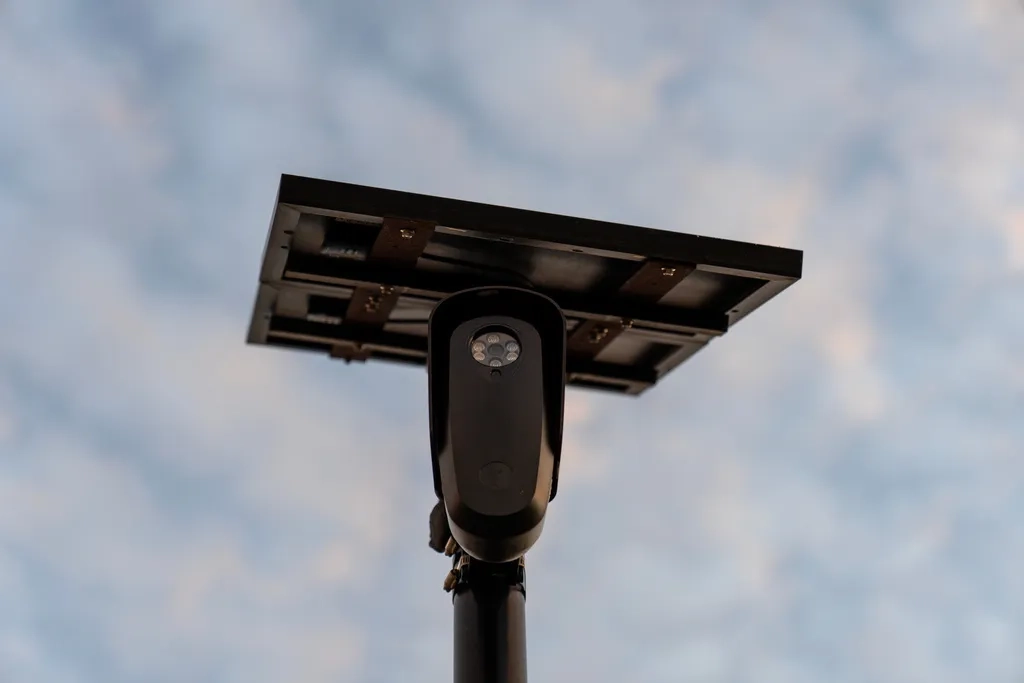
Automated license plate readers have expanded rapidly across American policing over the past decade, evolving from specialised patrol-car scanners into interconnected, cloud-based networks capable of tracking vehicle movements across municipal and state boundaries. Founded in 2017 to market solar-powered, motion-activated cameras to residential neighbourhoods, Flock Safety scaled rapidly into law enforcement and commercial retail, building a nationwide network of roughly 120,000 cameras.
In Texas, rapid deployment was accelerated by state grant programmes and municipal contracts before comprehensive statutory privacy frameworks were enacted. As public records requests by journalists and civil liberties organisations uncovered warrantless cross-agency searches, vague audit trails, and criminal stalking prosecutions involving police personnel, bipartisan scepticism grew. Governor Greg Abbott’s decision to cut state agency funding for the cameras marked a major turning point, setting the stage for formal legislative debate in Austin over constitutional privacy boundaries versus public safety utility.
How This Development Can Affect Texas Motorists, Law Enforcement Agencies, and Surveillance Vendors
The legislative debate over House Bills 331 and 847, alongside local contract cancellations, is expected to reshape policing practices, statutory privacy protections, and surveillance operations across Texas:
1. Tighter Legal Guardrails and Reduced Warrantless Tracking for Texas Motorists
For everyday drivers across Texas, passage of either an outright ban or a strict judicial warrant mandate for violent crimes would substantially curtail routine, suspicionless logging of public vehicle movements by government agencies—though motorists would remain subject to data collection by privately owned cameras operated by retailers and homeowners associations unless private-sector sharing is separately addressed.
2. Investigative Adjustments for Municipal and State Law Enforcement
For police departments such as the Dallas Police Department—which relies on ALPR leads in roughly 18% of homicide cases—statutory warrant requirements or camera bans would require detectives to revert to traditional investigative methods, subpoenas, and conventional CCTV canvassing when tracking suspect vehicles.
3. Compliance Restructuring and Market Contraction for ALPR Vendors
For Flock Safety and competing surveillance technology providers, legislative restrictions in Texas—one of the nation’s largest law enforcement markets—would reduce public-sector contract renewals and compel heightened technical enforcement of audit logging, retention limits, and inter-agency data-sharing controls.