- East Texas Republican lawmakers largely retained their seats during the 2026 midterm elections—despite a broader statewide Democratic wave—by focusing campaigns on local policy concerns, personal constituent outreach, and community trust rather than culture-war social rhetoric.
- While Republican winners in East Texas U.S. House districts generally secured just over 50% of the vote, state House candidates captured between 65% and 80%, including incoming freshmen Rocky Thigpen (R-Lufkin) and Ray Callas (R-Beaumont) at nearly 75%, Cole Hefner (R-Mt. Pleasant) at nearly 80%, and Joanne Shofner at 71% in Nacogdoches.
- In state Senate races, Trent Ashby (R-Lufkin) garnered nearly 70% of the vote for Robert Nichols’ seat and Bryan Hughes (R-Mineola) won re-election with nearly 72%, whereas Bob Hall (R-Edgewood), whose district spans East Texas and the Dallas area, secured 51%.
- University of Houston political science professor Brandon Rottinghaus and Rice University political science professor Mark Jones attributed the regional resilience to localised campaigning, constituent casework, demographic composition, and pre-existing redistricting buffers.
- Democratic challengers contested every state and federal seat across the region, narrowing margins in races such as U.S. House District 36, where Republican Brian Babin fell from nearly 70% in 2024 to 54% against challenger Rhonda Hart.
Texas (Texas 24 News) November 12, 2026 – Republican lawmakers in East Texas successfully defended their legislative seats during the 2026 midterm elections despite a sweeping Democratic wave across Texas, diverging from statewide party messaging by prioritising local economic issues and constituent relationships over culture-war rhetoric. While federal congressional margins narrowed in several districts, state House and Senate candidates achieved victories ranging from 65% to 80% by addressing grocery costs, property taxes, housing, water protections, and artificial intelligence infrastructure. Political analysts Brandon Rottinghaus and Mark Jones note that deep community roots and favourable redistricting insulated the region, though Democratic recruitment across every seat signals long-term efforts to erode the Grand Old Party’s primary Texas stronghold.
- What Campaign Strategies Helped East Texas Republicans Survive the 2026 Midterm Wave?
- How Did Key 2026 Election Results Compare Across East Texas Legislative and Congressional Races?
- Background of the Particular Development After the News
- How This Development Can Affect Texas Political Strategy, Rural Governance, and Future Elections
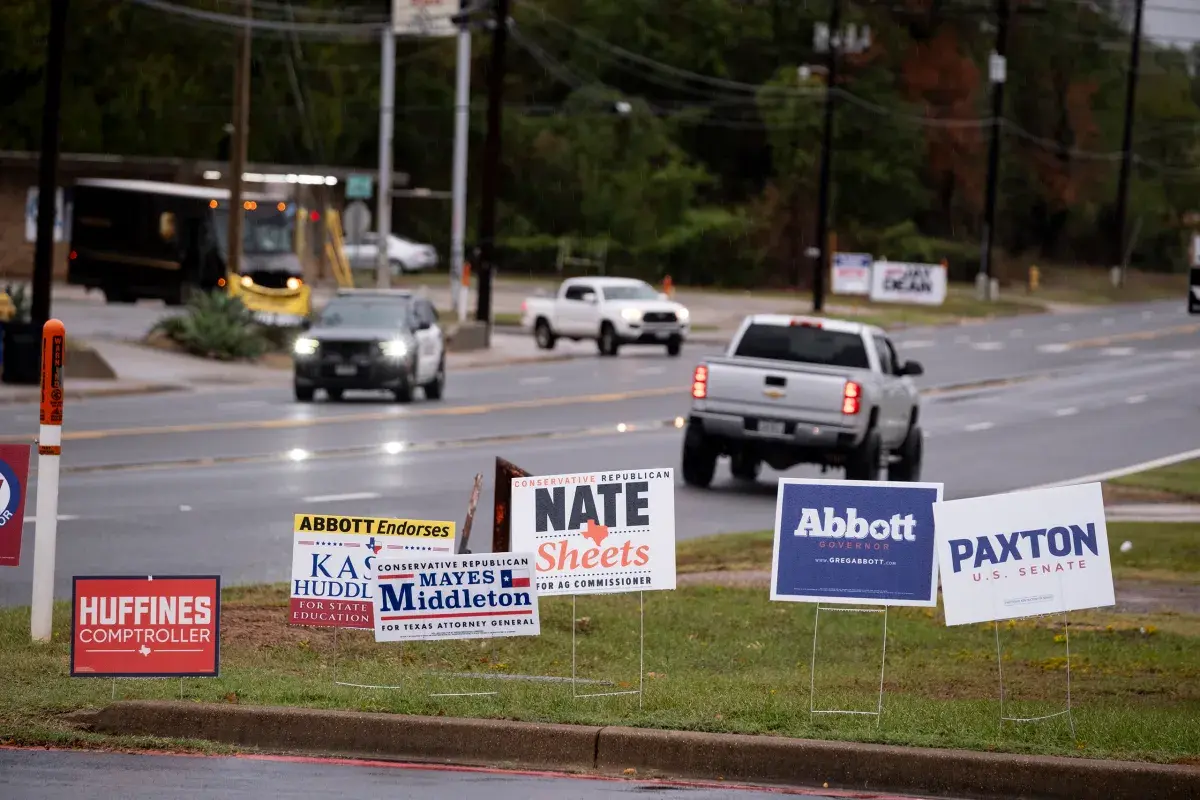
As reported by Jess Huff of The Texas Tribune, the immediate aftermath of election night found lifelong East Texan Bobby Dean reflecting over lunch with a friend at a local café in the small community of Burke. Situated within East Texas—a vast region home to nearly 800,000 residents stretching from Texarkana along the Arkansas border, through Lindale, and down into the pinewood forests associated with Texi-Cajun cuisine—Burke forms part of an area represented by more than a dozen predominantly Republican state and federal lawmakers. According to rural voters interviewed by The Texas Tribune, numerous statewide Republican candidates suffered midterm defeats because their campaign messaging centred heavily on culture-war social issues. Conversely, East Texas Republicans preserved their majorities by emphasising practical policy solutions and established community trust.
Electoral returns from the 2026 cycle demonstrate a sharp distinction between federal and state-level margins across the region. As reported by Jess Huff of The Texas Tribune, Republican candidates winning U.S. House seats in East Texas generally captured slightly more than 50% of the vote, alongside outliers such as Congressman Tom Sell in Lubbock and Congressman Nathaniel Moran (R-Tyler), who defeated Yolanda Prince with nearly 70% of ballots cast. By contrast, state House representatives secured victories ranging between 65% and 80%. Incoming freshman state representatives Rocky Thigpen (R-Lufkin) and Ray Callas (R-Beaumont) each garnered close to 75% of the vote, while returning lawmaker Cole Hefner (R-Mt. Pleasant) received nearly 80%. Even in Nacogdoches, where Democrat James Talarico captured 42% of the vote, state Representative Joanne Shofner secured 71%. Similarly, in the state Senate, state Representative Trent Ashby (R-Lufkin) won nearly 70% of ballots in his bid for state Senator Robert Nichols’ seat, and state Senator Bryan Hughes (R-Mineola) earned re-election with nearly 72%, whereas state Senator Bob Hall (R-Edgewood)—whose district encompasses both East Texas and portions of the Dallas metropolitan area—prevailed with 51%.
Analysing the divergence between East Texas and the broader statewide electorate, Brandon Rottinghaus, a political science professor at the University of Houston, highlighted the impact of continuous constituent engagement. As reported by Jess Huff of The Texas Tribune, Brandon Rottinghaus stated that “these candidates are rooted in East Texas, and it shows. The best way to win rural votes is to engage in casework, make appearances at local events, build relationships with county officials and advocate for district projects. These are all things that these candidates did, and even in a wave election, that personal connection can create a meaningful amount of ticket splitting”.
Despite those electoral margins, everyday economic pressures remain acute among rural residents. In Burke, Bobby Dean expressed scepticism toward state legislative candidates broadly, arguing that politicians often fail to grasp the financial realities confronting ordinary families. Explaining his frustration with rising living expenses, Bobby Dean stated that “they wanted to make you think everything looks good, and it’s not. It’s a struggle right now. I feel bad for the young kids out here trying to start out right now, I mean even buying groceries, and it’s not getting better.”
Successful East Texas lawmakers attributed their durability to addressing household concerns—specifically affordability, water resources, housing, and measured responses to the rapid expansion of artificial intelligence—while maintaining year-round visibility well ahead of formal campaign periods. Emphasising the necessity of continuous accessibility, Congressman Nathaniel Moran (R-Tyler) stated that “frankly, I think that is the most important thing to do: be in front of your constituents, be present and working daily for them, and then communicate.”
Incoming state Representative Rocky Thigpen (R-Lufkin) illustrated that grassroots approach by spending over a year attending small service-project meetings in local church buildings, listening to hundreds of residents opposing city councils over data centres and Flock surveillance cameras, and participating in rallies advocating water protections. Explaining his refusal to decline community invitations, Rocky Thigpen stated that “my wife told me one time that I could say no to attending something. I can’t. I can’t say no because my constituents expect me to be there.”
Evaluating why local Republicans avoided the voter backlash that swept other parts of Texas, Brandon Rottinghaus noted that East Texas candidates positioned themselves as trusted community figures rather than mere party standard-bearers, focusing on grocery prices, fuel costs, lake water extraction, rural land development, and property tax relief instead of national culture-war debates over transgender athletes, religious doctrine, or Sharia law. Summarising their electoral advantage, Brandon Rottinghaus stated that “I fully think that’s the difference between how these Republicans survived and their colleagues didn’t. They localized the election instead of simply running on a statewide Republican brand.”
Structural and demographic factors further reinforced the region’s voting patterns. Mark Jones, a professor in the Department of Political Science at Rice University, noted that legislative redistricting had deliberately constructed East Texas districts to withstand partisan swings. As reported by Jess Huff of The Texas Tribune, Mark Jones stated that “the districts in East Texas were drawn to provide a substantial buffer for Republicans, so they already had a large advantage — or a large cushion — and were able to therefore withstand the blue wave better”. Additionally, East Texas possesses a smaller Hispanic and Latino population than other regions that shifted Democratic, consisting predominantly of white, blue-collar, Christian voters—though areas with substantial student populations, such as Nacogdoches County, exhibited stronger leftward movement.
While Democrats did not anticipate capturing East Texas—having concentrated resources in metropolitan areas where they achieved historic gains—the party successfully fielded candidates in every state and federal race across the region, a milestone unachieved in recent cycles. That universal ballot presence yielded noticeable margin compression in several contests, notably U.S. House District 36, where Republican incumbent Brian Babin secured 54% of the vote against Democratic challenger Rhonda Hart, down sharply from nearly 70% in 2024. Although Mark Jones assessed that Democrats cannot flip East Texas within a four-year cycle, he warned that incremental erosion threatens the Republican Party’s foundational base in the state. Underscoring the strategic stakes, Mark Jones stated that “for Texas Republicans, East Texas is the base upon which they would rebuild toward the future. If Texas Republicans start to lose East Texas, then Texas is on its way to becoming a California-style state. It’s not an overstatement to say: If Texas Republicans lose East Texas, then any hope for a return to Republican majority government in Texas is lost.”
What Campaign Strategies Helped East Texas Republicans Survive the 2026 Midterm Wave?
Interviews with lawmakers, voters, and political scientists identify specific practices that separated East Texas Republican campaigns from statewide races:
- Focus on Kitchen-Table Economics: Candidates prioritised grocery affordability, fuel prices, housing availability, and property tax relief rather than national culture-war controversies.
- Engagement on Emerging Local Infrastructure Issues: Lawmakers actively addressed resident concerns surrounding data centre construction, artificial intelligence expansion, Flock cameras, and regional water rights.
- Year-Round Constituent Presence: Politicians such as Rocky Thigpen and Nathaniel Moran maintained continuous visibility at church gatherings, county meetings, and local rallies long before primary or general election cycles began.
- Constituent Casework and Local Alliances: As highlighted by Brandon Rottinghaus, consistent casework and collaboration with county officials fostered personal trust that encouraged ticket splitting even during a statewide Democratic wave.
How Did Key 2026 Election Results Compare Across East Texas Legislative and Congressional Races?
Official and reported vote shares across East Texas highlight the contrast between state-level strongholds and tightening federal districts:
| Candidate / Race | Office / District | Reported 2026 Vote Share & Context |
| Cole Hefner (R-Mt. Pleasant) | Texas House (Returning) | Nearly 80% of ballots cast |
| Rocky Thigpen (R-Lufkin) | Texas House (Incoming Freshman) | Close to 75% of votes |
| Ray Callas (R-Beaumont) | Texas House (Incoming Freshman) | Close to 75% of votes |
| Bryan Hughes (R-Mineola) | Texas Senate (Re-elected) | Nearly 72% of ballots |
| Joanne Shofner (R) | Texas House (Nacogdoches) | 71% (even as Democrat James Talarico took 42% in Nacogdoches) |
| Trent Ashby (R-Lufkin) | Texas Senate (Robert Nichols’ seat) | Nearly 70% of ballots |
| Nathaniel Moran (R-Tyler) | U.S. House | Nearly 70% against challenger Yolanda Prince |
| Brian Babin (R) | U.S. House District 36 | 54% against Rhonda Hart (down from nearly 70% in 2024) |
| Bob Hall (R-Edgewood) | Texas Senate (East Texas & Dallas area) | 51% of the vote |
Background of the Particular Development After the News
East Texas has not always functioned as an immovable Republican bastion. During the 1980s and 1990s, many of the same rural communities that later displayed strong support for Donald Trump in 2024 routinely elected conservative Democrats, exemplified by 12-term U.S. Representative Charlie Wilson. According to University of Houston political scientist Brandon Rottinghaus, the region’s partisan realignment began taking root during the 1960s amid the Civil Rights Movement, gradually accelerating over subsequent decades.
By 2011—following party switches by prominent local officials in hubs such as Angelina County and successive rounds of legislative redistricting—roughly 90% of East Texas had consolidated into a reliable Republican stronghold punctuated only by small Democratic pockets. This entrenched political infrastructure endowed Republican candidates with superior fundraising networks, entrenched name recognition, and structural district advantages entering the 2026 midterm cycle, even as broader demographic and urban shifts reshaped statewide Texas politics.
How This Development Can Affect Texas Political Strategy, Rural Governance, and Future Elections
The 2026 electoral outcomes in East Texas carry significant implications for state party strategists, rural lawmakers, and opposition organisers across several fronts:
1. Recalibration of Statewide Republican Messaging
For Republican strategists seeking to rebuild after statewide midterm losses, the contrast between East Texas’s high legislative margins and statewide defeats provides an empirical template favouring localised economic advocacy—centred on cost of living, infrastructure, and property taxes—over nationalised culture-war rhetoric.
2. Heightened Scrutiny on Rural Infrastructure and Resource Governance
For incoming and returning East Texas lawmakers such as Rocky Thigpen and Trent Ashby, maintaining voter trust over the next four years will require delivering tangible legislative outcomes on local friction points, including water conservation, data centre energy demands, surveillance technology regulations, and household affordability.
3. Long-Term Democratic Groundwork in Marginally Competitive Districts
For the Texas Democratic Party, fielding candidates in every East Texas race and narrowing margins in districts such as U.S. House District 36 establishes baseline campaign infrastructure that could gradually erode Republican cushions in suburbanising or university-anchored counties like Nacogdoches over future election cycles.