Key Points:
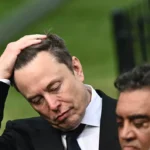
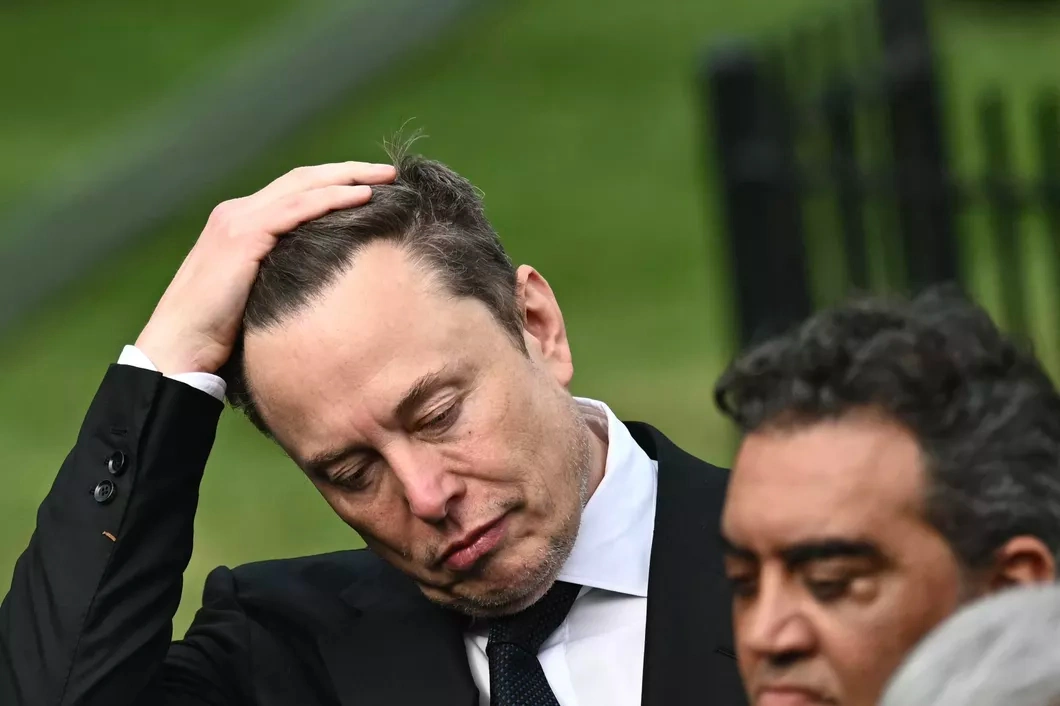
- Record Financial Investment Fails: Tech billionaire Elon Musk invested nearly $475 million nationwide, including over $200 million in Texas to support Republican candidates, yet failed to secure key victories in top-tier statewide races.
- Top-of-the-Ticket Losses: Despite heavy financial backing from Musk’s political network, incumbent Republican Governor Greg Abbott lost to Democrat Gina Hinojosa, while outgoing Attorney General Ken Paxton was defeated by Democrat James Talarico.
- Most Expensive Senate Race in History: The U.S. Senate contest between Talarico and Paxton became the most expensive in American history, with Talarico successfully turning billionaire campaign spending into a core populist campaign issue.
- Nationwide PAC Setbacks: Musk’s America PAC spent nearly $87 million across 44 federal legislative races across the United States, but the majority of endorsed candidates lost their respective contests.
- Commercial and Regulatory Scrutiny: The Democratic victories across Texas executive offices position long-standing corporate subsidies and environmental permissions for Tesla and SpaceX under heightened regulatory review.
Texas (Texas 24 News) November 4, 2026 – Record-breaking campaign expenditures by technology billionaire Elon Musk failed to deliver victories for high-profile Republican candidates in Texas on Tuesday, marking an unprecedented operational setback for mega-donor political strategy. As reported by political investigative reporter David Corn of Mother Jones, alongside financial coverage from CNBC and Fortune, Musk directed more than $200 million of his personal fortune into Texas races to support outgoing Attorney General Ken Paxton’s U.S. Senate campaign and incumbent Governor Greg Abbott’s re-election bid. The total capital deployment formed part of a massive $475 million political expenditure campaign executed across the United States during the 2026 mid-term election cycle. However, voters across Texas rejected the GOP candidates up and down the ballot, electing Democrat James Talarico to the U.S. Senate and Democrat Gina Hinojosa to the governorship. The electoral outcome leaves Musk’s vast Texas-based commercial infrastructure—including Tesla’s primary U.S. manufacturing facility and SpaceX’s Starbase launch complex—facing potential policy scrutiny from a newly elected Democratic administration.
- Key Points:
- How did James Talarico use Elon Musk’s spending to win the U.S. Senate seat?
- What caused the political backlash against corporate subsidies and tech influence?
- How could the election outcome affect Elon Musk’s Texas business operations?
- Background of Elon Musk’s Texas Expansion and Political Capital Deployment
- Corporate Subsidies, Environmental Regulation, and Federal Contracting
How did James Talarico use Elon Musk’s spending to win the U.S. Senate seat?
As reported by political correspondent David Corn of Mother Jones, Democrat James Talarico successfully transformed Elon Musk’s massive capital injection into a primary focal point of his campaign against Republican candidate Ken Paxton.
The U.S. Senate contest between Talarico and Paxton officially shattered previous spending benchmarks to become the most expensive Senate race in American history. Throughout the campaign, Talarico consistently targeted the influx of mega-donor funding, framing the election as a fundamental test of democratic accountability against corporate influence.
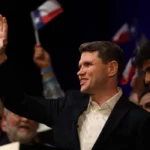
Addressing supporters following his victory late Tuesday night, Senator-elect James Talarico highlighted the bipartisan frustration with campaign finance structures:
“For five decades now, billionaire megadonors have been buying politicians in both political parties. We just proved that all the money in the world is no match for the people of Texas.”
As analyzed by financial journalist Leo Schwartz of Fortune, Musk’s heavy financial participation ultimately backfired by providing Talarico with a clear, high-profile platform to rally independent and reform-minded voters against outside political money.
What caused the political backlash against corporate subsidies and tech influence?
As reported by political economy reporters for CNBC, the Texas election outcomes reflected a widespread voter reaction against concentrated corporate power, tech-industry deregulation, and high-profile donor influence.
Democrat Gina Hinojosa’s victory over three-term Governor Greg Abbott was heavily driven by suburban and urban voters responding to campaign promises to reassess state-level economic incentives. During her gubernatorial campaign, Hinojosa regularly criticized the allocation of state tax breaks to mega-corporations, calling for stricter regulatory oversight and an end to unconditioned corporate subsidies.
The broader electoral wave extended beyond Texas. Across federal contests, Musk’s primary political action committee, America PAC, poured nearly $87 million across 44 federal races nationwide. However, performance data compiled by Fortune confirms that the overwhelming majority of candidates endorsed and funded by America PAC were defeated at the polls.
Political analysts tracking national campaign trends noted that voters increasingly viewed heavy corporate political spending not as a sign of candidate strength, but as an indicator of special-interest dependency.
How could the election outcome affect Elon Musk’s Texas business operations?
As reported by technology policy journalists for CNBC and Mother Jones, the Democratic sweep across Texas executive departments introduces new regulatory and operational variables for Musk’s corporate portfolio.
Texas serves as the strategic center for several of Musk’s largest commercial operations:
- Tesla Gigafactory Texas: Located in Austin, the facility operates as Tesla’s corporate headquarters and primary high-volume vehicle manufacturing hub in the United States.
- SpaceX Starbase: Positioned at Boca Chica in South Texas, the expansive facility serves as the manufacturing, testing, and orbital launch site for the Starship rocket program.
- The Boring Company and X: Additional administrative and technical operations centered across Central Texas municipal corridors.
With Gina Hinojosa assuming the governorship and Democrats winning executive oversight positions including the General Land Office and the Texas Railroad Commission, Musk’s operations face potential policy shifts regarding state environmental permitting, water-use authorizations, land-use agreements, and localized tax abatements.
Furthermore, with Democrats securing majorities in the U.S. Congress, Musk faces a significantly altered legislative landscape in Washington D.C., where federal agency contracts, aerospace safety reviews, and executive oversight of defense expenditures are expected to undergo intensified scrutiny.
Background of Elon Musk’s Texas Expansion and Political Capital Deployment
Elon Musk began relocating his primary business operations and personal residency from California to Texas in late 2020, citing Texas’s business-friendly regulatory climate, lack of state personal income tax, and corporate tax incentives. Under the leadership of former Governor Greg Abbott and Attorney General Ken Paxton, state authorities aggressively courted Musk’s ventures, facilitating rapid zoning approvals, state infrastructure grants, and local tax abatements for Tesla’s Austin Gigafactory and SpaceX’s Starbase facilities along the Gulf Coast.
In response to changing federal regulatory dynamics and legal challenges facing his enterprises, Musk expanded his direct involvement in political campaign finance during the 2024 and 2026 election cycles. Establishing America PAC, Musk became one of the largest individual donors in modern American political history, spending hundreds of millions of dollars to maintain Republican control at both state and national levels. His political strategy relied heavily on ground-game field operations, targeted digital advertising, and direct financial backing of conservative candidates willing to champion deregulation, domestic energy expansion, and corporate tax protections.
Corporate Subsidies, Environmental Regulation, and Federal Contracting
The defeat of Musk-backed candidates in Texas and across federal races is predicted to result in structural shifts regarding corporate governance, state subsidy evaluations, and federal regulatory oversight through 2027 and 2028.
For Texas state governance and economic policy, Governor-elect Gina Hinojosa’s administration is predicted to initiate comprehensive audits of existing corporate tax abatement agreements and state enterprise funds. Local economic development boards across Central and South Texas are expected to face stricter statutory criteria before granting future tax breaks or infrastructure concessions to large technology entities. Additionally, state environmental agencies—including the Texas Commission on Environmental Quality (TCEQ)—are predicted to enforce tighter compliance checks regarding industrial wastewater discharge permits, air quality standards, and coastal ecosystem protections around SpaceX’s Boca Chica operations and Tesla’s Austin manufacturing plants.
For federal policy and government contracting, the newly elected Democratic-controlled Congress is predicted to increase committee oversight into major federal defense and aerospace contracts held by SpaceX and Starlink. Congressional committees are expected to hold formal inquiry hearings examining launch safety protocols, satellite constellation orbital approvals, and federal reliance on single private suppliers for defense logistics. Consequently, national political strategists predict that future corporate campaign finance efforts will face diminishing returns, as mega-donor visibility increasingly proves to be a political vulnerability in competitive statewide elections.