
- $22.6 Billion Campus Over 3,200 Acres: Taiwan Semiconductor Manufacturing Co. (TSMC) has filed an application with the Texas Comptroller’s Office under the state’s Jobs, Energy, Technology and Innovation (JETI) programme for a proposed $22.6 billion (NT$743.7 billion) semiconductor manufacturing complex on more than 3,200 acres (3,232 acres) in Brazos County Precinct 1, within the City of College Station’s extraterritorial jurisdiction and College Station Independent School District (ISD) boundaries.
- 2-Nanometre Production, Jobs and Economic Output: The proposed TSMC Texas Advanced Semiconductor Manufacturing Campus would manufacture 2-nanometre and more advanced chips for artificial intelligence, high-performance computing and mobile applications, generating at least 2,099 direct jobs averaging approximately $133,000 per year and $64.4 billion in economic output over 40 years, with construction targeted for 2027 and operations in 2031–2032.
- Tax Incentives and Competing Sites: TSMC is seeking a 10-year school property tax limitation estimated at $354 million alongside a separate 35% federal investment tax credit—which currently requires groundbreaking by 31 December 2026 unless extended by lawmakers—while weighing competing sites in Arizona and Sherman in North Texas.
- Local Approvals and Community Response: Brazos County Manager Trevor Lansdown welcomed the potential transformational opportunity as the county coordinates with College Station, Bryan, College Station ISD, Texas A&M University and the Greater Brazos Partnership ahead of a College Station ISD Board of Trustees public meeting on 10 December 2026 and final approval by the local school district and Texas governor.
Texas (Texas 24 News) November 25, 2026 – Taiwan Semiconductor Manufacturing Co. (TSMC) has submitted a state incentive application to build a proposed $22.6 billion semiconductor fabrication campus spanning more than 3,200 acres near College Station in Brazos County, Texas. Reported across Manufacturing Dive, REBusinessOnline, W.Media, Taiwan News and Brazos County disclosures on 24–25 November 2026, the 2-nanometre chipmaking facility would create at least 2,099 direct jobs averaging $133,000 annually, though TSMC says securing state property tax relief and federal credits will determine whether it chooses Texas over Arizona.
- What Are the Specifications, Timeline and Economic Projections of TSMC’s College Station Proposal?
- Why Does TSMC’s Decision Hinge on State Tax Incentives, Federal Deadlines and Competing Sites?
- What Have Local Officials and Regional Partners Said About the Proposal?
- How Do the Key Figures and Milestones of TSMC’s Proposed College Station Project Compare?
- Background of the Particular Development After the News
- How This Development Can Affect Brazos County, Texas and the Semiconductor Sector
As reported by Manufacturing Dive, REBusinessOnline, W.Media, Taiwan News and Brazos County official disclosures on 24–25 November 2026 (based on filings with the Texas Comptroller of Public Accounts), Taiwan Semiconductor Manufacturing Co. (TSMC) has proposed a $22.6 billion (NT$743.7 billion) advanced semiconductor manufacturing campus across more than 3,200 acres in Brazos County near College Station, Texas.
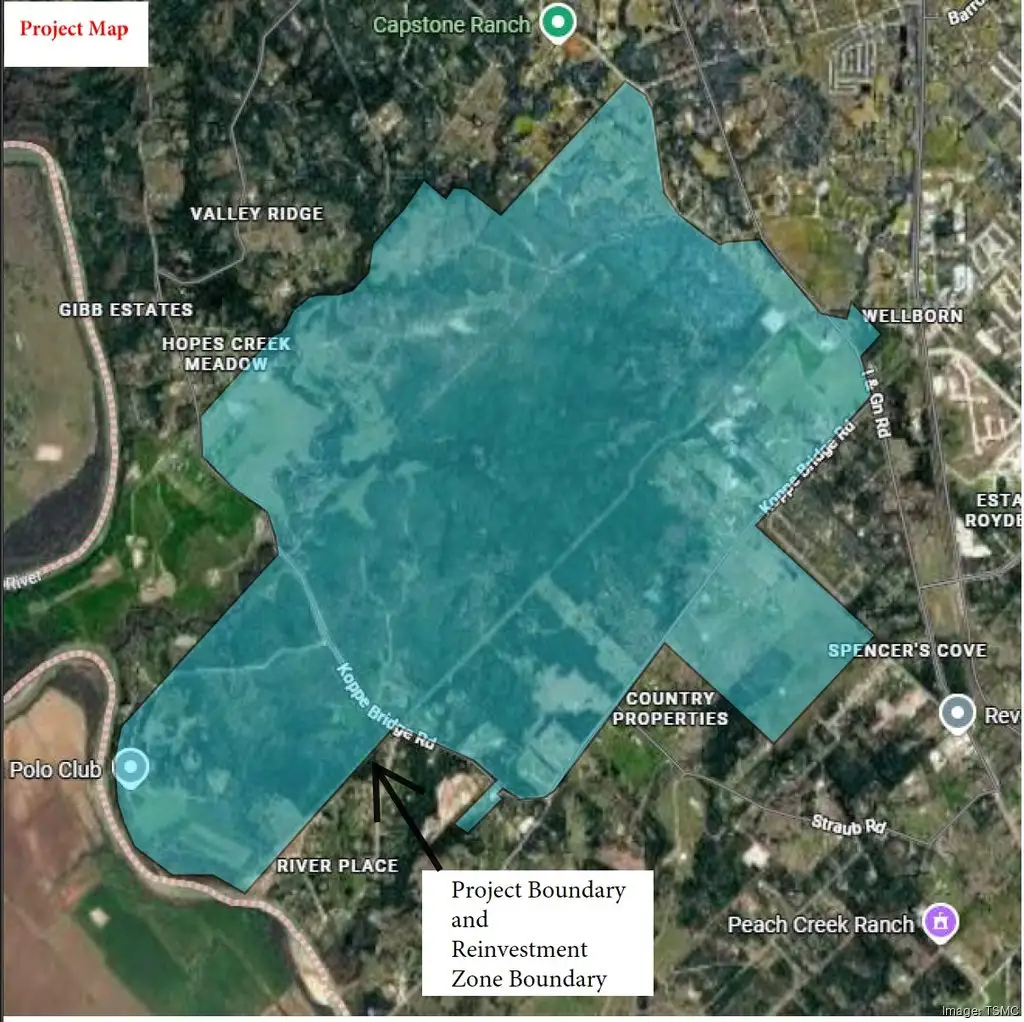
According to the Texas Comptroller JETI application (J0055) and Brazos County notices, the proposed TSMC Texas Advanced Semiconductor Manufacturing Campus is located in Precinct 1 within the City of College Station’s extraterritorial jurisdiction and College Station Independent School District boundaries—covering parcels along roads including Koppe Bridge Road, Redman Lane and South Dowling Road—and would add a major project to the region’s manufacturing economy.
What Are the Specifications, Timeline and Economic Projections of TSMC’s College Station Proposal?
Reporting from Manufacturing Dive, W.Media, REBusinessOnline, Taiwan News and Brazos County disclosures sets out the scale, technology, employment figures and schedule detailed in TSMC’s filing:
- 2-Nanometre Chip Production and Campus Footprint: As reported by Manufacturing Dive on 25 November 2026 and W.Media, the 3,200-acre (3,232-acre per Taiwan News) campus would comprise one or more semiconductor wafer fabrication plants and supporting infrastructure producing 2-nanometre and more advanced chips for artificial intelligence systems, high-performance computing, graphics processing units and mobile applications. Brazos County’s official project notice specifies that the development is a semiconductor manufacturing facility rather than a data centre, while TSMC’s application states that establishing the capacity in Texas strengthens domestic supply chain resilience and secure U.S. access to advanced technologies.
- 2,099 Direct Jobs, $133,000 Average Pay and $64.4 Billion Output: According to Manufacturing Dive, BigGo Finance and Brazos County disclosures, TSMC projects the campus would generate at least 2,099 direct jobs paying an average annual salary of approximately $133,000, alongside $64.4 billion in economic output and increased gross state product over 40 years. Under the timeline outlined in filings cited by Manufacturing Dive and BigGo Finance, construction is slated to begin in 2027 with operations starting in 2031 and reaching full operational employment by 2032, subject to regulatory approvals and TSMC’s final investment decision.
Why Does TSMC’s Decision Hinge on State Tax Incentives, Federal Deadlines and Competing Sites?
Coverage from Manufacturing Dive, BigGo Finance, KuCoin News, TradingView and Taiwan News explains the fiscal and competitive factors shaping TSMC’s site selection:
- Estimated $354 Million JETI Property Tax Break and Federal 35% Credit: As reported by Manufacturing Dive and BigGo Finance, TSMC has applied for a 10-year school property tax limitation under Texas’ Jobs, Energy, Technology and Innovation (JETI) programme estimated at $354 million, noting that securing the incentive is a decisive factor in its location choice. BigGo Finance and KuCoin News further report that the project also depends on a separate 35% federal investment tax credit requiring groundbreaking by 31 December 2026—a deadline senators from Texas and Arizona have introduced legislation to extend by five years—while the state JETI abatement requires sign-off from both the local school district and the Texas governor.
- Competition With Arizona and Sherman, Texas: According to Manufacturing Dive, TradingView and Taiwan News (citing local officials quoted by KBTX), Brazos County is competing against alternative sites including Arizona—where TSMC already operates major fabrication plants and cites “operational and economic advantages” such as proximity to existing fabs and “synergies” in workforce, logistics, supplier networks, infrastructure familiarity and government ties—as well as Sherman in North Texas. Local officials cited by Taiwan News noted that Brazos County’s appeal includes access to Texas A&M University’s engineering workforce, proximity to Bryan-College Station and an international airport.
What Have Local Officials and Regional Partners Said About the Proposal?
Reporting from REBusinessOnline, W.Media, Manufacturing Dive and Brazos County outlines official reactions and upcoming public review steps:
- Statement From Brazos County Manager Trevor Lansdown: As reported by W.Media and REBusinessOnline, Brazos County Manager Trevor Lansdown stated: “We are very excited about this potential transformational opportunity for our citizens, the direct and indirect jobs this investment could create would open new doors for our residents, strengthen local businesses, and give our children and grandchildren more opportunities to build rewarding careers right here at home”.
- Inter-Agency Coordination, Nearby Terafab Context and 10 December Meeting: According to REBusinessOnline and Brazos County notices, Brazos County is coordinating with the cities of College Station and Bryan, the College Station Independent School District, Texas A&M University and the Greater Brazos Partnership as the proposal is evaluated, with the College Station ISD Board of Trustees scheduled to hold a public meeting on 10 December 2026 as part of the JETI review alongside a forthcoming county town hall. REBusinessOnline also notes that the proposed site sits one county away from SpaceX’s 100-million-square-foot Terafab semiconductor manufacturing facility in Grimes County—with which TSMC has confirmed it is in discussions—while TSMC also operates a wafer plant in Camas, Washington and design centres in Austin and San Jose, California, and closed at $363.60 per share on Monday, 23 November 2026.
How Do the Key Figures and Milestones of TSMC’s Proposed College Station Project Compare?
A structured summary consolidates the primary figures, incentives and milestones reported across filings and media coverage:
| Category | Reported Detail or Figure | Context in Coverage |
| Investment & Site Area | $22.6 billion (NT$743.7 billion); more than 3,200 acres (3,232 acres) | Brazos County Precinct 1, within College Station ETJ and College Station ISD boundaries. |
| Technology & Output | 2-nanometre and more advanced chips; $64.4 billion economic output over 40 years | Targets AI, high-performance computing and mobile applications; strengthens US supply chain. |
| Employment & Wages | At least 2,099 direct jobs; average annual salary of ~$133,000 | Full operational staffing projected by 2032 following 2027 groundbreaking and 2031 start. |
| Tax Incentives & Rivals | Estimated $354 million 10-year Texas JETI school tax break; 35% federal tax credit | Competing against Arizona expansion and Sherman, Texas; CSISD public meeting set for 10 December 2026. |
Background of the Particular Development After the News
Global semiconductor manufacturers have expanded advanced wafer fabrication capacity inside the United States to serve growing demand from artificial intelligence, cloud computing and mobile device markets while reinforcing domestic supply chain resilience. Texas has emerged as a prominent contender for large-scale industrial and technology projects through state incentive frameworks such as the Jobs, Energy, Technology and Innovation (JETI) programme, which allows qualifying capital-intensive projects to apply for school district property tax value limitations subject to state and local approvals.
In Brazos County, local leaders have highlighted the region’s research and engineering pipeline anchored by Texas A&M University alongside infrastructure in Bryan and College Station as key assets when competing for advanced manufacturing investments.
How This Development Can Affect Brazos County, Texas and the Semiconductor Sector
TSMC’s $22.6 billion application and forthcoming state, local and federal reviews carry practical implications across several groups:
1. Residents, Workers and Businesses in College Station and Brazos County
For residents, students and local enterprises across Bryan-College Station, the prospect of at least 2,099 direct jobs averaging $133,000 annually—plus construction activity and indirect supplier demand—would reshape local employment, housing and infrastructure planning if TSMC selects the site, with public meetings beginning in December 2026 offering forums for community input.
2. College Station ISD, State Policymakers and Federal Lawmakers
For the College Station ISD Board of Trustees, the Texas Comptroller and governor, and congressional lawmakers weighing extensions to the 35% federal semiconductor investment credit, decisions on the estimated $354 million property tax limitation and federal timelines will directly influence Texas’ competitiveness against Arizona.
3. U.S. Semiconductor Supply Chains and AI Customers
For technology companies relying on leading-edge 2-nanometre wafers for artificial intelligence and high-performance computing, TSMC’s final investment decision—whether in Brazos County or Arizona—will shape domestic foundry capacity coming online in the early 2030s.