Key Points
- High-Stakes Down-Ballot Election: The race for Texas Comptroller of Public Accounts features a four-way contest between Republican incumbent Don Huffines, Democratic State Senator Sarah Eckhardt, Green Party candidate Shehla Faizi, and Libertarian V. Alonzo Echavarria-Garza.
- Control of TEFA Funds: The state’s chief financial officer oversees the administration and disbursement of the $1 billion Texas Education Freedom Accounts (TEFA) school voucher program.
- Proposal to Double Funding: Incumbent Don Huffines has requested an additional $1 billion for the 2028–2029 biennium in his legislative appropriations request, which would double the program’s current budget.
- Overwhelming Initial Demand: State metrics show over 274,000 applications were submitted for TEFA funding, with more than 100,000 students receiving grants before hitting the $1 billion statutory cap.
- Opposing Visions for TEFA: Democrat Sarah Eckhardt argues against doubling program funding prior to evaluating first-year outcomes, while Green Party nominee Shehla Faizi advocates directing taxpayer dollars back into public education.
- Recipient Demographics Raised: Data indicates 70% of TEFA voucher recipients were already enrolled in private or home schooling prior to applying, sparking debate regarding the program’s overall intent and effectiveness.
Texas (Texas 24 News) October 29, 2026 – The election for Texas Comptroller of Public Accounts has emerged as a central battleground for the future of public and private education funding across the state. Incumbent Republican Don Huffines, appointed by Governor Greg Abbott earlier this year following his primary victory, is advocating to expand the state’s $1 billion Texas Education Freedom Accounts (TEFA) program. Challenged by Democratic State Senator Sarah Eckhardt, Green Party candidate Shehla Faizi, and Libertarian V. Alonzo Echavarria-Garza, the race highlights starkly different approaches to state fiscal oversight, revenue forecasting, and the long-term funding structure of school choice initiatives in Texas.
- Key Points
- Who are the key candidates competing for Texas Comptroller in 2026?
- What is the dispute over the $1 billion Texas Education Freedom Accounts (TEFA)?
- How do candidates and policy experts view the duties of the comptroller?
- Background of the particular development
- Prediction: How this development can affect Texas families, public school districts, and state taxpayers
Who are the key candidates competing for Texas Comptroller in 2026?
The high-stakes, though relatively low-profile, race pits four distinct political figures against one another for the position of Texas’s chief financial officer. The state comptroller is tasked with estimating state revenue, certifying the state budget, auditing agency expenditures, and administering major state-managed accounts, including the newly established Texas Education Freedom Accounts (TEFA).
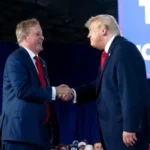
The incumbent, Republican Don Huffines, is a former Dallas-area state senator and real estate developer. Appointed by Governor Greg Abbott in the spring of 2026 to fill the unexpired term of former acting Comptroller Kelly Hancock—whom Huffines defeated in the March Republican primary—Huffines ran on his business background and a platform centered on conservative principles. Running under the slogan “faith, family, freedom,” Huffines has positioned himself as an unwavering proponent of Texas’s school voucher framework.
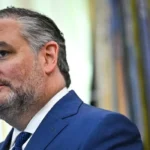
Challenging Huffines is Democratic State Senator Sarah Eckhardt of Austin. Bringing 20 years of public service experience across state and county government, including time as Travis County Judge, Eckhardt has framed her candidacy around fiscal accountability, rigorous data auditing, and government transparency.
Also on the general election ballot are Green Party candidate Shehla Faizi, an Irving-based podcaster, mother, and activist, and Libertarian nominee V. Alonzo Echavarria-Garza, a former municipal chief financial officer.
What is the dispute over the $1 billion Texas Education Freedom Accounts (TEFA)?
At the center of the comptroller campaign is the oversight and future expansion of the $1 billion TEFA voucher program. The program was designed to provide eligible Texas families with state funding to offset private school tuition, tutoring, and other educational expenses.
During the initial application cycle, state records documented more than 274,000 requests for TEFA grants. However, due to the $1 billion legislative budget cap, just over 100,000 students were awarded funding before the cap was reached, leaving over 170,000 applicants on an official waitlist.
Speaking to Matthew Watkins of The Texas Tribune, Don Huffines described himself as “a champion” of the voucher initiative. As reported by Matthew Watkins of The Texas Tribune, Huffines stated regarding the program’s demand: “We see the demand right now. And I think it’s going to do nothing but substantially increase.”
In his official legislative appropriations request submitted ahead of the upcoming legislative session, Huffines requested an additional $1 billion for the 2028–2029 biennium. If approved by state lawmakers, the move would double the TEFA budget to $2 billion. Addressing the statutory requirement regarding waitlisted students, as reported by Matthew Watkins of The Texas Tribune, Huffines stated: “The legislation that was passed requires the comptroller, the way I read it, to add to the budget everyone on the wait-list. Now, the legislature doesn’t have to fund it, but I’m supposed to present them a budget with everybody on the wait-list.”
Democratic candidate Sarah Eckhardt strongly criticized the proposal to expand the program’s budget prior to conducting a thorough review of its operational results. As reported by news station KERA, Sarah Eckhardt stated: “Whenever you start a new program, you don’t start talking about doubling its funding before you’ve even gone through a single year of the new program. You want to see what the results are. You don’t haul off and double the funding right out of the gate.”
How do candidates and policy experts view the duties of the comptroller?
Political scientists and economic analysts emphasize that while the office of the comptroller rarely draws top-tier national headline attention, its constitutional functions hold vast authority over Texas fiscal policy.
Speaking to reporter Elizabeth Myong of KERA, Brent Boyea, a political science professor at the University of Texas at Arlington, explained the primary role of the state comptroller. As reported by KERA, Brent Boyea stated: “Probably the easiest way to think about it is they are in charge of estimating the revenue of the state, certifying budget funds. They kind of figure out what the economic growth is going to be over the next couple of years, and they’re really important for trying to figure out… how much money the state could spend.”
Professor Boyea noted that Texas is among fewer than half of US states with an independent comptroller’s office, and one of even fewer where the position is filled via partisan statewide elections. He added that while the office is designed as a neutral check against state overspending and unbalanced budgets, political considerations can influence executive decisions.
Highlighting her extensive background as a former county judge and state senator, Sarah Eckhardt views the comptroller’s mandate as an independent auditor for the legislature. As reported by KERA, Eckhardt argued that the comptroller must objectively assess state expenditures and present comprehensive data showing who benefited most, who benefited least, and who was left out, concluding: “And then the legislature decides whether this experiment worked, didn’t work or needs to be scuttled.”
Concerns over built-in program evaluation bias were also raised by academic observers. Speaking to KERA, Jim Hamill of Southern Methodist University’s Cox School of Business pointed to state data indicating that roughly 70% of initial TEFA grant recipients were already attending private institutions or being homeschooled prior to receiving state funds. As reported by KERA, Jim Hamill observed: “If you ask them, how do you like the vouchers? They’re going to say, we love them, because they’ve already made the decision to leave the public schools. That becomes less meaningful when the parents have already left the public schools.”
Expressing opposition to the voucher system altogether, Green Party nominee Shehla Faizi contended that state revenues diverted to TEFA would be far better allocated toward strengthening public school districts. As reported by KERA, Shehla Faizi stated: “As a comptroller, first and foremost, I can’t change the law. What I can do is show how the money is going in and how it’s impacting directly public schools.”
Faizi emphasized that public school systems across Texas were already struggling with reduced state funding formulas and declining enrollment before millions of dollars were redirected toward private education providers. As reported by KERA, Faizi added: “There’s a lot of taxpayer money being used for that, and it will most definitely have a negative impact on public schools and people who want to send their kids to public schools.”
Libertarian candidate V. Alonzo Echavarria-Garza did not respond to interview inquiries regarding his platform prior to publication.
Background of the particular development
The establishment of the Texas Education Freedom Accounts (TEFA) program represents the culmination of a multi-year legislative debate over school choice in Texas. For years, efforts to pass universal education savings accounts faced resistance in the Texas House from a coalition of rural Republicans and urban Democrats who argued that vouchers would drain crucial operational funding from public school districts.
Following intense primary challenges and legislative maneuvering supported by Governor Greg Abbott, lawmakers enacted Senate Bill 2, officially creating the $1 billion TEFA framework. Under the law, qualified families receive state-funded accounts—valued at up to $10,474 per child for general education, with additional allocations for students with special needs—managed through a digital portal overseen by the comptroller’s office.
The sudden resignation of acting Comptroller Kelly Hancock following his primary defeat in March 2026 led to Don Huffines’ appointment as comptroller by Governor Abbott in July 2026. This transition placed Huffines directly at the administrative helm of TEFA just as the agency prepared its biennial budget requests for the 2027 legislative session, elevating the down-ballot comptroller election into a central debate over state education spending.
Prediction: How this development can affect Texas families, public school districts, and state taxpayers
The outcome of the Texas Comptroller election and the subsequent legislative decisions regarding TEFA funding will carry major implications across several key groups in Texas:
- For Public School Districts and Educators: Should the comptroller’s request to double TEFA funding to $2 billion be approved by state lawmakers, public school systems may face heightened financial headwinds. Because public school funding in Texas is tied directly to average daily attendance, continued migration of students to private institutions could reduce formula allocations to local ISDs, forcing administrators to adjust operational budgets, staffing levels, and facility resources.
- For Private School and Homeschool Families: A doubling of TEFA funding would enable thousands of families currently on the 170,000-student waitlist to access up to $10,474 per child annually for private tuition or approved educational expenses. Conversely, if the legislature caps or modifies the program following a more restrictive audit approach, grant availability may remain limited, leaving waiting-list families reliant on private tuition or local public schooling.
- For Texas Taxpayers and Fiscal Policy: As the state’s revenue estimator, the comptroller’s decisions heavily shape the entire biennial budget. Allocating $2 billion toward private education vouchers creates a permanent entitlement expense within the state revenue framework. Taxpayers will depend on the comptroller’s office to deliver rigorous, transparent audits ensuring that state funds are used efficiently and without administrative waste or fraud.