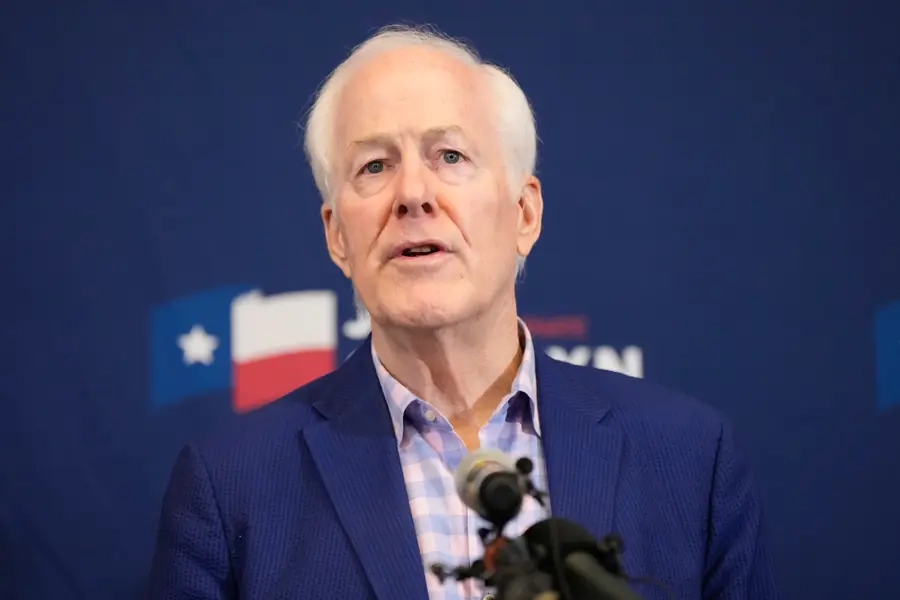
- Blue Slip Veto Exercised: Outgoing Republican Senator John Cornyn of Texas announced on Wednesday, 18 November 2026, that he will block President Donald Trump’s nomination of Justice Department official Elliot Gaiser for a federal court vacancy in the Dallas area by withholding his Senate “blue slip”.
- Criticism Over Lack of Vetting: Cornyn stated that Gaiser is not from Texas and was not vetted by the state’s traditional bipartisan federal judicial evaluation committee, describing the lack of prior consultation with his office as unacceptable for a lifetime judicial appointment.
- Alternative Candidate Proposed: Cornyn confirmed that the White House has requested information regarding his preferred alternative nominee, Fort Worth lawyer Steve Fahey, a veteran former federal prosecutor who served 18 years in the U.S. Attorney’s Office for the Northern District of Texas.
- Post-Election Nomination Timeline: According to Senate Judiciary Committee questionnaire disclosures, Gaiser—who leads the Justice Department’s Office of Legal Counsel—was first contacted by Texas Senator Ted Cruz’s staff about the judgeship on 4 November 2026, the day after the midterm elections.
- Lame-Duck Confirmation Rush: The standoff unfolds as Senate Republicans race to confirm remaining judicial nominees before Democrats assume majority control of the upper chamber in January 2027.
Texas (Texas 24 News) November 18, 2026 – Outgoing Republican Senator John Cornyn of Texas has moved to block President Donald Trump’s nomination of senior Justice Department official Elliot Gaiser to fill a federal district court vacancy in Dallas, halting the confirmation process during a high-stakes lame-duck session. Speaking to The Associated Press on Wednesday, 18 November 2026, Cornyn confirmed he has withheld—and refuses to return—his mandatory home-state “blue slip,” citing Gaiser’s lack of ties to Texas and the absence of vetting by the state’s longstanding bipartisan judicial evaluation panel. While expressing sympathy for Gaiser personally, Cornyn revealed that the White House has already requested background information on his preferred candidate, veteran Fort Worth attorney Steve Fahey. The dispute highlights internal party friction as Republicans attempt to fill remaining federal bench vacancies before Democrats take over the Senate majority in January.
- What Alternative Candidate Is Senator John Cornyn Recommending to the White House?
- How Did Elliot Gaiser’s Nomination Originate After the Midterm Elections?
- How Do the Two Candidates for the Dallas Federal Court Vacancy Compare?
- Background of the Particular Development After the News
- How This Development Can Affect the White House, Senate Republicans, and the Northern District of Texas
As reported by The Associated Press, senior outgoing Republican Senator John Cornyn of Texas declared on Wednesday, 18 November 2026, that he will block one of President Donald Trump’s final judicial nominees for a court vacancy in Texas, creating a significant hurdle as the GOP-led Senate scrambles to fill remaining vacancies in the federal courts before Democrats assume power in January.
In an interview with The Associated Press, Texas Senator John Cornyn stated that he has not returned the “blue slip” for Elliot Gaiser, a senior official at the Justice Department who was nominated for the Dallas-area vacancy in the Northern District of Texas earlier in November, nor does he plan to do so. Within Senate Judiciary Committee tradition, a blue slip functions as an essential permission slip from home-state senators that permits district court nominees to advance through their confirmation hearings, effectively granting home-state senators substantial veto authority over a president’s judicial selections.
Explaining his opposition to Gaiser’s advancement, John Cornyn told The Associated Press: “He’s not from Texas. He hasn’t been vetted. And this is a lifetime job, and there’s better qualified people to hold that job”. Elaborating on his constitutional obligations as a sitting senator, Cornyn added: “This is part, of course, of the constitutional responsibility of senators in the Senate to provide advice and consent. But it’s hard to provide advice and consent when there’s zero consultation, which happened in that case”.
Despite his firm procedural blockade, Cornyn expressed sympathy for Gaiser’s position amidst the political maneuvering. As reported by The Associated Press, Cornyn remarked of Gaiser: “He’s a very bright young man, and I think has a very bright future. I kind of feel bad that he’s been used basically as a pawn in this process”.
What Alternative Candidate Is Senator John Cornyn Recommending to the White House?
While utilizing his blue-slip authority to halt Gaiser’s confirmation hearing, Cornyn emphasized that he does not wish to leave the Northern District of Texas judicial seat vacant when the Senate changes hands. According to The Associated Press and reporting by The Washington Examiner, Cornyn revealed that the White House has formally requested information regarding his preferred alternative nominee, Fort Worth lawyer Steve Fahey:
- Extensive Prosecutorial Experience: Steve Fahey served for 18 years in the U.S. Attorney’s Office for the Northern District of Texas from 2003 until 2021, where he led both the civil and criminal divisions.
- Private Sector Practice: Following his tenure as a federal prosecutor, Fahey worked as a partner at the law firm Kirkland and Ellis before establishing his own legal practice in 2024.
- Prior Bipartisan Vetting: According to aides cited by The Washington Examiner, Fahey had previously interviewed twice during 2026 with the Texas Federal Judicial Evaluation Committee regarding a Dallas-area judicial vacancy.
Cornyn noted that he remains uncertain whether the administration will formally withdraw Gaiser’s nomination in favour of nominating Fahey before the legislative calendar expires.
How Did Elliot Gaiser’s Nomination Originate After the Midterm Elections?
Disclosures from Gaiser’s official nominee questionnaire submitted to the Senate Judiciary Committee—and documented by The Associated Press and Bloomberg Law—provide insight into the rapid, post-election timeline of his selection:
- Contact from Senator Ted Cruz’s Office: Elliot Gaiser, who currently serves as head of the Justice Department’s Office of Legal Counsel, was first contacted by the staff of fellow Texas Republican Senator Ted Cruz regarding becoming a federal judge on 4 November 2026—the day immediately following the midterm elections.
- Bypassing the Texas Evaluation Committee: Cornyn has repeatedly voiced objections regarding the irregular speed and opaque manner of Gaiser’s nomination, underscoring that Gaiser had minimal ties to Texas and bypassed the bipartisan federal judicial evaluation committee that Texas senators have traditionally relied upon to screen prospective nominees.
- Committee Hearing Stalled: As reported by Bloomberg Law and regional outlets, Cornyn’s refusal to return his blue slip directly prevented Gaiser’s scheduled Senate Judiciary Committee confirmation hearing from taking place as planned.
How Do the Two Candidates for the Dallas Federal Court Vacancy Compare?
A structured overview outlines the professional backgrounds, vetting histories, and political endorsements surrounding Elliot Gaiser and Steve Fahey:
| Candidate Metric | Elliot Gaiser (Current Nominee) | Steve Fahey (Cornyn’s Preferred Pick) |
| Current / Recent Role | Head of the Department of Justice’s Office of Legal Counsel. | Founder of private law firm (since 2024); former partner at Kirkland and Ellis. |
| Texas Legal Ties | Minimal direct residency or practice ties to Texas; nominated post-election. | 18-year veteran of the U.S. Attorney’s Office for the Northern District of Texas (2003–2021). |
| Bipartisan Vetting Status | Not vetted by the Texas Federal Judicial Evaluation Committee. | Interviewed twice in 2026 by the Texas Federal Judicial Evaluation Committee. |
| Key Senate Backing | Contacted by Senator Ted Cruz’s staff on 4 November 2026; nominated by President Trump. | Endorsed and recommended to the White House by outgoing Senator John Cornyn. |
| Confirmation Status | Blocked from advancing due to Senator Cornyn withholding his blue slip. | Under preliminary information review by the White House. |
Background of the Particular Development After the News
The procedural clash between Senator John Cornyn and the White House occurs during a pivotal lame-duck transition in the United States Senate. Having served in the upper chamber since 2002, Cornyn—a senior member of the Senate Judiciary Committee—is preparing to leave office after losing his Republican primary runoff earlier in 2026 following President Donald Trump’s endorsement of his primary rival, Ken Paxton. Simultaneously, the November 2026 midterm elections resulted in Democrats securing a Senate majority set to take effect in January 2027, including the election of Democratic Senator-elect James Talarico in Texas.
Because Senate Judiciary Committee rules enforce the blue-slip custom for federal district court nominees, any Texas judicial seat left unfilled by January will require the approval of incoming Democratic leadership and Senator-elect Talarico. Consequently, Senate Judiciary Committee Republicans have accelerated confirmation hearings during November and December to confirm as many nominees as possible before losing floor control, while simultaneously navigating internal GOP disagreements over candidate vetting and home-state senatorial prerogatives.
How This Development Can Affect the White House, Senate Republicans, and the Northern District of Texas
The refusal by Senator John Cornyn to grant a blue slip for Elliot Gaiser is projected to carry significant consequences for judicial appointments and federal court operations:
1. Immediate Pressure on the White House to Pivot Candidates
For President Donald Trump and White House legal counsel, Cornyn’s firm stance leaves little procedural pathway to confirm Gaiser before the current Congress adjourns, compelling the administration to decide swiftly whether to withdraw Gaiser and formally nominate Steve Fahey to avoid forfeiting the seat.
2. Tightening Calendar Constraints for Senate Judiciary Republicans
For Senate Judiciary Committee Chairman Chuck Grassley and GOP leadership, managing intra-party vetoes—alongside similar resistance seen in other states such as Arkansas and Oklahoma—consumes scarce floor and committee calendar days prior to the January transfer of power.
3. Potential Prolonged Vacancy for the Northern District of Texas
For federal judges, litigants, and legal practitioners in the Dallas division of the Northern District of Texas, any failure by the White House and Cornyn to reach an immediate compromise will likely leave the lifetime district judgeship vacant into 2027, subject to renewed negotiations under a Democratic Senate majority.