
- Incoming Attorney General Refuses to Defend Senate Bill 10: Texas Attorney General-elect Nathan Johnson—a Dallas state senator, corporate litigator and the first Democrat elected Texas attorney general since 1994 after defeating Republican Mayes Middleton on 3 November 2026—stated he will not defend Texas’s law requiring the Ten Commandments to be displayed in public school classrooms once he takes office in January 2027.
- Statement on Constitutionality and State Legal Position: Speaking to The Dallas Morning News on Monday, 23 November 2026 (subsequently reported by The Hill, Fox News and Houston Chronicle), Nathan Johnson described Senate Bill 10 as unconstitutional and stated that while courts hold the final word, he will set the state’s legal position, adding: “will not be the position the state has previously taken.”
- Fifth Circuit Ruling and Pending U.S. Supreme Court Conference: In April 2026, the full 5th U.S. Circuit Court of Appeals ruled 9–8 that Senate Bill 10—which mandates displaying a poster or framed copy of the Ten Commandments measuring at least 16 inches wide by 20 inches tall “in a conspicuous place in each classroom”—violates neither the First Amendment’s Establishment Clause nor its Free Exercise Clause, lifting an injunction across roughly a dozen school districts; challenger families including Rabbi Mara Nathan petitioned the U.S. Supreme Court in August 2026, with justices scheduled to consider the petition at their 11 December 2026 private conference.
- Outgoing Attorney General Ken Paxton’s Brief and Outside Counsel Dispute: In a 10 November 2026 brief, outgoing Republican Attorney General Ken Paxton’s office argued that Nathan Johnson’s election makes the dispute “a particularly poor vehicle” for Supreme Court review because Texas could lack a state lawyer willing to defend the statute, while Nathan Johnson previously told CBS News Texas that the state would need to hire private outside attorneys “if they want to defend unconstitutional laws.”
Texas (Texas 24 News) November 28, 2026 – Texas Attorney General-elect Nathan Johnson announced he will not defend Senate Bill 10—the state law mandating Ten Commandments displays in public school classrooms—when he takes office in January 2027. Reported across The Dallas Morning News, The Hill, CBS News Texas, SCOTUSblog, Steven Dial of FOX 4 Dallas-Fort Worth and Andrew Schneider of Houston Public Media, the shift arrives ahead of the U.S. Supreme Court’s 11 December 2026 conference on a challenge filed by families including Rabbi Mara Nathan.
- What Did Nathan Johnson Say About Defending Texas’s Ten Commandments Law?
- What Does Senate Bill 10 Require and How Did the Fifth Circuit Rule?
- How Are Outgoing Attorney General Ken Paxton and Legal Experts Responding Ahead of the Supreme Court Conference?
- How Do the Key Legal Milestones, Rulings and Statements Compare?
- Background of the Particular Development After the News
- How This Development Can Affect Texas School Districts, Supreme Court Review and State Governance
Texas Attorney General-elect Nathan Johnson stated that he will not defend the state’s law requiring the Ten Commandments to be displayed in public school classrooms once he assumes office in January 2027, reversing the legal stance of outgoing Republican Attorney General Ken Paxton as the U.S. Supreme Court weighs whether to hear a constitutional challenge.
As reported by The Dallas Morning News (23 November 2026), The Hill, Fox News and Houston Chronicle, Nathan Johnson—a Dallas state senator and corporate litigator who defeated Republican Mayes Middleton on 3 November 2026 to become the first Democrat elected Texas attorney general since 1994—said he views the statute as unconstitutional.
What Did Nathan Johnson Say About Defending Texas’s Ten Commandments Law?
Reporting by The Dallas Morning News (23 November 2026), The Hill, CBS News Texas and SCOTUSblog (25 November 2026) sets out Nathan Johnson’s statements regarding Senate Bill 10 and the hiring of outside legal counsel:
- Statement to The Dallas Morning News on State Legal Position: As reported by The Dallas Morning News and carried by The Hill and SCOTUSblog on 25 November 2026, Nathan Johnson stated that the measure is unconstitutional and explained that while courts will have the final word on constitutionality, he will determine the state’s legal position. As quoted by SCOTUSblog, Nathan Johnson stated: “My jurisprudential opinion is that the law is unconstitutional. The court will have the ultimate say as to what’s constitutional and what is not, but I’m the one who says what the state’s position is, and it will not be the position the state has previously taken.”
- Campaign Statement to CBS News Texas on Private Outside Attorneys: Nathan Johnson stated that Texas would need outside lawyers to defend the statute. Asked during his election campaign whether the state would have to hire private attorneys to argue the case, Nathan Johnson told CBS News Texas: “Yes. If they want to defend unconstitutional laws.”
- Election Context: A Dallas state senator and corporate litigator, Nathan Johnson defeated Republican candidate Mayes Middleton on Tuesday, 3 November 2026, becoming the first Democrat elected to serve as Texas attorney general since 1994.
What Does Senate Bill 10 Require and How Did the Fifth Circuit Rule?
Coverage by The Dallas Morning News, The Hill, SCOTUSblog (25 November 2026) and Steven Dial of FOX 4 Dallas-Fort Worth (25 November 2026) details the statutory requirements of Senate Bill 10 and the federal appellate ruling that upheld it:
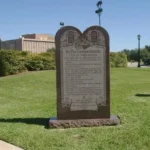
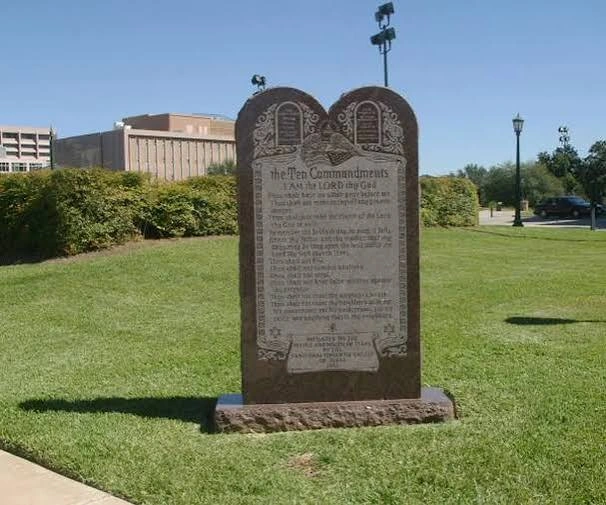
- Classroom Display Dimensions and Funding Rules: Texas’s 2025 law, Senate Bill 10, requires every public school to display a poster or framed copy of the Ten Commandments measuring at least 16 inches wide and 20 inches tall “in a conspicuous place in each classroom.” Under the statute, public schools are required to accept donated copies and are permitted to purchase copies using school district funds.
- Fifth Circuit’s 9–8 En Banc Decision in April 2026: In April 2026, the full 5th U.S. Circuit Court of Appeals ruled 9–8 that Senate Bill 10 violates neither the First Amendment’s Establishment Clause (banning government establishment of religion) nor its Free Exercise Clause (protecting religious exercise), reversing an earlier lower federal court ruling.
- Injunction Lifted and Outgoing Attorney General Ken Paxton’s Response: The 9–8 ruling lifted an injunction that had blocked Ten Commandments displays in roughly a dozen Texas school districts. Outgoing Republican Attorney General Ken Paxton, whose office defended the statute in federal court, called the appellate decision “a major victory for Texas and our moral values.”
How Are Outgoing Attorney General Ken Paxton and Legal Experts Responding Ahead of the Supreme Court Conference?
Reporting by SCOTUSblog (25 November 2026), Steven Dial of FOX 4 Dallas-Fort Worth (25 November 2026) and Andrew Schneider of Houston Public Media / Texas Public Radio (24 November 2026) records the filings before the U.S. Supreme Court and assessments from constitutional scholars:
- Challengers’ Supreme Court Petition and 11 December 2026 Conference: Families challenging Senate Bill 10—including lead plaintiff Rabbi Mara Nathan of Temple Beth-El in San Antonio—petitioned the U.S. Supreme Court in August 2026 to review the case. The Supreme Court justices are scheduled to consider the petition at their private conference on Friday, 11 December 2026, where they decide which cases to accept for argument.
- Ken Paxton’s 10 November 2026 Brief Opposing Review: As reported by SCOTUSblog on 25 November 2026, outgoing Attorney General Ken Paxton’s office has already used Nathan Johnson’s stance as an argument for keeping the dispute out of the nation’s highest court. In a brief filed on 10 November 2026, the state told the justices that the election result makes the case “a particularly poor vehicle” for Supreme Court review because the court could be left without a state lawyer willing to argue in favour of the statute. If the Supreme Court declines to take up the appeal, the 5th U.S. Circuit Court of Appeals ruling upholding the classroom displays would remain intact, preserving Ken Paxton’s legal victory after he leaves office in January 2027.
- Legal Analysis From Constitutional Law Experts: As reported by Steven Dial of FOX 4 Dallas-Fort Worth on 25 November 2026, constitutional law attorney David Coale explained that because the 5th Circuit has already upheld the law, Nathan Johnson’s decision does not immediately overturn classroom displays unless the Supreme Court intervenes, stating: “So, I think as a practical matter, it doesn’t really have much impact, except on a pending case that the Supreme Court is deciding whether or not to accept” and adding: “If you try to sue a school district and say, ‘Ha ha, I’ve got you because the attorney general’s not going to defend you,’ you’re going to lose. The Fifth Circuit has settled that question. It is constitutional.” Separately, as reported by Andrew Schneider of Texas Public Radio on 24 November 2026, Boise State University public affairs professor Sam Martin noted that leaving Senate Bill 10 on the statute books without attorney general enforcement leaves school districts uncertain because “a future attorney general could pick up the law and enforce it again,” while law professor Douglas Laycock observed: “If they ignore the law, some conservative group may sue them. If they obey the law, some liberal group may sue them.”
How Do the Key Legal Milestones, Rulings and Statements Compare?
A structured summary compiles the timeline, court decisions, filings and official statements reported across the sources:
| Category | Reported Detail | Source / Attribution |
| Statute (Senate Bill 10) | Requires every Texas public school classroom to conspicuously display a poster or framed copy of the Ten Commandments (at least 16″ x 20″); schools must accept donated copies and may use district funds | The Dallas Morning News; The Hill; FOX 4 |
| Fifth Circuit Ruling (April 2026) | Full 5th U.S. Circuit Court of Appeals ruled 9–8 that SB 10 violates neither the First Amendment Establishment Clause nor Free Exercise Clause, lifting an injunction across ~12 school districts; Ken Paxton called it “a major victory for Texas and our moral values” | Ken Paxton; The Hill; SCOTUSblog |
| Supreme Court Petition & State Brief | Challenger families including Rabbi Mara Nathan petitioned Supreme Court in Aug 2026 (set for 11 Dec 2026 conference); Ken Paxton’s 10 Nov 2026 brief called the case “a particularly poor vehicle” due to Nathan Johnson’s election | Rabbi Mara Nathan; Ken Paxton; SCOTUSblog (25 Nov 2026) |
| Attorney General-Elect Nathan Johnson’s Stance | Democrat elected 3 Nov 2026 over Mayes Middleton (first Democrat AG elected in Texas since 1994; takes office Jan 2027); told The Dallas Morning News SB 10 is unconstitutional, state’s position “will not be the position the state has previously taken,” and told CBS News Texas private outside lawyers would be needed | Nathan Johnson; The Dallas Morning News; The Hill; CBS News Texas |
| Legal Scholar Assessments | Attorney David Coale noted 5th Circuit precedent keeps SB 10 constitutional unless Supreme Court takes the case; Prof. Sam Martin and Prof. Douglas Laycock highlighted litigation risks for school districts whether they comply or not | David Coale (FOX 4); Sam Martin & Douglas Laycock (Texas Public Radio) |
Background of the Particular Development After the News
Enacted by the Texas Legislature in 2025 and signed into law as Senate Bill 10, Texas’s classroom Ten Commandments mandate formed part of a broader legislative effort across several U.S. states—including Louisiana and Arkansas—to require historical and religious texts in public school classrooms.
While a federal district court in San Antonio initially issued a preliminary injunction blocking enforcement in approximately a dozen Texas school districts following a July 2025 lawsuit brought by multi-faith families led by Rabbi Mara Nathan, the en banc 5th U.S. Circuit Court of Appeals reversed that block in April 2026—creating a federal appellate split with rulings blocking similar legislation in Arkansas and placing the constitutional question squarely before the U.S. Supreme Court.
How This Development Can Affect Texas School Districts, Supreme Court Review and State Governance
Nathan Johnson’s refusal to defend Senate Bill 10 upon taking office in January 2027 carries distinct legal and operational consequences across several groups:
1. The U.S. Supreme Court’s 11 December 2026 Conference Decision
For the nine U.S. Supreme Court justices reviewing the challengers’ certiorari petition on 11 December 2026, Ken Paxton’s argument that Texas will lack an executive-branch defender after January 2027 complicates vehicle suitability, potentially prompting the Court either to deny review—leaving the 5th Circuit’s 9–8 ruling intact across Texas, Louisiana and Mississippi—or to allow outside intervenors, state officials or private counsel to defend the law if certiorari is granted.
2. Texas Public School Districts, Teachers and Families
For local school boards, superintendents and parents across Texas, Senate Bill 10 remains valid state law under binding 5th Circuit precedent regardless of whether the incoming attorney general enforces it—leaving districts exposed to competing pressures between compliance mandates and potential First Amendment litigation unless the U.S. Supreme Court or the Texas Legislature clarifies the statute’s status.
3. Divided Executive Governance in Austin Starting January 2027
For state governance in Texas, Nathan Johnson’s arrival as the first Democratic attorney general in more than three decades alongside a Republican governor and legislature signals recurring institutional disputes over whether state agencies, legislative leaders or outside private counsel can step in to defend contested conservative statutes when the Office of the Attorney General declines to do so.