Key Points
- Public concern over government corruption has emerged as a central defining issue in the Texas United States Senate race, ranking second among voter priorities just behind the economy.
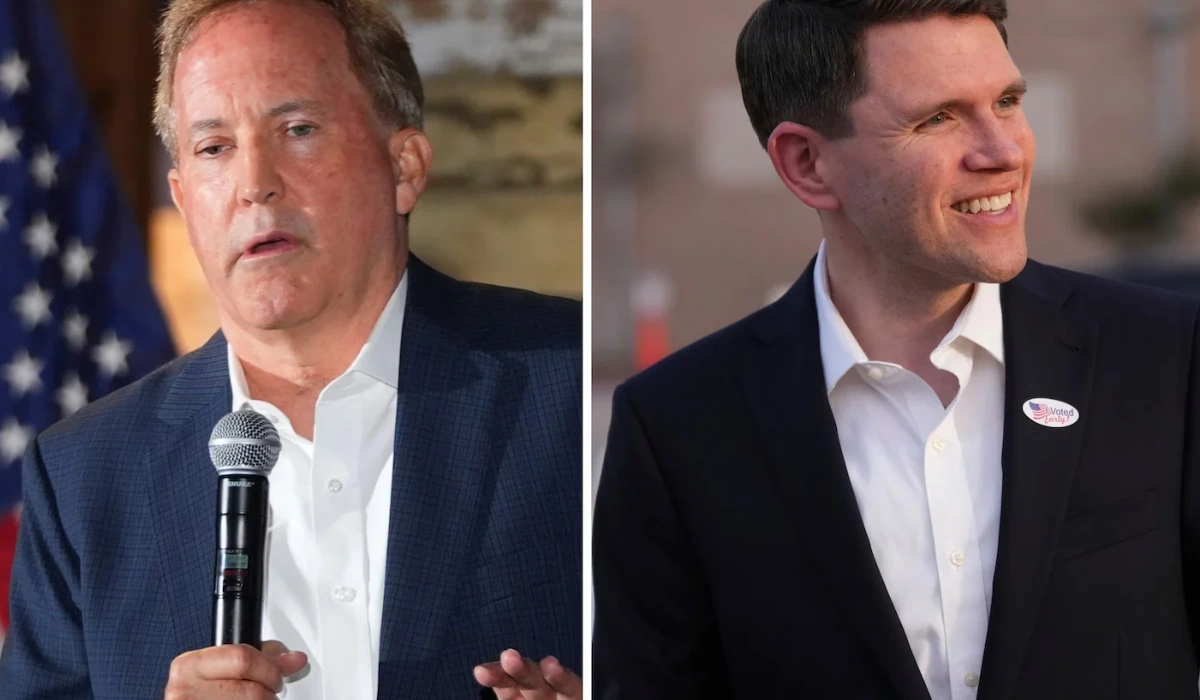
- The contest features Republican nominee and Texas Attorney General Ken Paxton against Democratic nominee and state Representative James Talarico.
- Ken Paxton secured the Republican nomination after defeating incumbent Senator John Cornyn in a primary runoff, buoyed by an endorsement from Donald Trump.
- James Talarico, a former middle school teacher and Presbyterian seminary student, has anchored his campaign on anti-corruption messaging and unrigging the economic system.
- Paxton has countered Talarico by highlighting cultural issues and framing his opponent as an out-of-step liberal whose policies would harm the state.
- Polling shows a tight contest leading up to the November 3 general election, transforming a historically conservative seat into a competitive toss-up.
Texas (Texas 24 News) October 26, 2026 — Widespread public dissatisfaction with institutional corruption in government has emerged as a primary force shaping the United States Senate contest in Texas between Republican Ken Paxton and Democrat James Talarico. Voters across political affiliations consistently identify government integrity as a paramount concern, placing it immediately behind the economy and inflation. Democrat James Talarico has made allegations of ethical misconduct against Republican Attorney General Ken Paxton the focal point of his campaign strategy. In response, Paxton has relied on conservative voter turnout, national political endorsements, and ideological contrasts to maintain his party’s hold on the seat.
Why Has Government Corruption Become a Top Concern for Texas Voters?
As reported by political correspondents tracking midterm contests across the United States, public frustration with government conduct has escalated to the forefront of voter priorities. Citizens from diverse demographic and political backgrounds regularly rank official integrity alongside economic concerns such as inflation and living costs. In Texas, this issue has taken on heightened significance due to the contrasting backgrounds and campaign platforms of the two major-party Senate candidates.
Democratic nominee James Talarico, a state Representative and Presbyterian seminary student, has repeatedly argued that systemic corruption directly impacts the financial stability of working-class families. Speaking at a campaign gathering at the University of Houston, Talarico stated, “We have an affordability crisis because we have a corruption crisis,” as reported by National Political Reporter Stephen Groves of The Associated Press. Talarico’s strategy focuses on framing ethics in public office not merely as an abstract political debate, but as a central factor influencing personal economic well-being.
According to reports from local media outlets covering campaign stops in The Woodlands and surrounding suburban areas, voters have expressed growing weariness over political scandals, campaign finance practices, and special-interest influence in state and federal decision-making.
How Are Ken Paxton and James Talarico Positioning Their Campaigns?
As reported by journalists covering the Texas Senate race, the candidate strategies reflect two distinct approaches to appealing to the electorate ahead of the November election.
Ken Paxton, who currently serves as Texas Attorney General, advanced to the general election after defeating incumbent Republican Senator John Cornyn in a primary runoff election. Boosted by an endorsement from former President Donald Trump, Paxton has aimed to consolidate conservative voters across the state. In his post-runoff address, Paxton declared, “We just proved that this Senate seat doesn’t belong to Washington. It belongs to the hardworking men and women of Texas,” as cited by news anchor Mack Shaw of FOX 7 Austin.
To counter criticisms regarding his record, Paxton has focused his campaign speeches on traditional party priorities and cultural issues. During campaign stops along the southern border and in suburban districts, Paxton warned supporters that a vote for his opponent represents “a vote for every dangerous idea that Democrats across the country are putting forward,” as reported by Stephen Groves of The Associated Press.
Conversely, Talarico has sought to build a broad coalition by appealing beyond standard Democratic party lines. In a campaign video released following the Republican primary, Talarico stated that “That kind of corruption is the rot at the core of this broken system,” as reported by FOX 7 Austin, adding, “If we the people can come together to defeat the most corrupt politician in America, we can defeat this entire corrupt system”. By highlighting issues of governance and affordability, Talarico aims to attract independent voters and moderate Republicans dissatisfied with recent state-level controversies.
Background of the Particular Development
The prominence of ethical governance in the Texas Senate race stems from years of high-profile political and legal battles within the state’s governing apparatus. Ken Paxton’s tenure as Texas Attorney General has been characterized by significant legal challenges and political controversies, including a 2023 impeachment effort by the Texas House of Representatives over corruption accusations, from which he was ultimately acquitted by the state Senate.
Despite these intra-party disputes, Paxton maintained a strong base of support among conservative primary voters, enabling him to successfully challenge long-serving Republican Senator John Cornyn in the primary runoff. The competitive nature of the Republican primary highlighted deep divisions within the state party regarding candidate viability and leadership standards.
Texas has historically served as a reliable stronghold for the Republican Party in statewide federal elections, with Democrats failing to win a statewide office in over three decades. However, shifting demographic trends, rapid population growth in suburban regions like Montgomery and Fort Bend counties, and heightened voter focus on governance issues have contributed to narrowing margins in recent election cycles. The current Senate race reflects broader national trends where public trust in state and federal institutions has become a major factor in voter decision-making.
How This Development Can Affect Texas Voters and the Political Landscape
The outcome of the Texas Senate election and the emphasis on public corruption as a central voting issue carry significant implications for the Texas electorate, state governance, and national political dynamics.
Impact on the Texas Electorate and Public Policy
For Texas voters, the elevated focus on political ethics may lead to increased demands for legislative transparency, campaign finance reform, and stronger ethics oversight at both state and federal levels. If voters prioritize anti-corruption platforms over traditional party affiliation, future candidates from both major parties may be forced to adopt more rigorous transparency measures and distance themselves from corporate political action committees or high-dollar megadonors. Conversely, if partisan voting patterns remain decisive, future electoral strategies in conservative states will likely continue relying heavily on base mobilization and cultural framing rather than ethics-centered campaigning.
Implications for National Party Strategy and Senate Control
From a national political perspective, a competitive Senate race in Texas forces national party organizations and political action committees to allocate significant financial resources toward a state that was previously considered secure for Republicans. A shift in the political competitiveness of Texas would alter how both parties approach midterm electoral maps, potentially shifting legislative focus toward moderate, consensus-driven policy proposals aimed at suburban voters. Furthermore, the election outcome will directly influence the balance of power in the United States Senate, determining legislative priorities on judicial appointments, federal tax policy, and institutional oversight mechanisms over the coming term.