Key Points
- Tesla Chief Executive Officer Elon Musk announced on Friday that the automaker will wind down production of the Cybertruck at its Gigafactory in Austin, Texas, around the middle of 2027.
- The manufacturing space and assembly lines currently allocated to the electric pickup truck will be repurposed to accommodate increased production of Tesla’s autonomous Cybercab robotaxis.
- First revealed in 2019 with a stainless-steel exoskeleton, the Cybertruck suffered from repeated development delays, high-profile product demonstration mishaps, multiple safety recalls, and declining consumer demand.
- Musk did not clarify whether Cybertruck manufacturing will cease permanently or be relocated to another facility, while Texas remains the sole factory equipped with specialized tooling for the vehicle.
- The Cybercab autonomous vehicle—which was first unveiled in 2024 and commenced public road deployment in September 2026—is under regulatory scrutiny by federal transportation authorities regarding safety compliance certifications.
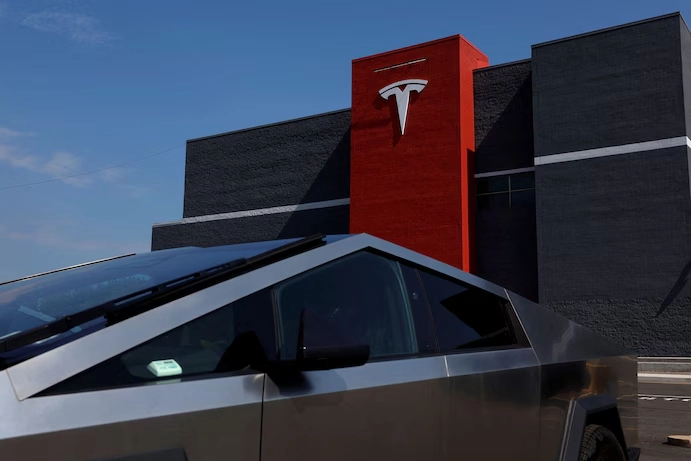
Texas (Texas 24 News) November 6, 2026 – Tesla Inc. will wind down manufacturing of its all-electric Cybertruck at its central Gigafactory in Austin, Texas, around the middle of 2027 to reallocate factory floor space and capital toward scaling up production of its autonomous Cybercab. Chief Executive Officer Elon Musk confirmed the strategic operational shift on Friday, 6 November 2026, marking a significant pivot away from the company’s first entry into the electric pickup market. The decision follows years of production bottlenecks, multiple safety recalls, regulatory interventions, and lower-than-anticipated sales figures, as Tesla focuses its long-term corporate resources on autonomous transport networks and artificial intelligence platforms.
- Why Is Tesla Ceasing Cybertruck Assembly at Its Texas Headquarters?
- What Challenges Beset the Cybertruck Since Its 2019 Unveiling?
- How Does the Pivot to Cybercab Fit Into Tesla’s Long-Term Strategy?
- Background of the Particular Development After the News
- How This Development Can Affect Cybertruck Owners, Automakers, and Autonomous Fleet Competitors
Why Is Tesla Ceasing Cybertruck Assembly at Its Texas Headquarters?
As reported by business correspondents at Reuters and The Washington Post, Tesla CEO Elon Musk confirmed via a public announcement on X (formerly Twitter) that the company intends to wind down Cybertruck assembly in Texas by mid-2027.
Addressing the operational adjustment, Elon Musk stated that Tesla will wind down Cybertruck output at Gigafactory Texas around the middle of 2027 to “make room” for increased production volume of the company’s autonomous Cybercab vehicles.
The announcement did not clarify whether Cybertruck manufacturing will be discontinued altogether or transferred to a secondary assembly facility. However, automotive industry analysts noted that the Austin plant represents the only Tesla manufacturing facility equipped with the specialized stamping presses and manufacturing infrastructure needed to handle the vehicle’s custom cold-rolled stainless-steel alloy. Tesla corporate representatives did not immediately respond to overnight requests for further clarification regarding future production plans.
Commercial data from automotive analytics firm Cox Automotive shows that U.S. sales of the Cybertruck experienced a sharp contraction, falling 48 per cent in 2025 to 20,237 units, before dropping further to 11,586 units during the first nine months of 2026. The delivery numbers fell significantly short of Musk’s initial annual production target of 250,000 units.
What Challenges Beset the Cybertruck Since Its 2019 Unveiling?
As documented across investigative reports in financial media titles, the Cybertruck experienced persistent design, manufacturing, and regulatory hurdles throughout its lifecycle.
First introduced to the public in November 2019, the vehicle was promoted as a futuristic, angular truck featuring a structural exoskeleton engineered to eliminate body dents and long-term surface corrosion. However, the initial live demonstration suffered a publicized embarrassment when an iron ball thrown at the vehicle’s supposedly shatterproof “Armour Glass” windows fractured two side windows on stage.
Subsequent customer deliveries were delayed repeatedly from original timelines until late 2023 due to global supply chain disruptions, battery cell manufacturing constraints, and scaling difficulties with the stainless-steel panels. Following its commercial release, the vehicle became the subject of several involuntary safety recalls issued by the National Highway Traffic Safety Administration (NHTSA). Regulators intervened following reported defects involving accelerator pedal pads becoming unclipped, windshield wiper motor failures, rearview camera display delays, and emergency power-operated door mechanisms failing to unlock during power loss.
How Does the Pivot to Cybercab Fit Into Tesla’s Long-Term Strategy?
According to industry coverage in Forbes and Quarterly Z, the phase-out of Cybertruck capacity reflects Tesla’s broader strategic transition toward autonomous mobility, robotics, and commercial fleet services.
The Cybercab—Tesla’s fully autonomous two-seater robotaxi designed without a steering wheel or pedals—was first unveiled in late 2024 and officially began initial commercial operations on select public roads in September 2026. Tesla plans to utilize the repurposed manufacturing capacity at Gigafactory Texas to accelerate high-volume Cybercab assembly.
However, the Cybercab initiative also faces regulatory scrutiny. Transportation safety regulators at NHTSA opened an active investigation into how Tesla certified that the driverless Cybercab complies with Federal Motor Vehicle Safety Standards (FMVSS) in the absence of traditional manual driver controls. Federal regulatory agencies noted that failure to meet statutory safety standards could carry administrative enforcement actions and potential civil penalties of up to $139 million.
Background of the Particular Development After the News
The announcement to wind down Cybertruck production comes as Tesla undergoes a structural reorganization of its global vehicle lineup. Over recent years, Tesla has adjusted its manufacturing priorities away from lower-volume legacy luxury platforms—including the phase-out of high-end Model S and Model X assembly lines—to channel capital into mass-market autonomous fleets, the Tesla Semi commercial transport program, and the Optimus humanoid robotics project.
The Cybertruck was originally intended to disrupt the highly profitable North American pickup truck market dominated by traditional Detroit automakers. However, competing manufacturers introduced alternative electric truck platforms—such as the Ford F-150 Lightning, Chevrolet Silverado EV, and Rivian R1T—which utilized conventional body-on-frame manufacturing processes that scaled faster and achieved broader commercial fleet adoption. The heavy tooling requirements and high warranty costs associated with the Cybertruck’s unique exterior architecture created margin drag on Tesla’s automotive division, accelerating the leadership’s decision to reallocate capital to the Cybercab program.
How This Development Can Affect Cybertruck Owners, Automakers, and Autonomous Fleet Competitors
The transition of manufacturing capacity at Gigafactory Texas will have distinct operational consequences for existing vehicle owners, traditional truck manufacturers, and the broader autonomous vehicle industry.
Impact on Existing Cybertruck Owners and Residual Values
For current Cybertruck owners and fleet operators, the wind-down of assembly at Gigafactory Texas by mid-2027 introduces uncertainty regarding long-term vehicle resale values, replacement part availability, and specialized service support. Because the vehicle relies on unique structural panels, custom glass, and proprietary 48-volt electrical architecture, a halt in primary vehicle manufacturing could lead to extended repair wait times and higher insurance premiums. Conversely, if Tesla refrains from establishing a replacement production facility, limited vehicle numbers may create a niche collector market, stabilizing secondhand values for well-maintained units.
Impact on Traditional Automakers and the Electric Truck Sector
For legacy automakers such as Ford, General Motors, and Stellantis, Tesla’s exit from high-volume electric pickup manufacturing removes a major disruptive competitor from the truck market. Traditional manufacturers can consolidate their position among commercial, agricultural, and retail truck buyers who favor conventional utility features, standard bed dimensions, and established dealer service networks over experimental vehicle designs.
Impact on Autonomous Vehicle Developers and Regulators
For autonomous vehicle competitors (such as Waymo and Zoox) and federal safety regulators, Tesla’s aggressive manufacturing commitment to the Cybercab signals an acceleration in scale for driverless ride-hailing networks. By shifting an entire manufacturing plant to robotaxi assembly, Tesla aims to lower per-mile operational costs through sheer production volume. However, the timeline remains contingent on federal regulatory approvals from NHTSA. If regulatory bodies enforce strict compliance delays or require hardware modifications to address safety certification inquiries, Tesla may face temporary factory capacity bottlenecks in Texas during the 2027 transition period.