Key Points:
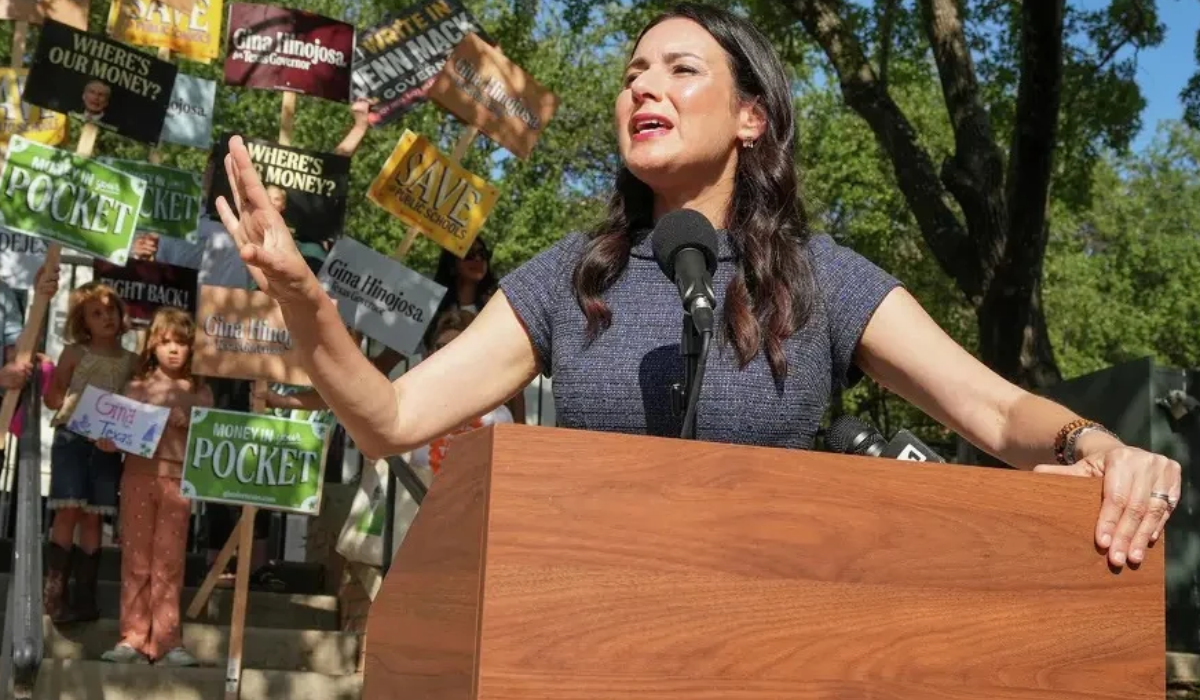
- Critique of Representative Gina Hinojosa’s Education Record: Texas Southern University Regent Dr. Richard Johnson challenged State Rep. Gina Hinojosa’s gubernatorial education platform, citing State of Texas Assessments of Academic Readiness (STAAR) data showing widening academic achievement gaps for Black and Hispanic students during her tenure on the Austin Independent School District board.
- Rebuttal to Former Supreme Court Justices: A bipartisan coalition of former Texas judges directly contested claims by former Chief Justices Thomas Phillips, Wallace Jefferson, and Nathan Hecht, arguing that judicial excellence must be evaluated by trial experience and statutory application rather than elite law clerkships or executive legal roles.
- Highlighting Judicial Challenger Credentials: Former judicial leaders defended the professional attainments of judicial challengers Justice Maggie Ellis, Justice Chari Kelly, Judge Kristen Hawkins, and Justice Gisela Triana as fully qualifying them for higher court seats.
- Record Midterm Early Voting and Voter Anxiety: Public commentary drew attention to historic early voting turnout in Harris County, with voters expressing intense concern over the political stakes, campaign rhetoric, and unverified claims during the high-stakes election cycle.
Texas (Texas 24 News) October 31, 2026 – A series of public letters published by the Houston Chronicle has laid bare intensifying political and legal debates across Texas as voters participate in historic early voting turnout. Contributor correspondence featured sharp criticism of State Representative Gina Hinojosa’s public education record during her time on the Austin Independent School District board, alongside a robust pushback from former state judges against conservative claims regarding Texas Supreme Court candidate qualifications. The exchange highlights growing public tension over state accountability standards, judicial independence, and overall voter sentiment ahead of Election Day.
- Key Points:
- How does State Representative Gina Hinojosa’s Austin school board record impact her gubernatorial education platform?
- Why are former state judges challenging claims about Texas Supreme Court candidate qualifications?
- What is driving voter anxiety and early voting turnout in Harris County?
- Background of Texas Education Policy and Supreme Court Races
- Texas Voters, School Districts, and Judicial Campaigns
How does State Representative Gina Hinojosa’s Austin school board record impact her gubernatorial education platform?
As reported by Dr. Richard Johnson, Regent of Texas Southern University, in a letter to the Houston Chronicle editorial board, State Representative Gina Hinojosa’s platform to transform Texas public schools is contradicted by academic performance metrics from her tenure on the Austin Independent School District (AISD) board. Addressing the board’s October 13 endorsement of Hinojosa for governor, Dr. Johnson stated that “Education isn’t Hinojosa’s strength. It’s her weakness”.
According to State of Texas Assessments of Academic Readiness (STAAR) data cited by Dr. Johnson, racial and socioeconomic achievement gaps widened in Austin public schools between 2013 and 2016:
- Math Readiness Gaps: In 2013, 61% of white students met or exceeded postsecondary math readiness standards compared to 21% of Black students. By 2016, white student readiness rose to 71%, while Black student readiness remained largely static at 23%.
- Reading Readiness Gaps: In 2013, 72% of white students met reading readiness benchmarks compared to 33% of Hispanic students. By 2016, white student reading proficiency climbed to 78%, while Hispanic student proficiency rose to 38%, expanding the underlying achievement gap.
Dr. Johnson noted that while statewide test adjustments during those years make exact comparisons complex, the directional trend demonstrates that vulnerable students fell further behind. He criticized Hinojosa’s platform of pausing A-F accountability systems and ending STAAR testing, asserting that “Opposing interventions is easy. Telling parents how their children will be reading on grade level by next spring is hard”.
Why are former state judges challenging claims about Texas Supreme Court candidate qualifications?
As reported by former Texas Supreme Court Justice Lloyd Doggett, former Court of Criminal Appeals Judge Elsa Alcala, retired 13th Court of Appeals Chief Justice Dori Contreras, and retired Justice Nelda Rodriguez, claims made by former Chief Justices Thomas Phillips, Wallace Jefferson, and Nathan Hecht regarding judicial challenger qualifications are fundamentally flawed.
Writing in response to an October 26 opinion piece urging voters to retain Republican Supreme Court incumbents, the former jurists stated that judicial excellence cannot be measured solely by federal clerkships, law school prestige, or service as executive counsel. They argued that practical trial experience, evaluating evidence, interpreting statutes, and issuing rulings directly impacting citizens hold equal professional weight.
The former judges highlighted the extensive records of current judicial challengers:
- Justice Maggie Ellis: Experienced administrative law judge, prosecutor, trial attorney, and current justice on the Third Court of Appeals.
- Justice Chari Kelly: Served on the Third Court of Appeals since 2019, authoring hundreds of opinions following service as an Army lawyer, prosecutor, and assistant attorney general.
- Judge Kristen Hawkins: Presided over complex civil litigation in Harris County and earned recognition as Jurist of the Year from the Texas chapter of the American Board of Trial Advocates.
- Justice Gisela Triana: Possesses 30 years of judicial experience across all Texas trial court levels and eight years of service on the Third Court of Appeals.
The authors emphasized that true judicial independence requires applying the law faithfully even when it inconveniences political powerholders, asserting that Texas courts benefit from jurists with diverse backgrounds.
What is driving voter anxiety and early voting turnout in Harris County?
As reported by Houston Chronicle opinion contributors reflecting on Harris County’s record-breaking midterm early voting turnout, voters across the region are experiencing heightened anxiety over political stakes and public campaign discourse.
Drawings parallels to historic political campaigns—including Lyndon B. Johnson’s 1964 race against Barry Goldwater—voters expressed concern over unverified political claims and partisan polarization. Community members voiced frustration over unaddressed campaign rhetoric from national figures while maintaining hope that public participation through early voting will deliver clear electoral outcomes.
Background of Texas Education Policy and Supreme Court Races
Texas public education governance has remained a central battleground in state politics, centered on the STAAR standardized testing system, local school district oversight, and academic achievement gaps. The Austin Independent School District (AISD), where Representative Gina Hinojosa served as board president prior to her election to the Texas House of Representatives, has long faced scrutiny over racial disparities in educational outcomes. Statewide debates over accountability have intensified as lawmakers weigh replacing or reforming the A-F rating system for public school campuses.
Simultaneously, the partisan composition of the Supreme Court of Texas—which has been fully controlled by Republicans for nearly three decades—has drawn increased national attention. Appellate court races in Texas are decided via partisan elections, leading to recurring debates over whether judicial qualifications should be judged by private practice prestige, executive appointments, or extensive trial court service.
Texas Voters, School Districts, and Judicial Campaigns
The debates surrounding education accountability metrics and judicial qualifications are expected to influence voter behavior and policy decisions following the election cycle.
For Texas public school districts and education policymakers, the ongoing debate over STAAR performance metrics will likely accelerate legislative calls to restructure state accountability frameworks. If state leaders move to pause or modify the A-F rating system, school administrators will face increased pressure to implement localized reading and math intervention programs that demonstrably close achievement gaps without relying solely on high-stakes standardized testing.
For legal professionals and judicial campaigns across Texas, the pushback from former state judges marks a broader shift toward valuing trial bench experience over traditional political and executive credentials. This structural debate is predicted to lead to more competitive appellate judicial races in future election cycles, encouraging judicial candidates to emphasize courtroom experience and independent statutory interpretation over party endorsement slates.