Key Points:
- High-Stakes Senate Showdown: The US Senate race between Republican state Attorney General Ken Paxton and Democratic state Representative James Talarico has emerged as one of the most competitive and expensive midterm battles in the nation.
- Breaking a 30-Year Drought: Democrats are attempting to end a 30-year losing streak in Texas statewide elections dating back to 1994, while Republicans are scrambling to preserve their key red stronghold and a narrow Senate majority.
- Ethics and Economic Backlash: Talarico’s campaign has heavily focused on Paxton’s past legal troubles, impeachment history, and ethical controversies, positioning the race as a fight between working families and billionaire-backed influence.
- Massive Campaign Spending: The race has witnessed record-breaking financial infusions, including $158 million contributed by billionaire Elon Musk to the Senate Leadership Fund, which subsequently funneled funds into Texas super PACs supporting Paxton.
- Culture War Arguments: Paxton has aggressively targeted Talarico’s past progressive statements on gender and culture war issues to rally conservative base voters across Texas.
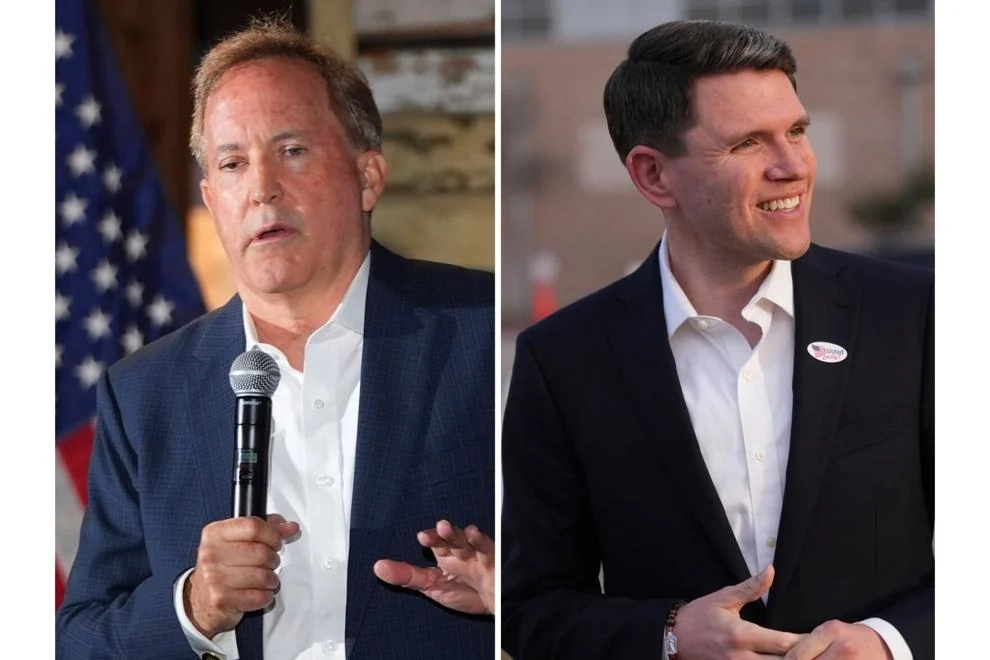
Texas (Texas 24 News) November 3, 2026 – Texas voters have headed to the polls in a high-stakes US Senate election that threatens to break the Republican Party’s three-decade political dominance over statewide offices. As reported by national political correspondents Paul J. Weber and Acacia Coronado of the Associated Press, the marquee midterm battle between Republican Attorney General Ken Paxton and Democratic state Representative James Talarico has pushed both parties to their financial and organizational limits. With national control of the US Senate hanging in the balance, Democrats are aiming to elect their first statewide candidate in Texas since 1994, leveraging voter frustration over cost-of-living pressures and ethical controversies surrounding Paxton. Conversely, Republicans are maneuvering to defend a foundational electoral stronghold in a state easily carried by Donald Trump two years prior.
- Key Points:
- How did legal scandals and primary battles shape Ken Paxton’s Senate candidacy?
- What is James Talarico’s populist strategy for winning over Texas voters?
- How has Ken Paxton targeted Talarico’s record on culture war issues?
- Background of Texas Senate Politics and Recent Statewide Alignment
- Election Night Returns, Suburban Voting Patterns, and Senate Control
How did legal scandals and primary battles shape Ken Paxton’s Senate candidacy?
As reported by Paul J. Weber and Acacia Coronado of the Associated Press, the Republican path to the general election was forged through an intense and divisive primary contest.
Ken Paxton secured the Republican Senate nomination by defeating veteran incumbent Senator John Cornyn in a combative primary runoff, buoyed by an endorsement from Donald Trump.
However, the primary outcome alarmed national Senate Republican leadership, who feared Paxton’s extensive history of legal and ethical vulnerabilities would render the seat competitive for Democrats in a national midterm cycle.
Detailing the controversies surrounding the Republican nominee, the Associated Press highlighted:
- 2023 Impeachment: Paxton was impeached by the Texas House of Representatives in 2023 over allegations of corruption and abuse of office, though he was ultimately acquitted by the state Senate following a trial dominated by party-line divisions.
- Federal Investigation: Paxton was the subject of a multi-year federal corruption inquiry that was closed without formal charges being filed.
- Personal Life Scratched by Trial: Testimony during the 2023 impeachment trial included public allegations of extra-marital infidelity, leading to his wife filing for divorce on “biblical grounds.”
In addition to legal troubles, national headwinds—including consumer anger over persistent inflation for fuel, groceries, and healthcare, alongside foreign policy tensions involving the war in Iran—have added pressure to the Republican ticket.
What is James Talarico’s populist strategy for winning over Texas voters?
As reported by Paul J. Weber and Acacia Coronado of the Associated Press, Democratic nominee James Talarico has structured his campaign around an economically populist, religion-infused message designed to appeal to working-class voters, moderates, and disillusioned Republicans.
Rather than running a traditional partisan campaign, Talarico—a Presbyterian seminarian and former middle school teacher—has deliberately framed the election around economic equity rather than left-versus-right ideology.
Describing his platform’s central argument, Talarico frequently emphasized on the stump that the contest was less about political parties and more fundamentally a battle between “the uber-rich versus everyone else.”
Talarico’s populist argument gained fresh traction following massive financial interventions by industrialist Elon Musk.
According to campaign finance disclosures reported by the Associated Press:
- Musk’s SLF Contributions: Elon Musk donated a total of $158 million to the national Senate Leadership Fund (SLF).
- Texas PAC Routing: The Senate Leadership Fund subsequently transferred $158 million to Texas PAC, which served as the primary financial backer of Paxton’s television and digital advertising campaign.
- Direct Super PAC Grants: Musk contributed an additional $10 million directly to the Paxton-aligned Lone Star Liberty PAC.
Talarico systematically cited these multi-million-dollar contributions during campaign events as primary evidence of corporate influence distorting the political process in Texas.
How has Ken Paxton targeted Talarico’s record on culture war issues?
As reported by Paul J. Weber and Acacia Coronado of the Associated Press, Ken Paxton has relied on aggressive culture-war messaging to energize conservative turnout across rural and suburban Texas.
Recognized in conservative legal circles as an aggressive partisan fighter, Paxton previously led the unsuccessful multi-state legal challenge seeking to overturn the results of the 2020 presidential election.
To counter Talarico’s economic appeal, Paxton’s campaign and supporting political action committees launched extensive media campaigns highlighting the Democrat’s past statements on gender and social policy.
Specific targets raised by Paxton’s campaign included:
- Drag Queen Statements: Highlighting public comments where Talarico named his favorite drag performer in Texas.
- Gender Identity Remarks: Drawing attention to previous statements in which Talarico remarked that there were “six sexes” and suggested that God is “nonbinary.”
Addressing these attacks, Talarico publicly moderated his position on gender policy during the campaign, characterizing some of his earlier phrasing as “cringey.”
Talarico clarified his stance on sports participation, stating that he opposes transgender athletes competing in women’s sports divisions if doing so “endangers safety or fairness.”
Throughout the closing weeks of the race, Talarico maintained an earnest, pastoral campaign tone, presenting himself as a listener focused on addressing voters’ everyday economic anxieties.
Background of Texas Senate Politics and Recent Statewide Alignment
Texas has long stood as an anchor of Republican political power in the United States. The state has not elected a Democratic candidate to statewide office since 1994, when Ann Richards served as governor and Bob Bullock served as lieutenant governor. The state’s last Democratic US Senator was Lloyd Bentsen, who won re-election in 1988 before joining the Clinton administration as Treasury Secretary. Over the past three decades, robust conservative margins in rural counties and small towns consistently offset Democratic gains in metropolitan centers such as Houston, Dallas, San Antonio, and Austin.
However, political realignment has gradually narrowed victory margins in statewide contests. Rapid population growth in suburban counties surrounding major cities—driven by an influx of corporate relocations and college-educated professionals—has eroded historical Republican vote share. In 2018, Democratic Congressman Beto O’Rourke came within 2.6 percentage points of unseating Republican Senator Ted Cruz. While Donald Trump carried Texas comfortably by double digits in recent presidential cycles, the 2026 midterm dynamics—combined with Paxton’s controversial primary victory over John Cornyn—created an unusually competitive environment for Democrats seeking a breakthrough.
Election Night Returns, Suburban Voting Patterns, and Senate Control
The election results in Texas between Ken Paxton and James Talarico are predicted to serve as a critical bellwether for the nationwide power balance in the US Senate and the future direction of Southern politics.
For political analysts and campaign strategists tracking the vote count on election night, the key determinant of success will be turnout ratios in fast-growing suburban counties such as Collin, Denton, Fort Bend, and Williamson. If Talarico’s populist platform succeeds in driving elevated turnout among young voters, women, and moderate suburbanites, the margin of victory could be exceptionally narrow late into the night. Conversely, if Paxton successfully mobilizes high turnout among traditional conservative rural voters, his campaign is predicted to absorb suburban losses and preserve the Republican hold on Texas.
For national congressional leaders, the victory of either candidate carries immediate structural consequences. A victory for James Talarico would mark an historic realignment in Texas politics, delivering a crucial US Senate seat to Democrats and proving that economic populism can win in traditional red states. Conversely, a victory for Ken Paxton would affirm the resilience of the Texas Republican base and validate a strategy centered on aggressive conservative legal advocacy and culture-war mobilization.