Key Points:
- High-Stakes Statewide Campaign: Texas Attorney General Ken Paxton initiated a 17-day statewide tour bus campaign across Texas on 17 October, seeking to consolidate conservative voter turnout in his tight US Senate contest against Democratic candidate Representative James Talarico.
- Persistent Democratic Polling Lead: Facing an electorate undergoing rapid demographic shift, Paxton trails behind state Representative James Talarico across multiple autumn polling averages, presenting Democrats with their strongest statewide electoral opportunity since 1994.
- Overcoming Institutional and Legal Setbacks: Despite surviving a 2023 legislative impeachment trial in the Texas Senate, settling a long-running securities fraud lawsuit for $300,000, and navigating personal divorce proceedings, Paxton secured the Republican nomination over four-term incumbent Senator John Cornyn.
- Grassroots Coalition and Strategic Alliances: Supported by a coalition of rural evangelical voters, conservative donors like Tim Dunn, and substantial financial backing from technological industrialist Elon Musk, Paxton’s strategy focuses on maximizing base turnout through border enforcement and anti-federal government messaging.
- Suburban Political Shift: Rapid population growth across Texas suburban corridors, including Collin and Fort Bend counties, continues to challenge traditionally secure Republican majorities through an influx of diverse corporate professionals and out-of-state transplants.
Texas (Texas 24 News) November 2, 2026 – Texas Attorney General Ken Paxton launched an intensive 17-day statewide tour bus campaign on 17 October from an aviation hangar in Rockwall, Texas, attempting to shore up conservative voter turnout in one of the most competitive United States Senate races in modern Texas history. According to political reporting by national correspondent Isaac Arnsdorf of The Washington Post, the 63-year-old Republican nominee is attempting to hold a traditionally conservative state against Democratic challenger state Representative James Talarico. Following a bitter primary season where Paxton ousted four-term incumbent Senator John Cornyn, recent autumn polling indicates a sustained lead for Talarico, creating significant anxiety among national Republican strategists regarding Texas’s long-standing single-party statewide winning streak dating back to 1994.
- Key Points:
- How is Ken Paxton structuring his final campaign message to mobilize Texas conservatives?
- What major legal and political hurdles has Ken Paxton navigated leading into the general election?
- How are shifting suburban demographics affecting the traditional Republican coalition in Texas?
- What role are high-profile donors and national policy issues playing in the race?
- Background of Texas Statewide Electoral Politics and Ken Paxton’s Rise
- Texas Legislative Dynamics, National Senate Control, and Suburban Policy Strategy
How is Ken Paxton structuring his final campaign message to mobilize Texas conservatives?
As reported by national political correspondent Isaac Arnsdorf of The Washington Post, Ken Paxton’s campaign strategy relies heavily on high-turnout messaging targeted at core conservative, evangelical, and rural voters rather than courting undecided swing voters.
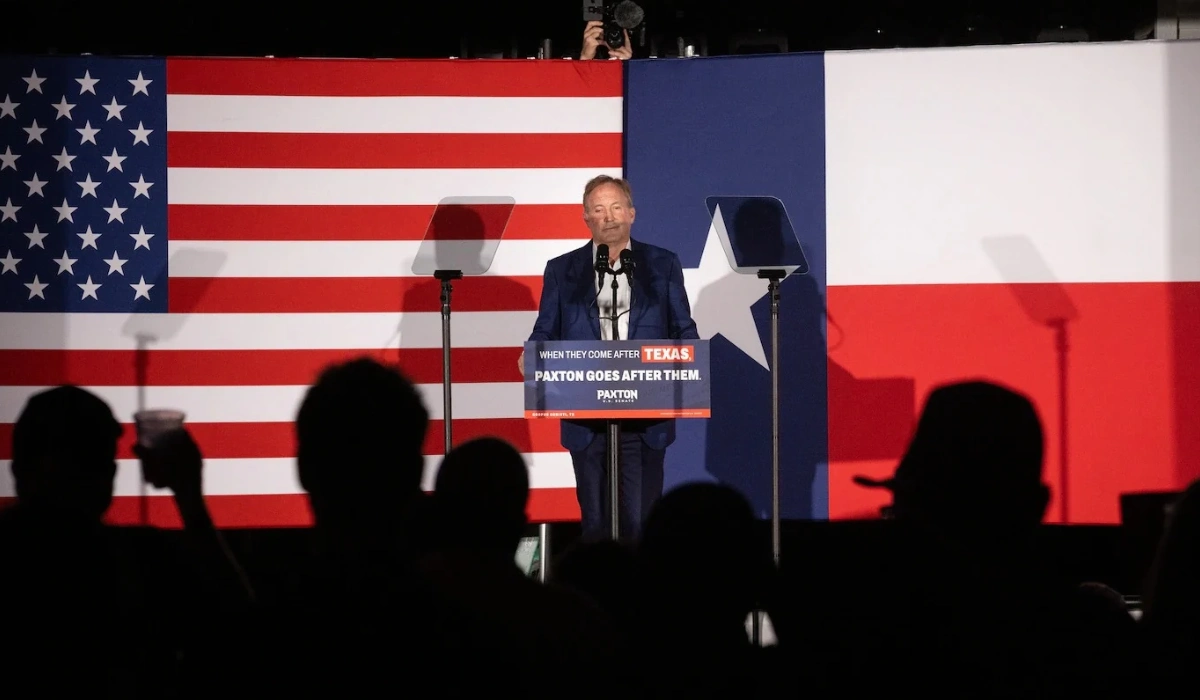
Arriving in a newly painted tour bus featuring the historic “Come and Take It” revolutionary flag, Paxton kicked off his tour alongside his son-in-law, pastor Daniel Hayworth, framed by classic rock anthems and evangelical introductions.
Addressing the assembled crowd without teleprompter script notes in Rockwall, Ken Paxton stated:
“They have a teleprompter for me here, but there’s nothing on it, so I’m going to just talk.”
Isaac Arnsdorf observed that while Paxton’s public speaking style lacks the polished delivery of traditional national politicians, his populist “us versus them” framing appeals directly to long-term residents concerned about rapid demographic and cultural changes across the state.
Throughout his campaign stops, Paxton has repeatedly referenced historic Texas defensive battles, invoking the Alamo and the Texas Revolution to argue that conservative governance in Texas represents a final barrier against federal policy overreach.
What major legal and political hurdles has Ken Paxton navigated leading into the general election?
As reported by political journalists covering the Texas State Capitol, Ken Paxton’s primary victory and general election campaign follow three years of legal scrutiny, legislative battles, and personal controversies.
Key challenges surrounding Paxton’s candidacy include:
- 2023 Impeachment Acquisition: The Texas House of Representatives voted 121–23 to impeach Paxton on corruption charges involving property developer Nate Paul, leading to a trial in the Texas Senate where he was ultimately acquitted after a pressure campaign targeting Republican senators.
- Securities Fraud Settlement: Paxton resolved a decade-long felony securities fraud case by paying $300,000 in restitution and agreeing to community service while admitting no criminal wrongdoing.
- Whistleblower Litigation: A judge ordered Paxton’s agency to pay $6.6 million to four former senior officials who were terminated after reporting alleged misconduct to federal authorities.
- Personal Divorce Proceedings: Following the primary campaign, Paxton’s wife, state Senator Angela Paxton, filed divorce papers alleging adultery, though she subsequently endorsed his US Senate bid.
Despite these hurdles, former primary rival Senator John Cornyn’s earlier warnings regarding general election vulnerabilities have materialized in current polling data, leaving the seat in a dead-heat category.
How are shifting suburban demographics affecting the traditional Republican coalition in Texas?
As reported by local governance and political correspondents in Fort Bend and Collin counties, rapid economic growth and corporate relocation have altered the state’s electoral map.
During stops in Richmond within Fort Bend County—a diverse suburban area near Houston characterized by international dining establishments and tech professionals—Paxton met with multi-ethnic conservative groups concerned about federal taxation, state income tax proposals, and traditional cultural values.
Highlighting the existential nature of the choice facing conservative voters in rural Victoria County, local pest control business owner Shane Schroeder remarked to reporters:
“We don’t have a choice right now — it’s Paxton or Talarico.”
Retired calf-roper Tod Slone echoed that sentiment at the same venue, adding:
“Would we have chosen Paxton? Well, he got chosen for us. So here we are.”
Shifting suburban dynamics are balanced by solid rural support, where voters express concern that out-of-state transplants from California and New York could alter the economic and political culture of the state.
What role are high-profile donors and national policy issues playing in the race?
As reported by The Washington Post, Ken Paxton’s general election campaign has drawn substantial financial support from prominent billionaire donors and industrial figures.
Technological entrepreneur Elon Musk—whose companies SpaceX and Tesla maintain extensive operational footprints in Texas—spent over $140 million supporting Paxton’s efforts, allowing the Republican campaign to maintain ad-spending parity with Representative James Talarico’s high-volume fundraising apparatus.
Simultaneously, campaign stops in border communities like Laredo and coastal industrial centers like Corpus Christi highlight contrasting voter priorities:
- Border Security: Supporters emphasize Paxton’s legal battles against federal immigration policies and his backing of border enforcement to curb illegal fentanyl trafficking.
- Energy Industry Protections: Gulf Coast workers back Paxton’s commitments to defend oil, gas, and liquefied natural gas (LNG) export facilities against federal decarbonization mandates.
- Local Community Concerns: Some border residents and agricultural owners express concern over local law enforcement friction and severe regional water shortages affecting municipal supplies.
Supporters at stops in Selma noted that despite Paxton’s extensive political baggage, they view his aggressive legal record as attorney general as an asset for delivering policy outcomes in Washington.
Background of Texas Statewide Electoral Politics and Ken Paxton’s Rise
For over three decades, the Republican Party of Texas has maintained an unbroken record of victory in statewide elections, holding every constitutional office and both US Senate seats since 1994. Ken Paxton’s career mirrors the evolution of the state party over this quarter-century. First elected to the Texas House of Representatives from Collin County in 2002 as an evangelical conservative, Paxton benefited early from funding networks established by Midland oil executive Tim Dunn and anti-tax grassroots organizations. Over his two decades in office, Paxton transitioned from a Bush-era suburban conservative to a Tea Party supporter, eventually becoming one of the most prominent state attorneys general aligned with the national MAGA movement.
During his eleven-year tenure as Texas Attorney General, Paxton initiated over 100 lawsuits against federal executive agencies, challenging Obama and Biden administration policies on immigration, environmental regulation, healthcare, and civil rights. His high-profile legal challenges established him as a national figure among conservative voters while simultaneously drawing fierce opposition from state Democrats and institutional Republicans. The 2026 US Senate primary marked a historic internal party clash, as Paxton successfully leveraged grassroots primary voters to defeat established four-term incumbent Senator John Cornyn, setting up a rare open-seat general election battle against rising Democratic star James Talarico.
Texas Legislative Dynamics, National Senate Control, and Suburban Policy Strategy
The outcome of the US Senate race between Ken Paxton and Representative James Talarico is predicted to have immediate structural consequences for both national congressional majorities and the political future of the state of Texas.
For national political strategists and the United States Senate, a Paxton victory would preserve the Republican party’s foundational red-state anchor in the Sunbelt, reinforcing conservative control over judicial nominations and federal tax policy. However, if Paxton loses to James Talarico, it would mark the first Democratic statewide victory in Texas in 32 years, signaling an electoral shift similar to recent political transformations in Arizona and Georgia. Such a result would force the national Republican party to reallocate significant federal campaign resources toward defending Texas in future presidential and senatorial cycles.
For state governance and local political parties in Texas, a narrow election result in either direction will accelerate intense primary competition within the state legislature. Should Paxton prevail, his victory is expected to empower conservative grassroots donor networks led by figures like Tim Dunn and Elon Musk to continue primary challenges against moderate state Republicans. Conversely, strong Democratic margins in suburban hubs like Collin, Fort Bend, and Williamson counties will likely compel state Republican leaders to adjust their legislative focus toward suburban economic priorities, infrastructure development, and property tax relief heading into the 2027 legislative session.