Key Points:
- High-Stakes Midterm Senate Battle: The competitive US Senate race in Texas between Republican candidate Ken Paxton and Democratic contender James Talarico could determine which political party controls the Senate majority for the remainder of Donald Trump’s presidential term.
- Decisive Shift in Electoral Trends: Despite Texas not electing a Democrat to the US Senate since 1988, current polling averages indicate that a Democratic victory is a distinct possibility, following Donald Trump’s 13-point state victory two years prior.
- Trump Endorsement and Key Factors: Donald Trump directly influenced the Republican primary by endorsing state Attorney General Ken Paxton over long-serving incumbent Senator John Cornyn, with Paxton’s ethical controversies, rising fuel prices stemming from conflict with Iran, and aggressive ICE immigration tactics pressuring voter sentiment.
- Divergent Core Policy Platforms: Ken Paxton’s campaign focuses on low taxes, aggressive anti-illegal immigration enforcement, and supporting the Trump administration agenda, whereas James Talarico centers his campaign on protecting health-care funding, instituting congressional term limits, and shifting tax burdens toward corporations and high earners.
- Escalating Campaign Rhetoric: Both campaign teams have traded intense accusations; Talarico has labeled Paxton “the most corrupt politician in Texas” due to past securities fraud indictments and impeachment proceedings, while Republican figures including candidate Lydia Elizondo have characterized Talarico as a “dangerous, leftist radical” and a threat to conservative values.
Texas (Texas 24 News) October 31, 2026 – Voters across Texas are preparing to cast ballots on Tuesday in a tightly contested US Senate midterm election that carries national implications for the balance of power in Washington. According to campaign reports and regional political coverage, the high-stakes race between Republican candidate Ken Paxton and Democratic state Representative James Talarico could decide which party holds the majority in the United States Senate for the remainder of President Donald Trump’s administration. Despite Texas failing to elect a Democratic senator since 1988, recent polling data indicates a closely fought contest. Political analysts point to voter reactions against rising fuel prices triggered by conflict with Iran, intensive ICE enforcement tactics, and public scrutiny surrounding Paxton’s legal record as factors narrowing the traditional Republican margin across the state.
- Key Points:
- Why is the Texas US Senate race considered critical for control of the national Senate majority?
- What are the core campaign promises of Ken Paxton and James Talarico?
- How have ethics allegations and national issues impacted voter sentiment in Texas?
- Background of Texas US Senate Electoral History and Republican Dominance
- Federal Senate Governance, Texas Voters, and Political Parties
Why is the Texas US Senate race considered critical for control of the national Senate majority?
As reported by political correspondents for CBC News, the Texas Senate battle between Ken Paxton and James Talarico has emerged as the defining electoral battleground of the 2026 US midterm elections.
Because the overall margin of control in the United States Senate remains razor-thin, a Democratic victory in Texas would dismantle the Republican party’s legislative buffer, potentially transferring committee control and judicial confirmation powers to the Democratic caucus.
Speaking to Republican supporters at a series of campaign rallies across the state, Ken Paxton underscored the national stakes of the contest, stating: “If we lose Texas, we’re going to lose the country”.
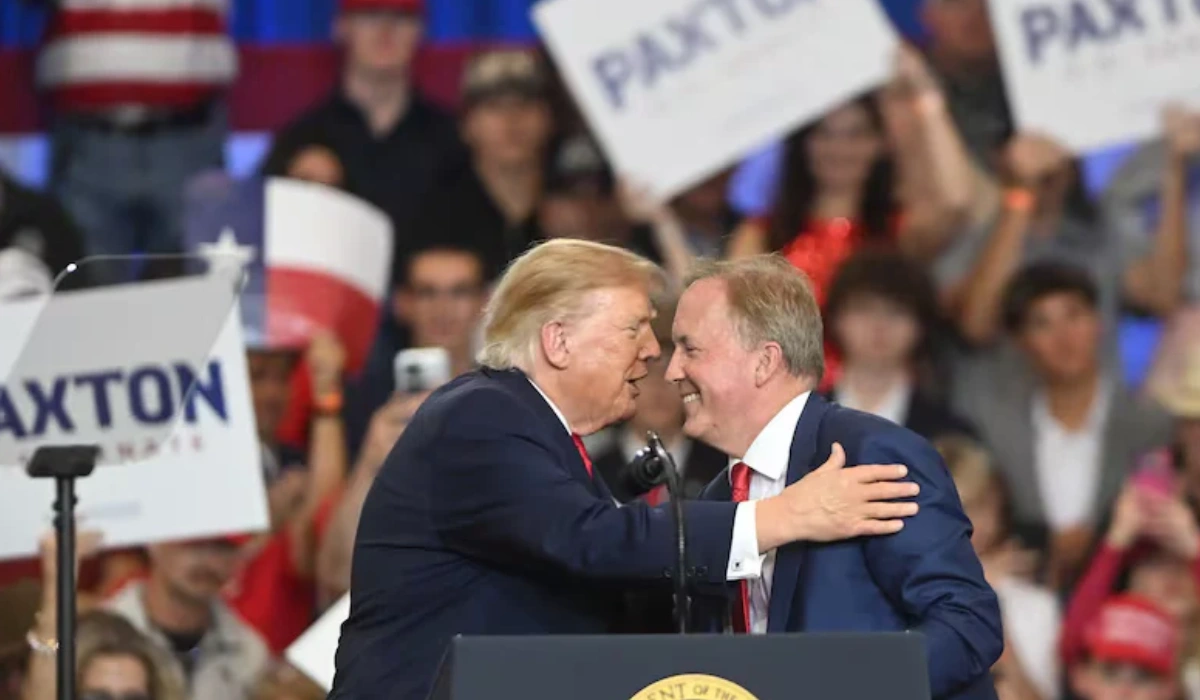
The high-stakes nature of the contest is particularly significant for President Donald Trump. As reported by national political analysts, Trump directly intervened in the Texas primary election by backing Paxton—the state’s long-serving Attorney General—over incumbent Senator John Cornyn. A loss for Paxton would represent a major political defeat for Trump’s political endorsement strategy within a state he carried by 13 percentage points just two years ago.
What are the core campaign promises of Ken Paxton and James Talarico?
As reported by legislative reporters for CBC News, both candidates present starkly contrasting legislative platforms to Texas voters:
- Ken Paxton (Republican): Built on maintaining low state and federal taxes, securing strict enforcement against illegal immigration, expanding border security measures, and providing steadfast legislative backing for President Trump’s federal policy agenda.
- James Talarico (Democrat): Centred on halting federal and state cuts to health-care funding, introducing mandatory term limits for members of the United States Congress, and implementing tax reforms that shift financial burdens away from middle-class families toward large corporations and high-income earners.
Addressing a campaign rally in the Dallas suburb of Allen, Ken Paxton described the broader ideological stakes of the election, stating that the contest “isn’t just red versus blue. It’s the America our founders gave us versus something they would never recognize”. Paxton added: “A vote for James Talarico is not just a vote for his radical agenda. It’s a vote for every dangerous idea that Democrats across the country are putting forward right now”.
Responding at a separate campaign rally held in Fort Worth on the same day, James Talarico—a former public school teacher and Presbyterian seminarian who has served in the Texas House of Representatives since 2019—sharply criticized his opponent’s personal record, stating: “Ken Paxton is everything that’s wrong with our politics. We are running against the most corrupt politician in Texas.”
How have ethics allegations and national issues impacted voter sentiment in Texas?
As reported by political affairs reporters for CBC News, Ken Paxton’s long-standing legal and ethical record has formed a primary line of attack for the Democratic campaign throughout the midterm cycle.
Paxton, who has served as Texas Attorney General since 2015, previously faced a federal grand jury indictment for felony securities fraud alongside an impeachment vote by the Republican-led Texas House of Representatives over allegations of abusing his public office to benefit a political donor. While the felony fraud charges were ultimately formally dropped following a negotiated plea agreement, and the Texas Senate voted against convicting him during his impeachment trial, the historical legal proceedings remain central to opposition messaging.
Concurrently, external economic and policy pressures have created political headwinds for the Republican ticket across the state:
- Fuel Cost Volatility: Elevated consumer prices for gasoline and commercial diesel, fueled by the Trump administration’s ongoing military and economic confrontation with Iran, have strained suburban and rural households.
- Immigration Enforcement Actions: Aggressive, heavy-handed enforcement operations carried out across Texas communities by Immigration and Customs Enforcement (ICE) agents have sparked voter backlash among key Hispanic and suburban demographics.
The combination of these factors has allowed Talarico to mount a competitive challenge in a state where no Democrat has won a US Senate seat since 1988—the year prior to Talarico’s birth.
Heightening the rhetoric in the closing days of the campaign, local conservative figures have intensified their attacks on the Democratic nominee. As reported by CBC News, Lydia Elizondo, the Republican candidate running for district attorney in South Texas’s Hidalgo County, introduced Paxton at a rally last week, telling the assembled crowd: “We cannot let evil win. That evil has a name, and its name is James Talarico.”
Background of Texas US Senate Electoral History and Republican Dominance
Texas has long functioned as an indispensable bedrock of statewide Republican political dominance within the United States. The state last elected a Democrat to the United States Senate in 1988, when incumbent Senator Lloyd Bentsen won re-election. Since that time, the Republican Party has maintained an unbroken winning streak in statewide elections, retaining control of the governor’s mansion, both Senate seats, and all major state executive offices for three decades.
However, rapid demographic growth, urban expansion across the “Texas Triangle” (comprising the Dallas-Fort Worth, Houston, and Austin-San Antonio metropolitan corridors), and shifting political alignments among suburban voters have gradually narrowed margins in major federal contests. In 2018, Democratic challenger Beto O’Rourke came within three percentage points of defeating Republican incumbent Senator Ted Cruz, signaling a competitive shift. The 2026 battle between Ken Paxton and James Talarico represents the culmination of years of shifting suburban demographics combined with internal Republican primary fractures created by the displacement of traditional establishment figures like John Cornyn.
Federal Senate Governance, Texas Voters, and Political Parties
The outcome of the midterm contest between Ken Paxton and James Talarico on Tuesday is predicted to have immediate, systemic consequences for voters, key demographic groups, and federal legislative agendas.
For Texas voters and middle-class households, a victory for James Talarico would mark a historic political realignment, signaling that suburban and independent voters are increasingly sensitive to healthcare protections, living costs, and corporate governance over traditional party loyalties. If Talarico wins, his legislative presence in Washington will prioritize defending Medicaid and rural healthcare funding, alongside advocating for middle-class tax relief that could directly alter economic policy for working families in Texas.
For President Donald Trump and the Republican Party leadership, a Paxton defeat would severely restrict executive authority during the final two years of Trump’s presidential term. Losing a Senate seat in Texas would likely flip the US Senate to Democratic control, granting opposition leadership the power to block executive branch appointments, halt judicial confirmations, and initiate aggressive oversight committee investigations into federal agency operations, including ICE enforcement actions and foreign policy decisions surrounding Iran. Conversely, a victory by Paxton would validate Trump’s primary intervention strategy and reinforce conservative control over federal judicial appointments and tax policy through 2028.