Key Points
- Historic Political Trailblazer: Dr Suleman Lalani, a Pakistani American internal medicine and geriatric physician, made history in November 2022 alongside Representative Salman Bhojani as the first Muslim Americans elected to the Texas Legislature.
- Reelection Campaign: Representing House District 76 in the greater Houston area (Fort Bend County), Democratic Representative Lalani defeated primary challenger Marie Baptiste in March with 54.1% of the vote and will face Republican Linda Howell in the November 3, 2026, general election.
- Healthcare-Driven Policy Focus: Spurred into public service by decades of seeing patients unable to afford life-saving medical treatments, Lalani has focused his legislative tenure on health affordability, securing $5 million for family practice residencies, and strengthening nursing home standards.
- Confronting Political Hostility: Lalani has actively challenged anti-Muslim political rhetoric, including opposing the Republican-led “Sharia Free Texas Caucus” and establishing the bipartisan Texas Interfaith Legislators Caucus.
- State-Sanctioned Surveillance Incident: Following a August 2025 Democratic legislative walkout to Illinois over redistricting, Lalani was subjected to plainclothes police surveillance, which The Washington Post documented as political intimidation.
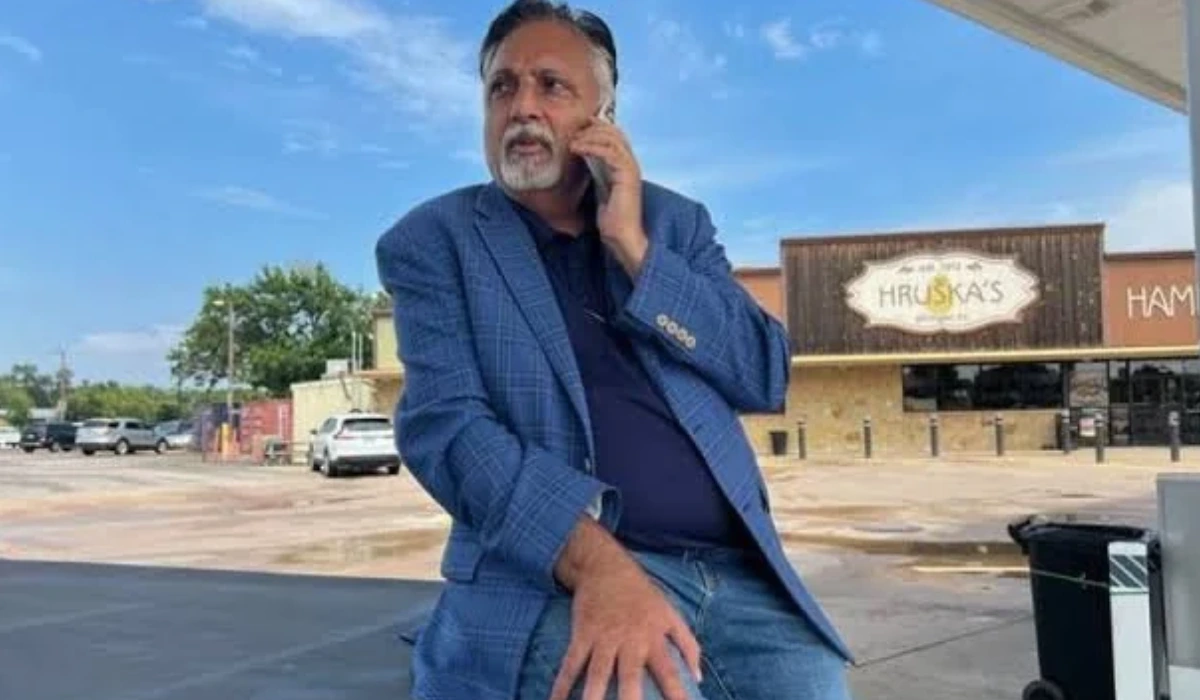
Texas (Texas 24 News) October 29, 2026 – Dr Suleman Lalani, a Pakistani American physician who spent nearly three decades practicing internal medicine and geriatric care in Texas, is preparing for the November 3, 2026, midterm elections as he seeks a third term in the Texas House of Representatives. Representing District 76 in the greater Houston area, Representative Lalani made history in 2022 as one of the state’s first Muslim lawmakers. Facing Republican challenger Linda Howell, Lalani’s campaign highlights medical affordability, public education, and community advocacy amid intensified political friction over anti-Muslim rhetoric and state-level legislative redistricting disputes.
- Key Points
- How did Dr Suleman Lalani transition from medicine to the Texas House of Representatives?
- What legislative milestones has Representative Lalani achieved in the Texas Legislature?
- How has Representative Lalani addressed anti-Muslim rhetoric and political surveillance in Texas?
- What is at stake in Dr Suleman Lalani’s 2026 reelection bid?
- Background of the particular development
- How this development can affect Texas healthcare policy, suburban voters, and Muslim civic representation
How did Dr Suleman Lalani transition from medicine to the Texas House of Representatives?
Born and raised in Pakistan, Dr Suleman Lalani completed his initial medical education before immigrating to the United States in the early 1990s. He completed his internal medicine residency in New York before moving to Texas for fellowship training at the prestigious Baylor College of Medicine in Houston. Settling in Sugar Land, Texas, with his wife, Zakia Lalani—a registered nurse—and their three sons, Lalani established a specialized practice in internal medicine, geriatric care, and hospice and palliative medicine.
For nearly twenty years, Lalani operated a practice near Sugar Land Town Square and Houston Methodist Sugar Land Hospital before shifting into long-term care, visiting vulnerable patients directly across nursing homes and assisted living facilities.
His journey into public policymaking began through non-profit leadership roles with organizations such as the Alzheimer’s Association, where he served as a volunteer ambassador to the US Congress. As reported by ABC13 Houston, Dr Suleman Lalani described the professional frustration that fueled his move from bedside clinical care to state legislative advocacy.
As reported by ABC13 Houston, Suleman Lalani stated: “The most hurtful part as a physician was when I knew there’s a treatment or cure, but my patient could not afford it.”
His broader community engagement included work with the Aga Khan Foundation USA, the Multiple Sclerosis Society, and the Fort Bend Rainbow Room. These experiences ultimately motivated him to seek public office so he could reform healthcare policies at a systemic state level.
What legislative milestones has Representative Lalani achieved in the Texas Legislature?
After an unsuccessful initial legislative bid, Lalani secured victory in House District 76 in November 2022. His election coincided with that of fellow Democrat Salman Bhojani in Tarrant County’s House District 92, making them the first two Muslim lawmakers in the history of the Texas Legislature. Lalani was reelected in November 2024 after defeating Republican candidate Lea Simmons.
During his tenure in Austin, Lalani leveraged his medical expertise across several committee assignments. In the 2025 legislative session, he served as vice chair of the House Committee on Land and Resource Management, sat on the Higher Education Committee, and was appointed to the House Select Committee on Health Care Affordability.
His primary legislative accomplishments include securing a $5 million state appropriation for the Family Practice Residency Program to alleviate regional physician shortages and establishing a state funding framework to leverage federal matching funds for a statewide medical stockpile. Additionally, his legislative agenda has encompassed measures strengthening nursing home care standards, expanding dementia research funding, improving preventive healthcare access, regulating artificial intelligence, and combating online impersonation.
How has Representative Lalani addressed anti-Muslim rhetoric and political surveillance in Texas?
Representative Lalani’s legislative service has taken place against a backdrop of heightened political tension surrounding religious minorities in Texas politics. Historically, Texas Muslim community members attending Texas Muslim Capitol Day events faced anti-Islamic demonstrations, such as in 2015 when former Republican Representative Molly White instructed staff to ask Muslim visitors to declare allegiance to the United States.
During the 2026 primary season, political friction intensified when more than 30 conservative state legislators formed the “Sharia Free Texas Caucus.” In an opinion article published by the Houston Chronicle, Dr Suleman Lalani condemned the political exploitation of anti-Muslim tropes, warning that vilifying religious communities risks inciting discrimination and targeted violence against institutions like the newly established Ismaili Center in Houston.
To counter religious division, Lalani co-founded the Texas Interfaith Legislators Caucus alongside Democratic Representative Christian Manuel, bringing together Muslim, Jewish, and Christian leaders across Houston to advocate for pluralism and interfaith collaboration.
Furthermore, Lalani faced direct executive pressure during the August 2025 legislative walkout, when Democratic lawmakers traveled to Illinois to break quorum and block Republican-backed congressional redistricting maps. Following his return to Texas, plainclothes law enforcement officers placed Lalani under active surveillance, following him between legislative duties, personal travel, and medical visits to nursing home patients.
As reported by The Washington Post, the state surveillance was documented as an attempt at political intimidation, with Lalani’s wife, Zakia Lalani, noting that the tactics mirrored political intimidation tactics common in developing nations.
What is at stake in Dr Suleman Lalani’s 2026 reelection bid?
In the Democratic primary held on March 3, 2026, Dr Suleman Lalani defended his House District 76 seat against primary challenger Marie Baptiste. As reported by official election returns, Lalani secured 8,517 votes (54.1%) to Baptiste’s 7,228 votes (45.9%).
Heading into the November 3, 2026, general election, Lalani faces Republican nominee Linda Howell in a district encompassing diverse suburban communities across Fort Bend County. His campaign framework remains anchored in expanding healthcare affordability, increasing public education funding, boosting regional economic opportunities, and defending civil liberties for minority communities.
Background of the particular development
The political trajectory of Dr Suleman Lalani reflects significant demographic shifts in the greater Houston suburban belt, particularly Fort Bend County, which has grown into one of the most ethnically diverse counties in the United States. Historically represented by conservative leadership, the realignment of suburban voters has created competitive electoral districts where Asian American, South Asian, and Muslim American populations exert growing influence.
Concurrently, the Texas Legislature has seen intense partisan battles over redistricting, voting access, healthcare coverage, and religious expression. The 2025 legislative quorum break and the subsequent state law enforcement surveillance of minority lawmakers underscored the friction between the state’s Republican executive majority and urban/suburban Democratic legislators, placing figures like Representative Lalani at the center of state and national political debates.
How this development can affect Texas healthcare policy, suburban voters, and Muslim civic representation
The outcome of Dr Suleman Lalani’s 2026 reelection bid and his ongoing legislative efforts will likely influence multiple political and social areas across Texas:
- For Texas Healthcare Professionals and Patients: As one of the few practicing physicians in the state legislature, Lalani’s presence ensures that clinical perspectives remain central to debates on medical affordability, rural residency funding, and long-term care regulations, potentially insulating healthcare budgets from purely ideological cuts.
- For Suburban Fort Bend County Voters: The competitive contest between Lalani and Linda Howell serves as a bellwether for political trends in suburban Texas, testing whether healthcare access and local economic policies resonate more strongly with suburban families than nationalized cultural and immigration debates.
- For Muslim American Civic Engagement: Lalani’s high-profile resistance to anti-Muslim political caucuses and state surveillance provides a blueprint for religious minority representation across the American South, likely encouraging increased political participation, voter turnout, and candidate filings among immigrant communities.